

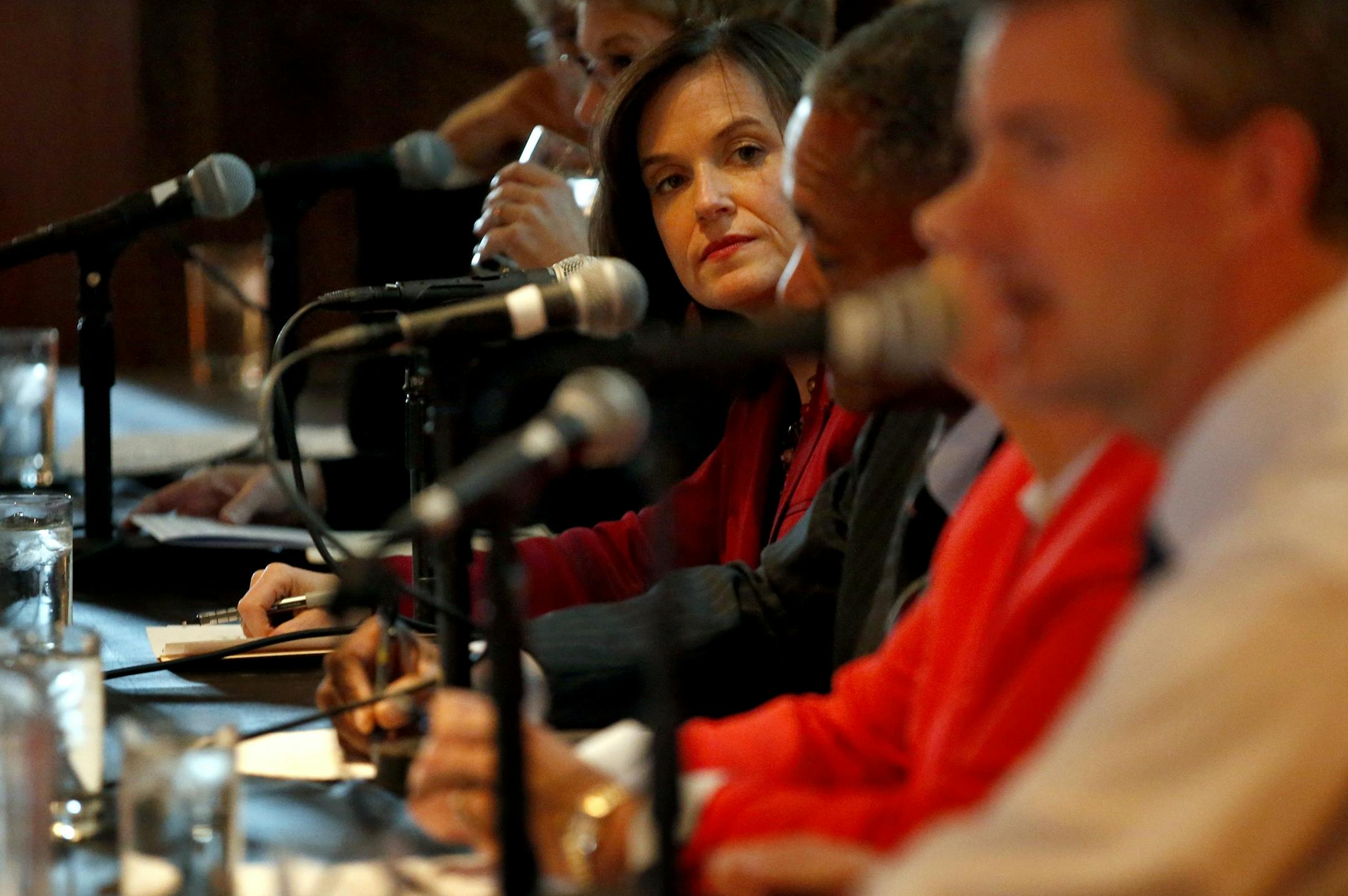
Minneapolis Mayor R.T. Rybak recently expressed regret for not being more involved from the start in improving the city's schools.
The next mayor of Minneapolis has a chance to prioritize education. It's been a promising sign in recent weeks that many of the candidates to replace Rybak as he steps down after three terms are talking about their visions for education.
But talk is not enough. And neither are the traditional modes of mayoral influence: bully-pulpit pronouncements and the informal advising of superintendents and school board members. If the next mayor wants to have a truly transformative effect on urban education, she or he should seek to gain real governance authority for city schools.
Historically, a large percentage of the nation's mayors appointed city school boards. But concerns over patronage at the start of the 20th century led to a movement to take politics out of schools. Today, most school districts, including the Minneapolis public schools, are governed by an independent elected school board.
But this traditional model is now being challenged. In the 1990s, Boston, Chicago and Cleveland were empowered by their respective state legislatures to employ a mayoral-appointment form of governance. More cities, including New York, have since followed suit. U.S. Secretary of Education Arne Duncan has made mayoral governance a priority: "At the end of my tenure, if only seven mayors are in control, I think I will have failed," he has said.
The critical policy question is whether mayoral involvement leads to more productive districts.
Along with colleagues, I have been researching this question for more than a decade. Our most recent analysis, published in 2013 by the Center for American Progress (a progressive think tank in Washington, D.C.), found that mayoral control is generally associated with improved student performance and strategic resource allocation. Experiences differ, of course, over time and across districts, and we emphasized that mayoral control is neither a one-size-fits-all reform nor a silver bullet. But, if planned and implemented carefully, it can improve outcomes of city school systems. The mayor must place partnership over power. Unions, parents, citizens and students must be part of the dialogue.
When first taking control of Boston's schools, Mayor Thomas Menino told city residents to "judge me harshly" when evaluating his education performance. The same should be true here. Minneapolis mayoral candidates should ask themselves: Do I really want to make education a priority? Am I willing to risk my entire political career on the city schools?


