

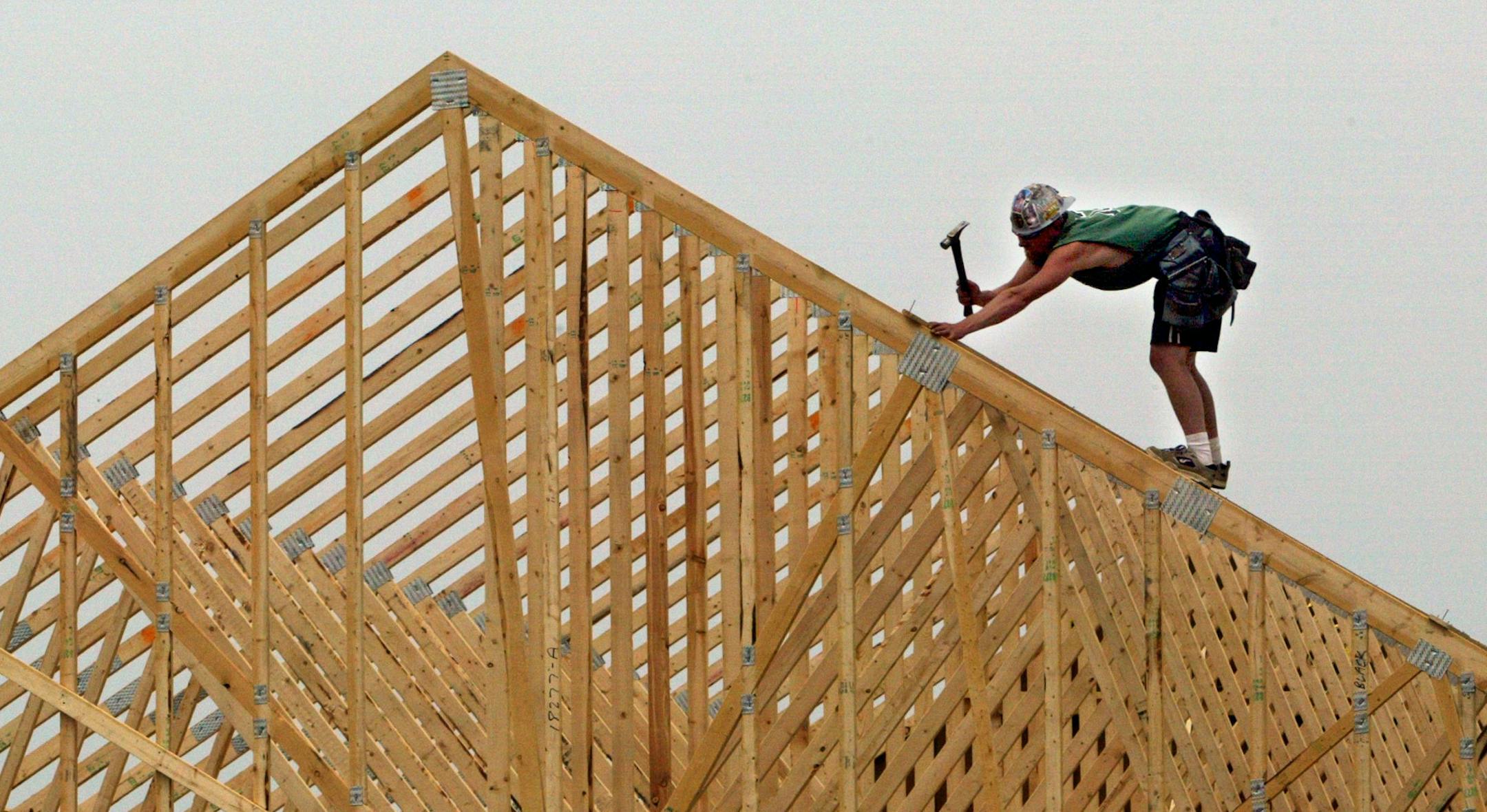
An urban rental boom wasn't enough to offset a decline in suburban new home sales in the Twin Cities this year, causing a modest correction in the construction recovery.
Throughout the 13-county region, builders were issued 4,914 permits to build 10,093 units, according to a year-end report from the Builders Association of the Twin Cities. That was a 1 percent decline in new units compared with 2013, which was the best year for new homes since the housing collapse in 2008.
"We expected 2014 to show an increase, but it didn't," said David Siegel, executive director of the Builders Association of the Twin Cities.
Nationwide, new home sales were on track to end the year at a 440,000-unit pace, only slightly better than last year.
New rental apartments were built at a record pace this year in the Twin Cities metro, helping keep contractors busy. In Minneapolis, for example, more than 2,300 multifamily units — mostly luxury rentals downtown — were built, making it by far the most active housing market in the metro. Maple Grove was the next busiest with 512 units, mostly single-family houses.
Multifamily housing accounted for 54 percent of all housing construction in the region last year.
Experts blame the correction on factors ranging from a lack of buildable lots to growing concerns about the global economy. After spending much of the past decade burning through an inventory of unsold homes, local builders spent this year trying to delicately balance supply and demand.
For many, this was the first year they've had the confidence to build spec houses in hopes of finding a buyer. But most remained conservative and kept inventory to a minimum. As of September, there was just a 1.3-month supply of new homes available for purchase in the Twin Cities, well below the 2.5-month level that's considered normal, according to Metrostudy's Twin Cities office. That's caused some builders to be more aggressive about boosting their inventory. During the third quarter, there was a 21.6 percent increase in finished and vacant new home inventory compared with the previous quarter.



