He chases semitrucks so food can be ‘rescued,’ not dumped along the route

Tom Polich, the “air traffic controller” of rejected food around Mankato, says food rescuers have saved 30 tons of food that would have gone into landfills.

The Minnesota Star Tribune
November 27, 2025 at 12:02PM
Tom Polich, right, delivers frozen hams to a food shelf in Mankato on Nov. 19. Polich is a regional food rescue coordinator who recovers food rejected by distributors. (Jp Lawrence)

MANKATO – Tom Polich’s phone rang at 8:30 a.m. with a tip: A ton and a half of chicken thighs was about to get thrown out.

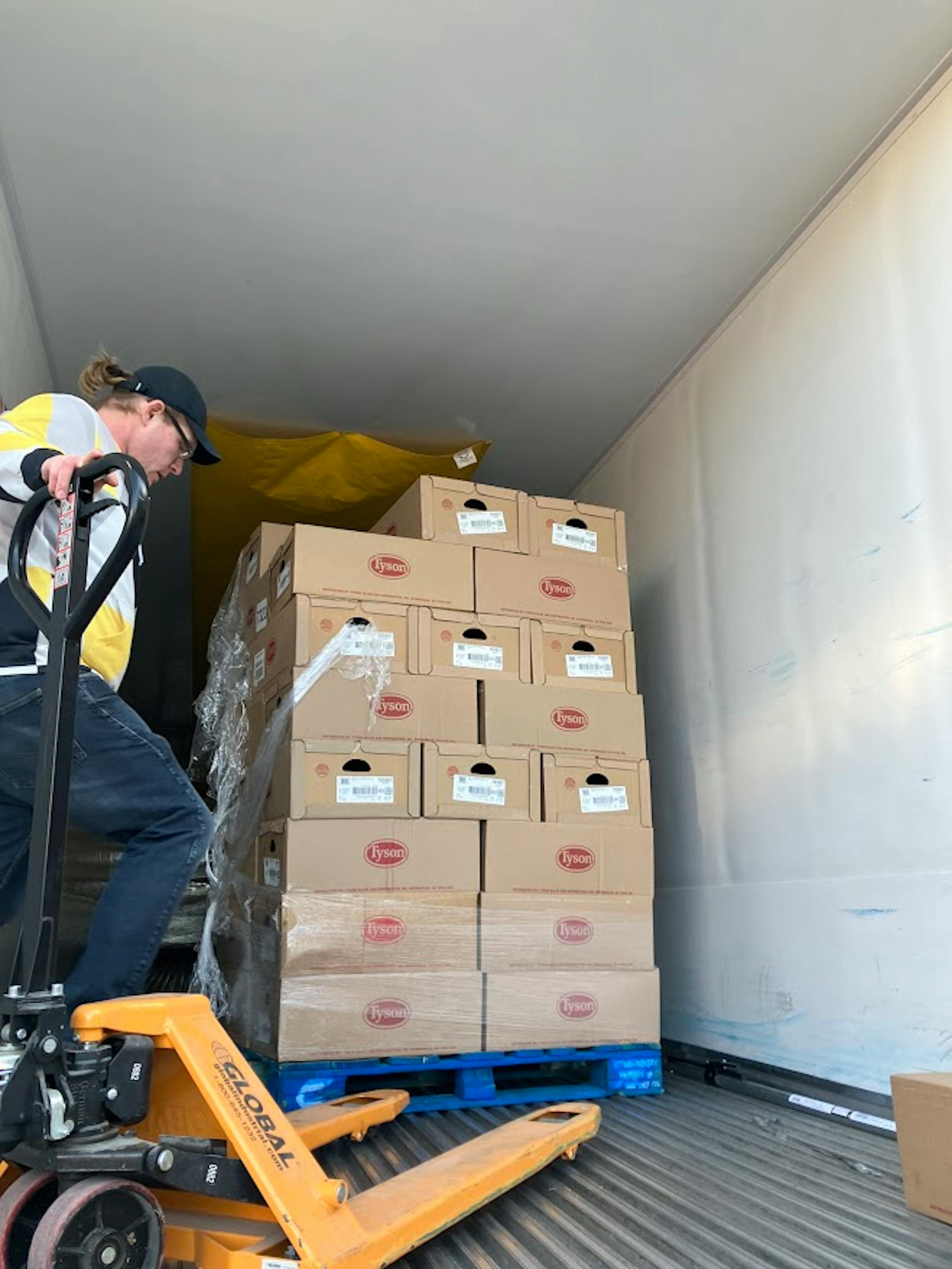
The meat from Tyson Foods was fresh, and the temperature was perfect. But there had been a paperwork mix-up, and now there was a truck driver on a tight schedule who needed her trailer empty before she could leave Mankato and get to her next job. Her only choice was the landfill — or food rescuers like Polich who want that food in the hands of people in need.

Polich sprang into action, racing to Mankato and calling the truck driver to line up a drop-off at a local time and place.

That morning he contacted a network of food shelves and volunteers. They met the truck driver at the Wooden Spoon bakery in Mankato, and they helped Polich unload 3,000 pounds of chicken into a walk-in cooler to be turned into soup that will feed people at youth shelters and the Salvation Army throughout the winter.

“Literally nothing wrong with the chicken,” Polich recalled. “If Tyson wouldn’t have reached out to us or if they wouldn’t have been able to find a spot within those couple of hours, probably would’ve ended up in a landfill.”

Polich is in his first year as a regional food rescue coordinator with the Region Nine Development Commission. It’s a job created to help prevent rejected groceries from trucks crossing the country from ending up in landfills and instead redirect them to local food shelves.

A 15-year veteran of the food industry, he calls himself an “air traffic controller,” trying to get the food where it needs to go as quickly as possible.

Though snagging food from trucks might be an unusual way to collect, it’s a task that’s increasingly important, with hunger and food insecurity rising throughout the state. Last year, Minnesota food shelves saw a record of nearly 9 million visits, and demand is rising as costs at grocery stores stay high.
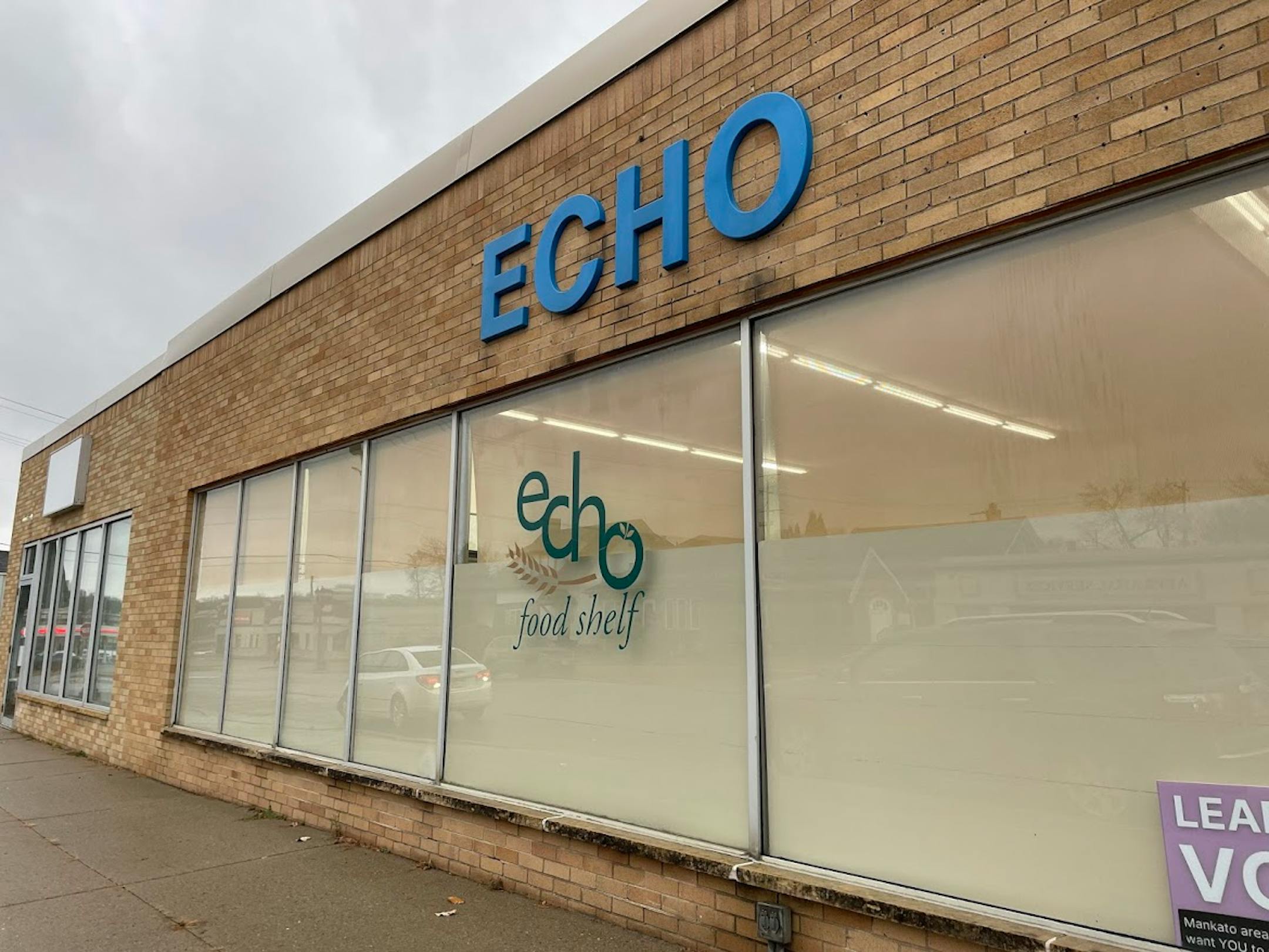
In Mankato, staff at the ECHO Food Shelf said they served about 45 households a day during the pandemic, but earlier this year that number rose to 130 households. Now it’s about 175 households daily.

At his office in Mankato last week, Polich picked up his phone and read a text. Josh Sorenson, program manager at Feeding Our Communities Partners, had a pallet of hams rescued from a truck bound for the Walmart distribution center in town.

“How much ham are we talking about here?” Polich said.

There were 50 hams, Sorenson said. They had been rejected because their pallet had been damaged, and they had been bound for the landfill if not for a semitruck driver contacting a local food rescuer.

Polich began calling food shelves in the area. “We might have some ham,” Polich said on the phone with a food shelf in nearby St. Peter. “Would you want some?”

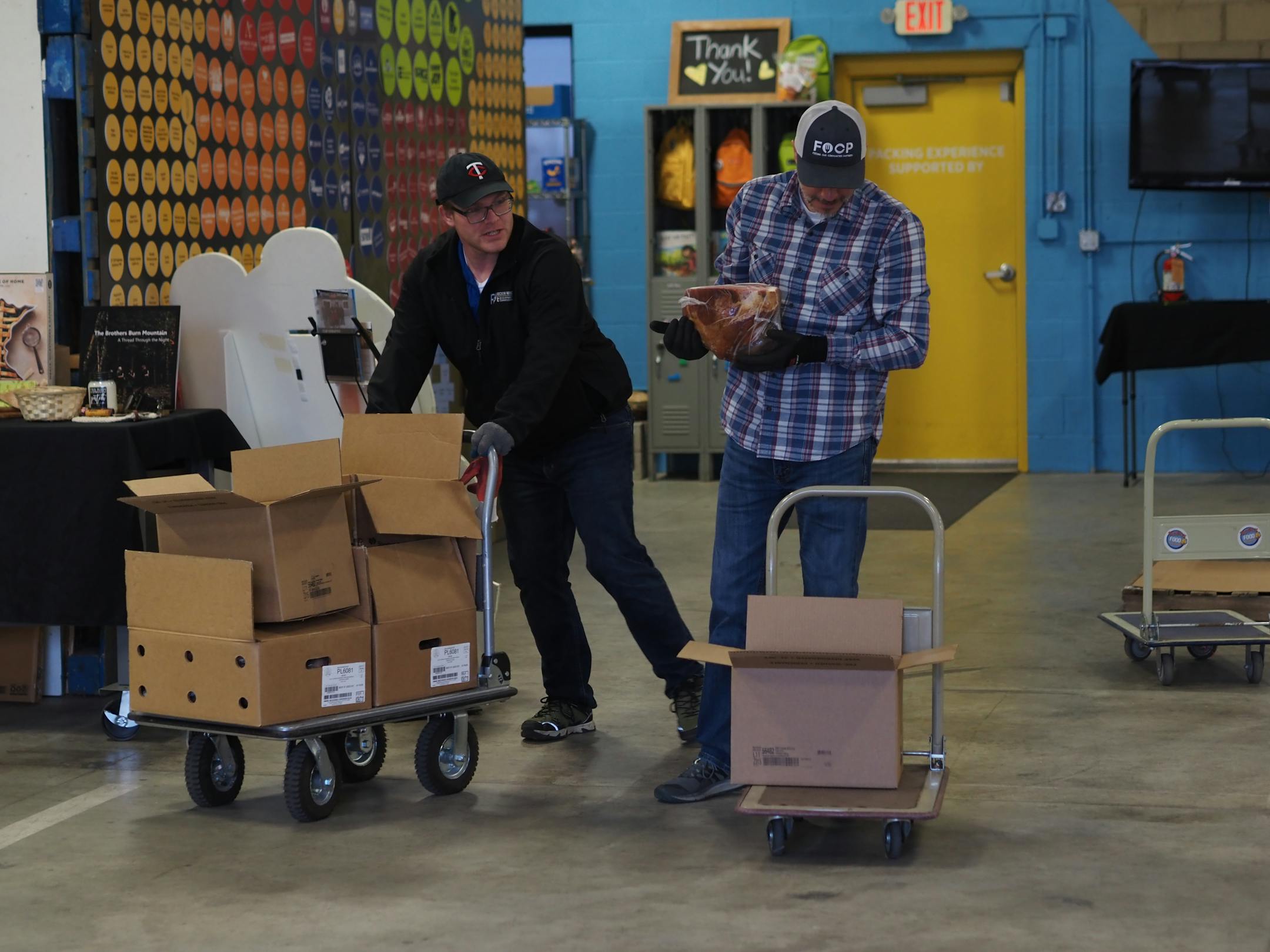
Tom Polich, left, and Josh Sorenson load 50 frozen hams onto carts to donate to food shelves around Mankato on Nov. 19. Polich is a Regional Food Rescue Coordinator, and Sorenson is program manager of Feeding Our Communities Partners. (Jp Lawrence)

Since February, Polich has helped recover 30 tons of food that would have been dumped. He keeps a spreadsheet tracking rescues: seven tons of potatoes in July, a ton of plums in August, three pallets of Caesar salad mix in November.

Typically, Polich will help guide a truck to a food shelf where the food can get unloaded. Sometimes he’ll pick up the food from a truck wash, his car leaving filled with squash.

The items he rescues are not spoiled but are rejected for reasons that seem to only make sense on a spreadsheet.

The No. 1 reason, Polich said, is overordering, with the distribution center later saying they can’t take the order. Other reasons include misprinted labels or damaged packaging. Sometimes the produce just doesn’t look nice enough, or in one case, the potatoes were too small.

Distributors sometimes reject deliveries a few weeks before the expiration date — too soon for a warehouse to process but enough time for a food shelf to get groceries to a family. Temperature deviation during transport is another major reason food gets rejected.

Polich said he doesn’t keep every load. There was a load of onions that was beginning to rot. But for the most part, he said, the rejected food offered to him is edible and safe.

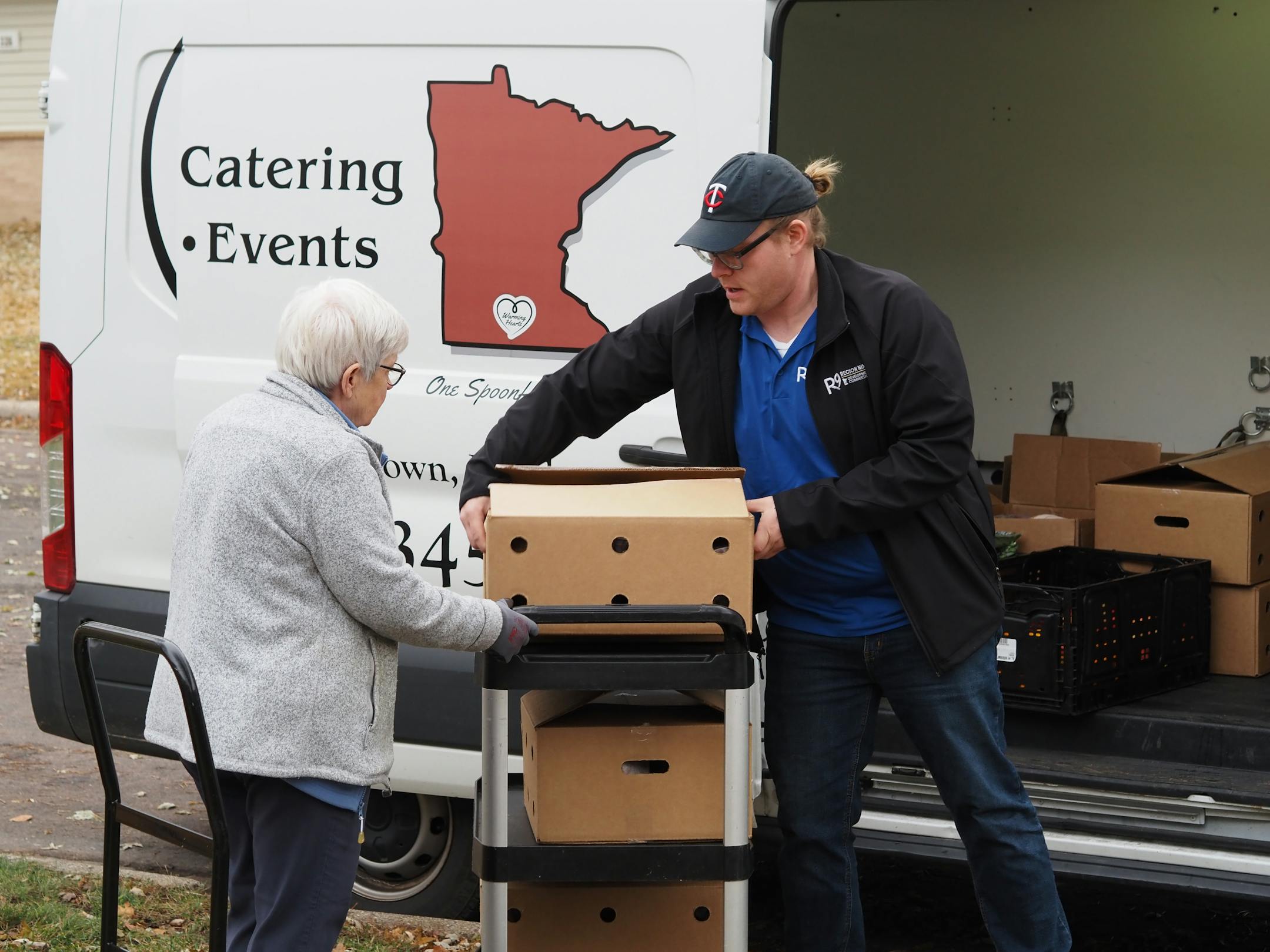
Tom Polich unloads a pallet of chicken thighs that was bound for the landfill but was recovered for use at food shelves on Nov. 4 in Mankato. (Courtesy of Tom Polich)

Truckers don’t want the food in their trailers to go to waste, but it can be difficult to find places to donate them, said Aubrey Carter, a broker with California Overland and a 33-year veteran in the industry.

“You’d be surprised at how hard it is to give away food,” Carter said in recent phone call.

It’s expensive to offload food, Carter said. It costs more than $1,000 to dump a trailer of rejected goods at a landfill.

Donating to a nonprofit, meanwhile, can provide a slip for a tax write-off or compensation. And legally, food donors are covered by state law and are not liable for injury unless there’s proof of “gross negligence, recklessness, or intentional misconduct.”

Truckers say they want to donate food, but they risk losing income if they don’t get back on the road, which is why they often can’t wait on understaffed food shelves to rally volunteers to unload a trailer, according to a report based on drivers who spoke with Region Nine, the organization that employs Polich.

When his truckers have food they need to dump in Minnesota, Carter said they’ve been going to Mankato, where they are received by Deisy De Leon Esqueda at the ECHO Food Shelf.

Staff at ECHO Food Shelf in Mankato say that demand has been rising over the last year. (Jp Lawrence)

Since 2015, Esqueda has been rescuing food from semitrucks in the Mankato area. Polich’s work is a formalization of efforts in the region by Esqueda and Natasha Frost, who owns the Wooden Spoon and started South Central Minnesota Food Recovery in 2019.

Esqueda says she first realized the magnitude of food waste in 2015, when truckers began calling her to help them get rejected groceries out of their trailers, in large part related to the Walmart distribution center in Mankato. In the years since, ECHO and its freezers have been the holding space for many of the food rescues.

Esqueda received a $200,000 grant from Taylor Family Farms Foundation and the Mankato Area Foundation earlier this year, as part of the same donation that provides $100,000 to fund Polich’s position. She said working with Polich means the ad hoc food rescue efforts around Mankato now have a central clearinghouse.

“Having the ability to reduce that waste ... it’s a great feeling,” Esqueda said, “but it doesn’t compare to being able to making that food accessible to people that really need it.”

In Mankato, Polich finished two deliveries of hams, and he cranked up the music as he drove up Hwy. 169 to deliver the rest to the food shelf in St. Peter. He has a playlist for deliveries: a lot of heavy metal, and that day, some indie Mexican rock.

Polich and his food rescues this year have kept the shelves stocked with fresh produce and protein, said St. Peter Area Food Shelf manager Cynthia Favre.

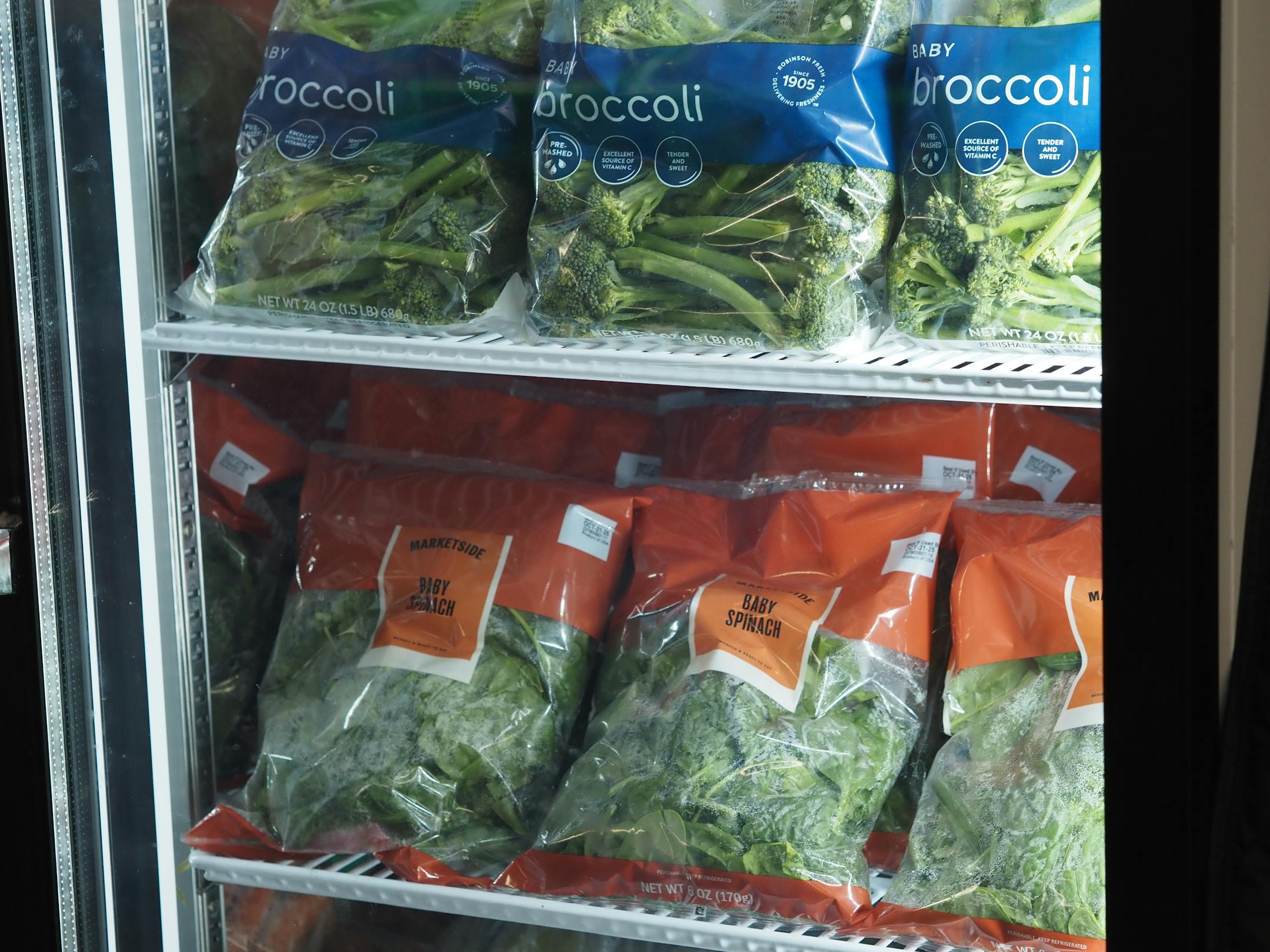
Efforts by Tom Polich, food rescue coordinator, kept a fridge filled with spinach and broccoli at the St. Peter Area Food Shelf over the summer, staff said. (Jp Lawrence)

Federal funding disruptions slashed more than a million pounds of food headed to Minnesota food shelves this summer. Favre said she hopes the hams delivered by Polich help make Thanksgiving better for someone in need.

Polich said working with seniors through Meals on Wheels showed him how widespread food insecurity is among America’s most vulnerable.

“Just knowing that we are doing everything in our power to feed them instead of letting food go into a landfill — I mean, that’s just to me, that’s hugely empowering," Polich said, “and definitely just drives me to keep on wanting to do this.”

about the writer

about the writer

Jp Lawrence

Reporter

Jp Lawrence is a reporter for the Star Tribune covering southwest Minnesota.

See Moreicon

More from Mankato

See More
card image
Jeff Wheeler/The Minnesota Star Tribune

Artificial intelligence has gone mainstream this semester, three years after the debut of ChatGPT. Schools and professors are scrambling to respond.

card image
card image