

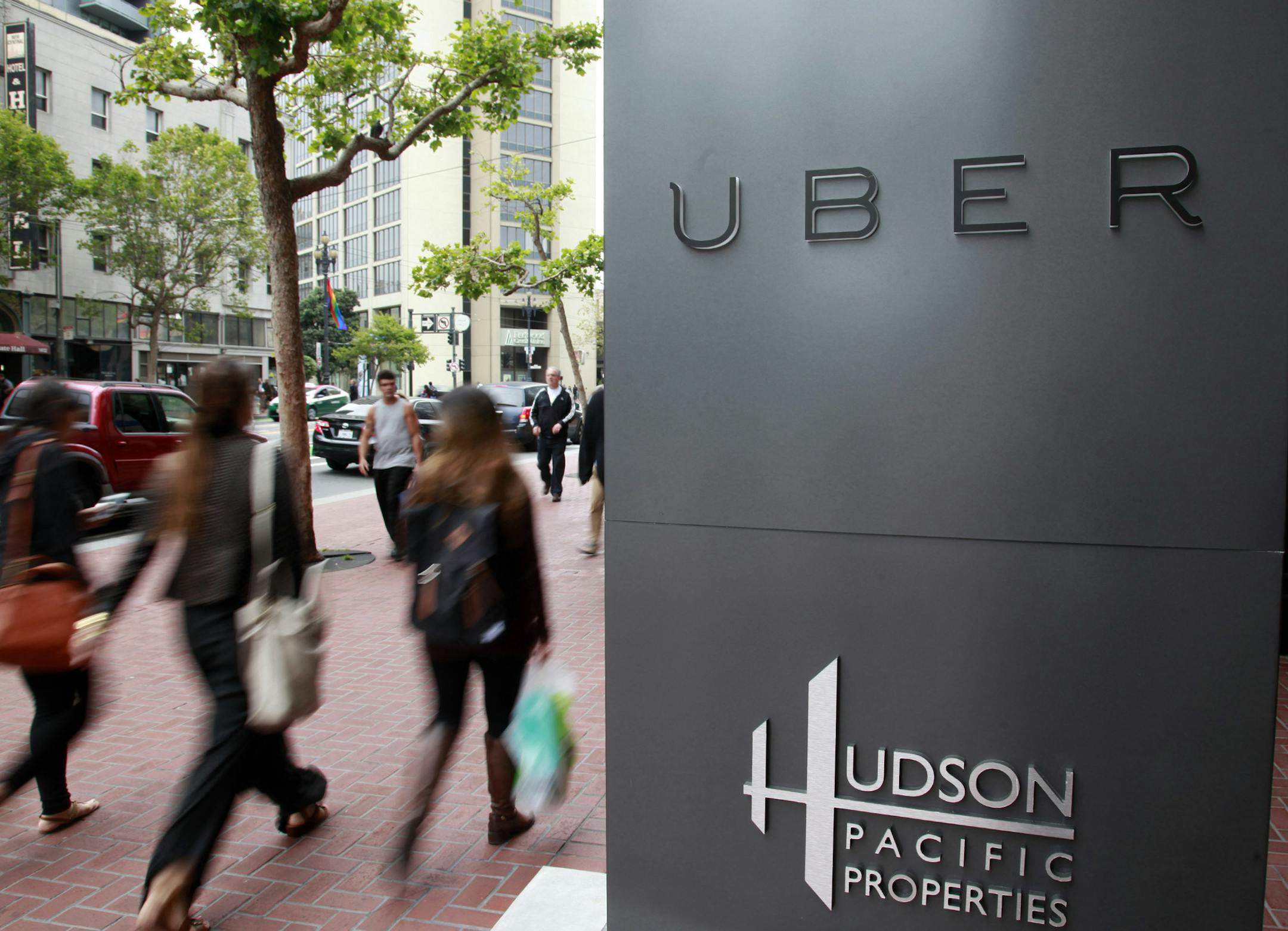
SAN JOSE, Calif. – Budding entrepreneurs hoping to cash in on the wave of collaborative consumption breaking across the nation are hitching their wagons to the King Kong of the sharing economy, claiming to be the "Uber of whatever" — food delivery, diaper service, dog-walking, you name it.
In other words, we have become the Uber of Uber-obsessed nations.
"We run into this issue of consumers not quite understanding what we do," says Jeryl Detmer, co-founder of what he likes to think of as "the Uber of trailer rentals," based in Ojai, about 60 miles northwest of downtown Los Angeles. "Either they're totally into the peer-to-peer or sharing economy, or they give you that deer-in-the-headlights look. But when we say, 'We're like Uber,' they suddenly get it."
Ride-booking pioneer Uber, along with Airbnb, its kissing cousin in the accommodations space, has sent the sharing economy into overdrive. Valued at $50 billion and operating in 61 countries at last count, Uber has become a household — if sometimes controversial — word. Defined as "a superlative example of its kind or class," Uber has become a hip shorthand for efficient transportation and seamless commerce, a digital darling that turns your smartphone into a matchmaker between you and your ride home.
It has also become the marketing tool du jour.
There are Ubers of party planners (GigSalad) and Ubers of real estate (SQFT), Ubers of storage units (SpareFoot) and Ubers of babysitting (The Babysitting Company). With scores of start-up founders and their marketing teams Uberizing their sales pitch to investors, media and customers, this metaphor-lobbing mob is using Uber as if it's some magical password to profits and fame. Sometimes, it's the end user who drops the U word.
"Often the first thing we hear from customers is 'Oh, so you're like the Uber of babysitting?' " said Cory Charlupski, whose Miami Beach, Fla.-based Babysitting Company hooks up child care for clients at home, in a hotel or on the road. He says he wears the Uber badge with honor: "If anyone says they don't want to be the Uber of something, they're lying, because everyone would love to eventually own a company worth $50 billion."
Uber, which declined to comment for this report, has experienced a supersonic growth spurt since 2009 when it was founded as "UberCab" by Travis Kalanick and Garrett Camp. As it spread to more than 300 cities around the world, here and overseas, the company has raised more than $5 billion from investors, including a $258 million investment by Google Ventures, even as its service has been challenged at every turn by governments and traditional taxi services.


