
A new Minnesota law was designed to get guns away from dangerous people. Has it worked?

The red flag law has been successful in removing guns from people who are a danger to themselves or others. But many counties have not filed any petitions.

The Minnesota Star Tribune
September 30, 2025 at 10:34PM
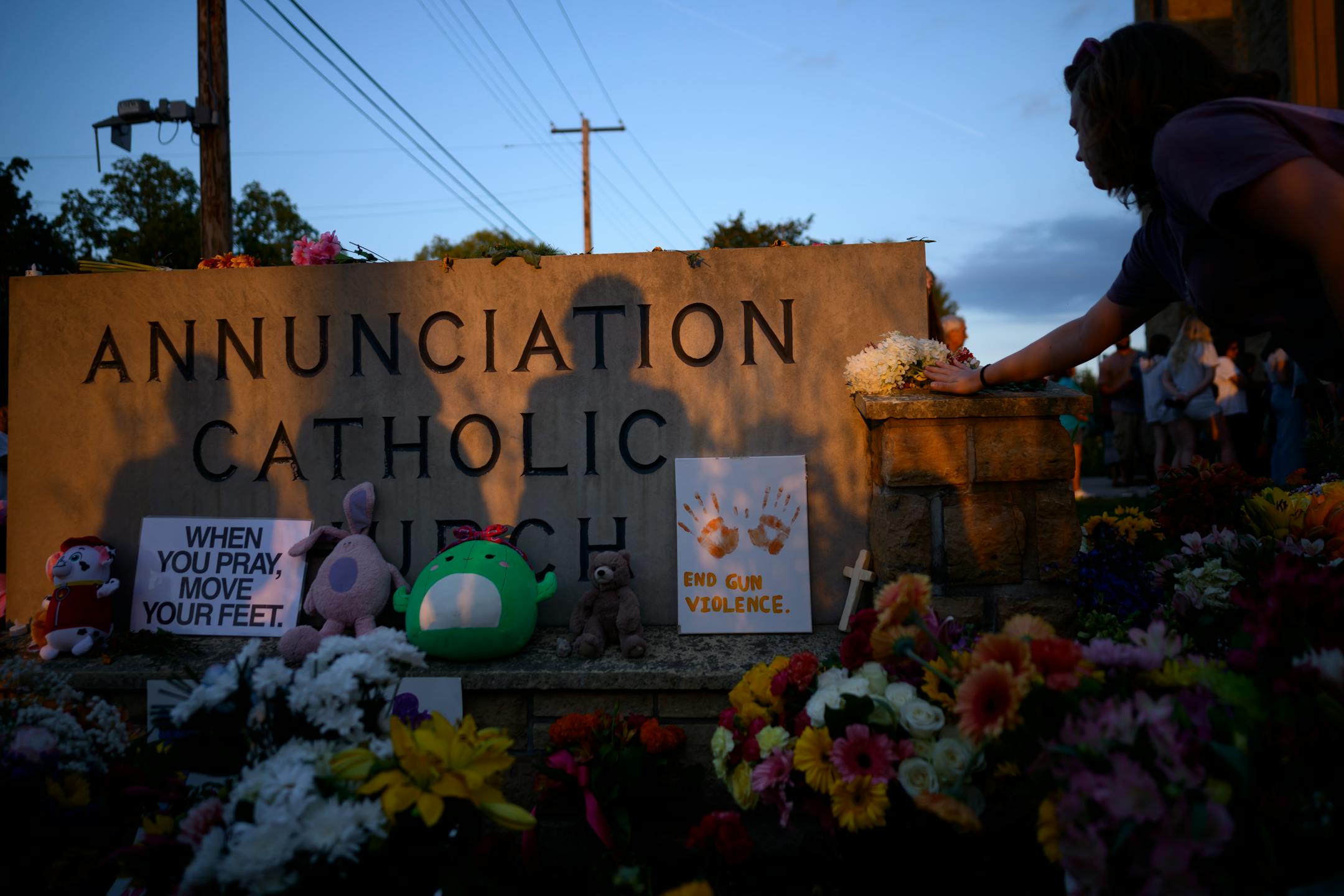
Signs calling for an end to gun violence are placed outside a memorial at Annunciation Church in Minneapolis, the day after two children were killed and 21 other people injured in a mass shooting there. The Star Tribune’s investigation of Minnesota’s red flag gun law determined the legislation has been successful in preventing potential violence. (Aaron Lavinsky/The Minnesota Star Tribune)

Citing the risk of future mass casualty events and the need to reduce suicides in rural Minnesota, state lawmakers narrowly approved legislation in 2023 making Minnesota the 21st state to adopt a red flag law aimed at reducing gun violence. The new law took effect on Jan. 1, 2024.

Under the law, family members, law enforcement officials and household members can ask the courts to bar firearms from people who pose a risk to themselves or others.

In the wake of the shooting at Annunciation Church in Minneapolis in August, where two children were slain and 21 other people wounded, the Minnesota Star Tribune investigated how the new law is working.

We spent several weeks reviewing all 301 red flag cases that were filed through the end of August and then contacted family members and police officials who were involved in some of the most troubling cases.

Here are five takeaways from the investigation:

The new law prevented violent attacks across Minnesota.

In chilling detail, police and family members recounted how dozens of troubled individuals were on the verge of committing horrific violence, including assaults on schools, retail outlets, nursing homes, courthouses and police stations. Altogether, 141 of the 301 cases reviewed by the Star Tribune involved people who threatened others. Most of these potential offenders already had firearms, including 10 who possessed assault weapons such as an AR-15. Some had dozens of weapons and large stockpiles of ammunition.

Few frivolous cases have been filed

Though some critics predicted the law would be widely abused to harass law-abiding gun owners who posed no threat to anyone, the courts denied just 10% of the petitions seeking Extreme Risk Protection Orders. In the vast majority of cases, judges found there to be compelling reasons to remove guns or bar someone from purchasing a firearm for at least 14 days, with most protective orders lasting as long as 12 months. A few cases were dismissed because the court found the plaintiffs did not have legal standing to seek a protective order, including the sister of a woman who was acting recklessly with a shotgun.

Health care workers stepped up

Of the 145 cases involving direct threats of suicide, at least 33 were reported by nurses, therapists, psychiatrists and other mental health workers after a patient described their plans for killing themselves with a firearm when they were discharged. Under the law, mental health professionals have a statutory duty to report such threats to the sheriff of the county where the client resides. In 20 cases, people lost their firearm access after threatening to commit “suicide by cop.”

Enforcement is spotty

There were no red flag cases filed in 39 of Minnesota’s 87 counties, including large swaths of rural Minnesota, where some law enforcement leaders have not embraced the new law. Judges dismissed 35 cases when short-term orders barring firearm access expired because law enforcement officials or family members failed to follow through on their petitions, sometimes by skipping required court hearings.

Minnesota embraced law faster than some states

In the law’s first year, 137 petitions were filed in Minnesota, more than six of the 21 states with red flag laws. That includes Massachusetts, which enacted its law in 2018 and accounted for just 24 petitions last year.

You can read the full story here.

about the writer

about the writer

Jeffrey Meitrodt

Reporter

Jeffrey Meitrodt is an investigative reporter for the Star Tribune who specializes in stories involving the collision of business and government regulation. 

See Moreicon

More from News & Politics

See More
card image
Leila Navidi/The Minnesota Star Tribune

Friday’s morning commute and weekend travel could be impacted by the snow.

card image
card image