

"What kind of government have you given us?" asked a woman outside the Constitutional Convention of 1787. "A republic, madam, if you can keep it," replied Benjamin Franklin.
It is hard to say what's more disturbing. The grotesque Democratic power play in ending the Senate filibuster, or the public's complacency in going along with it. Either way, we are witness to the undoing of a sacred Senate tradition, which over the course of two centuries helped to separate the American experiment from mob rule.
Egged on by a lame-duck president whose second term legislative agenda is justifiably threatened by the legacy of the first, Senate Majority Leader Harry Reid invoked the "nuclear option" last month, shamelessly allowing President Obama to retain his regulatory influence by ramming through executive branch appointments and judicial confirmations with a simple majority vote.
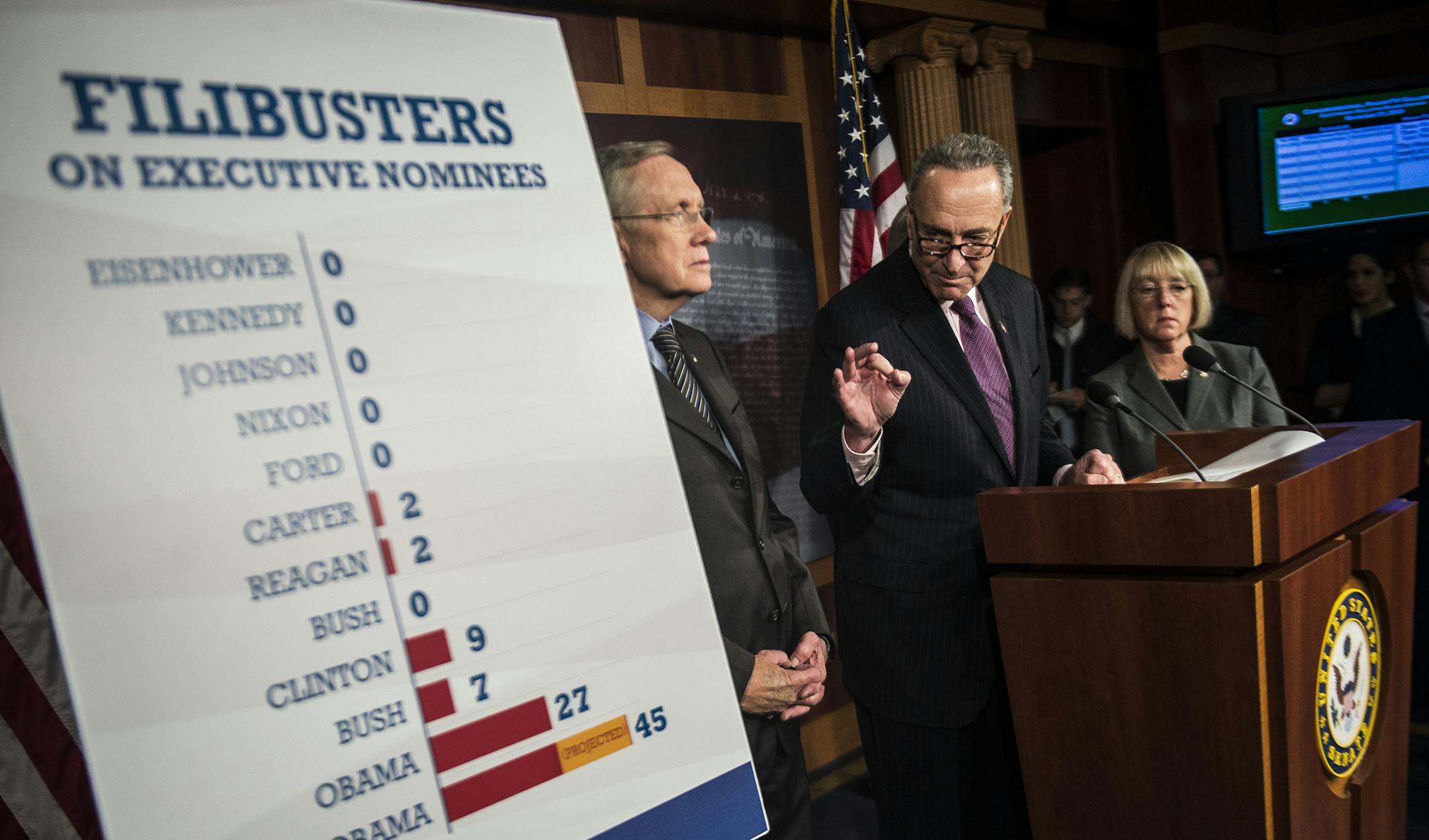
In doing so, the majority is counting on very short memories (given the long list of Republican nominees "victimized" by Democratic filibusters of years past). Recall the junior senator from Illinois, Barack Obama, in 2005: "The American people want less partisanship in this town, but everyone in this chamber knows that if the majority chooses to end the filibuster, if they choose to change the rules and put an end to democratic debate, then the fighting, the bitterness and the gridlock will only get worse."
This is blinding hypocrisy.
Never mind that the GOP had its own filibuster complaints, even threats, back then — it was this out-of-control Senate leadership that actually voted to end the 60-vote supermajority requirement so much a part of the founders' wisdom.
You see, the framers did not wish to trade the tyranny of the monarchy for the "tyranny of the majority." The Constitution, while not mentioning the filibuster itself, contains five explicit provisions for Senate supermajorities. Indeed, the Senate owes its very existence to the notion that government action required much more than a slim majority vote — it requires a consensus. That's why there are two senators allotted per each state, regardless of population. And why, up until 1913, senators were chosen through state legislatures and not by direct vote.
None other than James Madison, the putative father of the Constitution, was quite wary of simple majorities, writing "that such democracies have ever been spectacles of turbulence and contention; have ever been found incompatible with personal security or the rights of property; and have in general been as short in their lives as they have been violent in their deaths …"


