

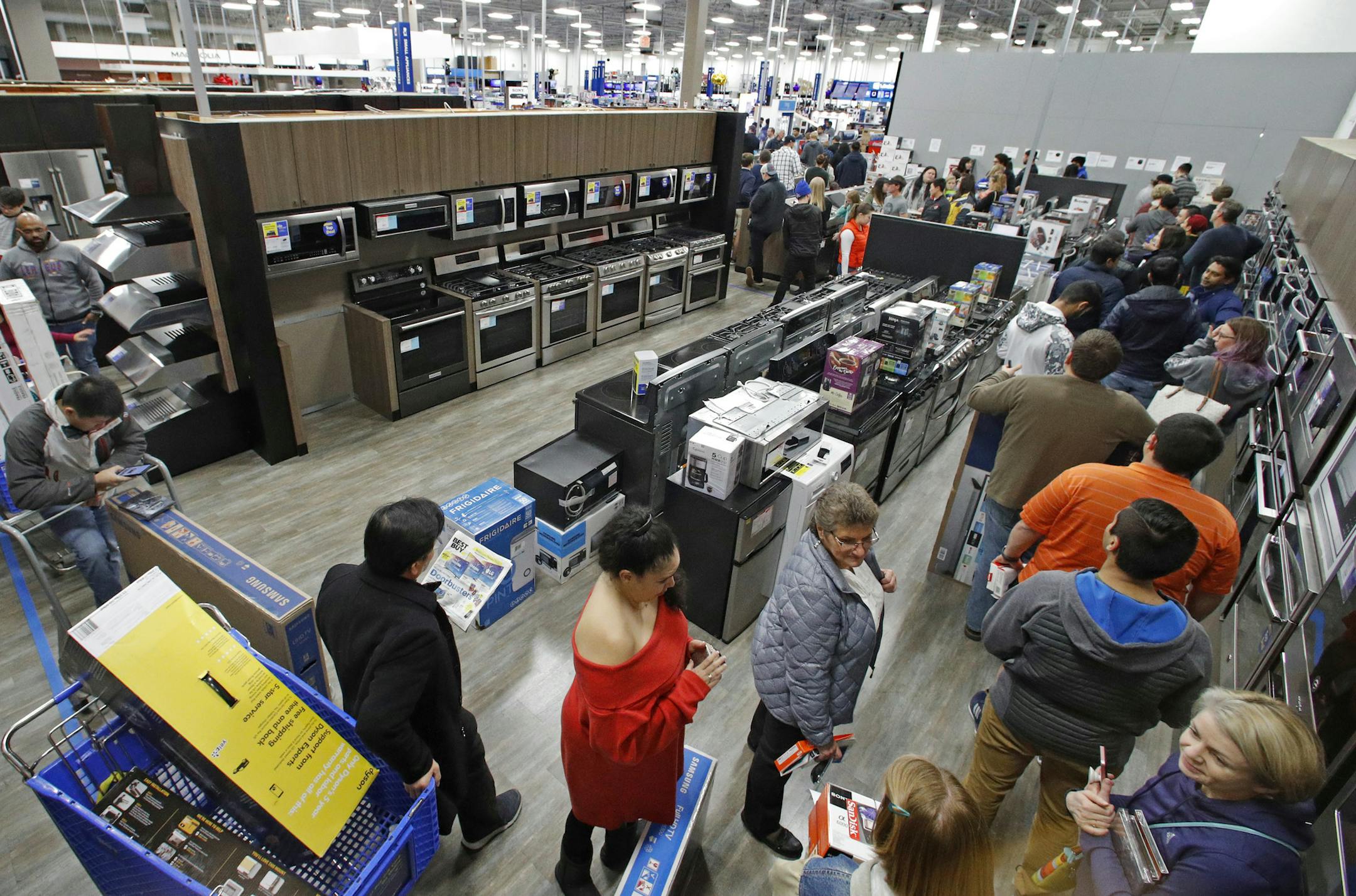
Convenience may be winning out over price in the retail world.
Consumers want to walk the aisles and fill their own carts. But they also want smooth online and digital shopping experiences, with options to pick up items at stores or get them shipped within a few days. For those companies who have seemed to master this do-or-die piece of the puzzle — including the Star Tribune 50's biggest retail players, No. 2 Target Corp. and No. 3 Best Buy Co. Inc. — it's paying off in sales and profits.
"Trying to sell based on price alone is not good enough anymore," said Kim Sovell, who teaches marketing at the University of St. Thomas. "It's now about experience, loyalty and getting people back into stores."
Both Target and Best Buy have sunk money into improved websites, mobile applications and training. Each also has a range of "click-and-collect" services to encourage customers to pick up digital orders in stores.
E-commerce sales rose 35% last year at Minneapolis-based Target as the retailer continues to benefit from a multiyear, $7 billion investment to modernize supply chain operations and turn stores into mini-distribution centers.
At Best Buy, online sales now account for 22% of total revenue. The Richfield-based retailer's profits soared 46% last year as it continues to outlast many of its competitors. With the $800 million purchase of GreatCall, Best Buy is now marketing products and services to aging baby boomers who want to stay home as they age.
The boom in e-commerce also has boosted the fortunes of C.H. Robinson, the nation's largest third-party logistics company and No. 7 on the Star Tribune 50. Through acquisition and organic growth, the Eden Prairie-based company's revenue has grown from $3.3 billion at the end of 2002 to $16.6 billion today, including a 12% jump last year.
Out of all ST50 companies, only five saw revenue declines in 2018. Three of them were retailers: Regis Corp., Evine Live and Christopher & Banks.


