

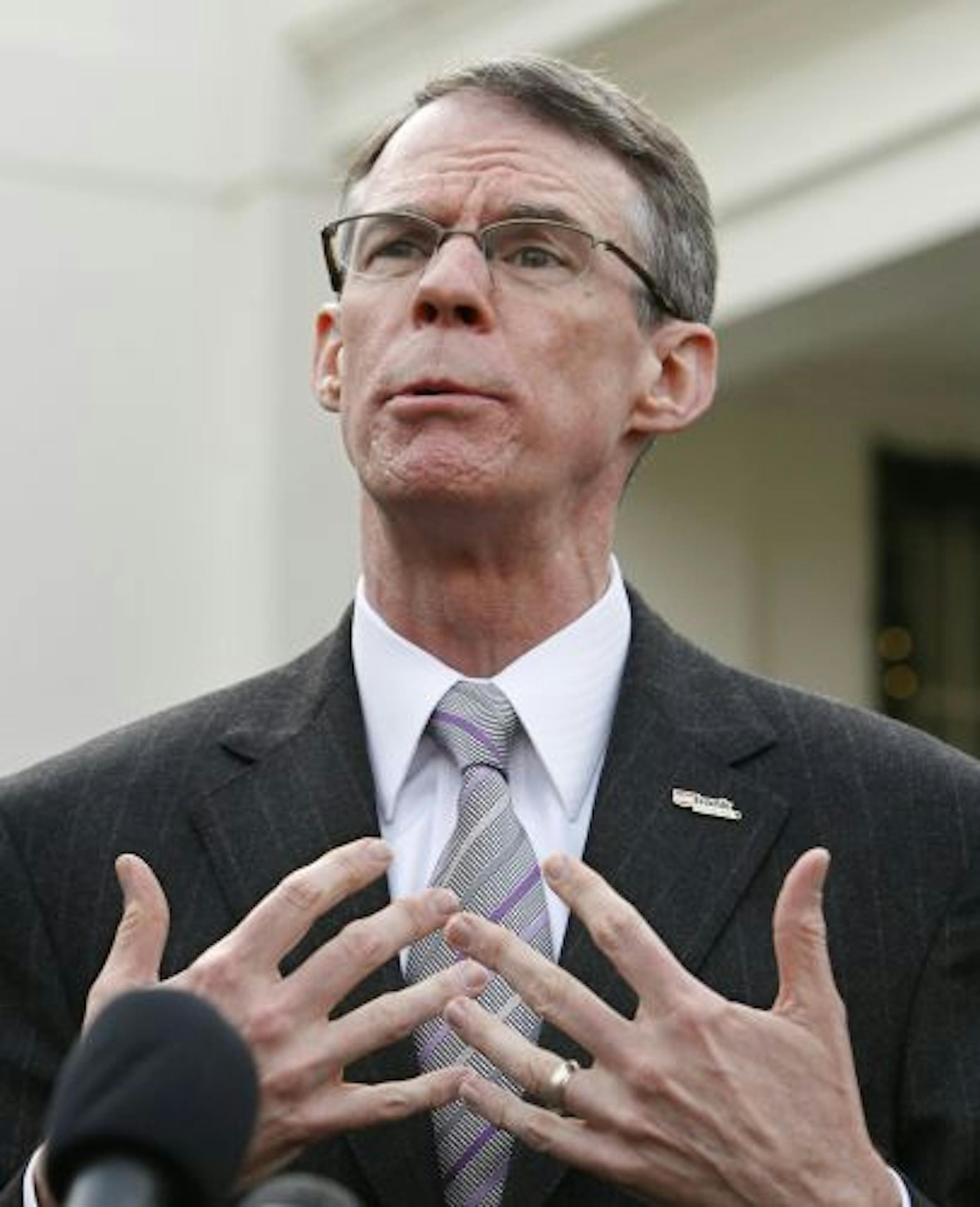
The TV crews pounced on U.S. Bancorp CEO Richard Davis Monday as he and a dozen other of the nation's top bank executives emerged from a 90-minute meeting with President Obama at the White House.
They wanted quick, pithy sound bites -- a feisty response, perhaps, to Obama's incendiary words Sunday on "60 Minutes," in which the President blasted "fat-cat bankers" for opposing tighter regulation and awarding themselves big bonuses while receiving taxpayer money.
What they got instead was the mild-mannered Davis, who had nothing but positive words to say about Obama and the whole issue of bank regulatory reform. "He didn't call us any names," Davis said, grinning. "We're in alignment on a lot of things," he added.
By day's end, Davis' face was as ubiquitous on national TV screens as Obama's, and Davis' upbeat message had helped to quash what had been a growing perception that the nation's big banks were digging in their heels against reform. If Obama had hoped to boost his sagging popularity ratings by picking a fight with unpopular bankers -- as some pundits suggested after Sunday's "60 Minutes" episode -- then the financial services industry could not have picked a better person to dial down the noise than Davis.
Indeed, in an interview several hours after the meeting, Davis said the bankers agreed when Obama exhorted them to become more involved in the reform process, and not to let lobbyists get in the way. Davis also said the banks and Obama have agreed to work together to find creative ways to free up lending.
"Right now, the lobbying groups are louder than we are," Davis said. "It shouldn't be that way."
But the full impact of Monday's meeting was difficult to gauge. Executives and Obama packed a number of complicated issues, including small business lending, loan modifications, executive compensation and regulatory overhaul, into a relatively short time frame.
For Obama, the meeting was an opportunity to appear tough on banks at a time when high unemployment and tight credit markets continue to hurt his popularity. For the banks, it was an opportunity to emphasize their willingness to lend -- something they already are inclined to do, noted John Boyd, a finance professor at the University of Minnesota.



