

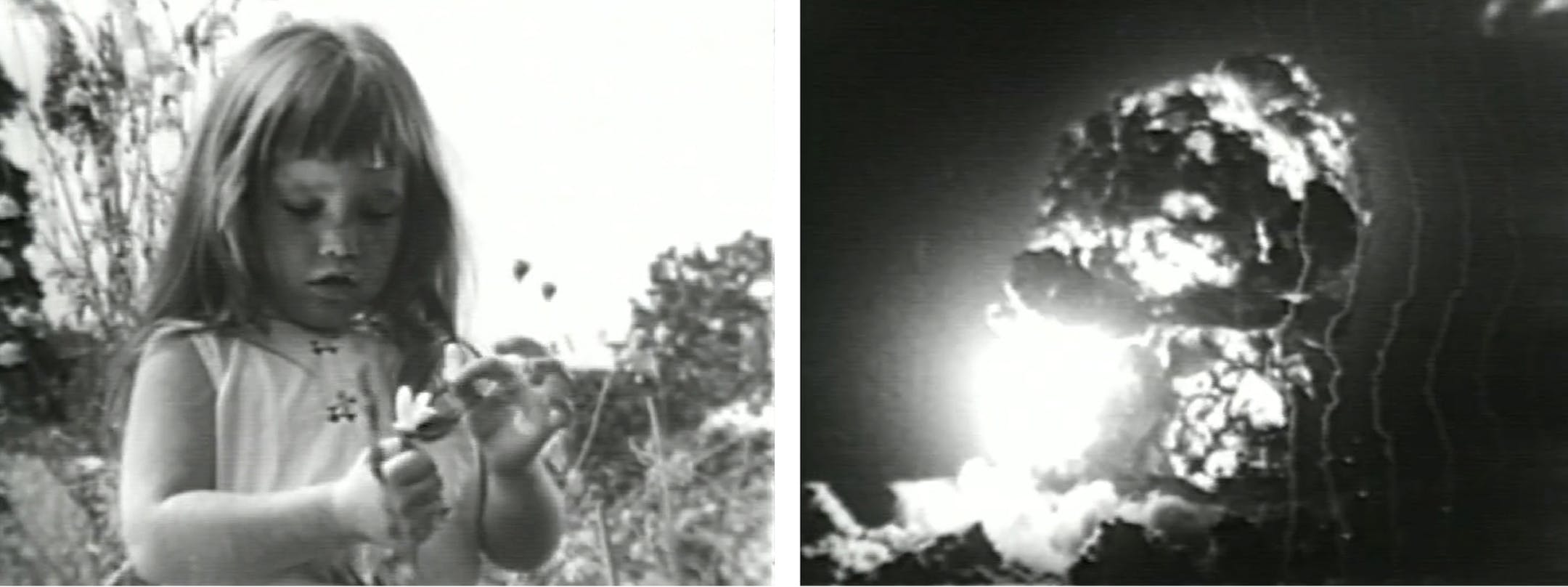
Lamenting the tone of TV commercials, the executive director of the Fair Campaign Practices Committee called the fall campaign "the most vicious and bitter I've ever seen, or for that matter, heard tell of."
Based on what's seen on screens lately, this could be a depiction of the 2014 election. But Bruce L. Felknor's characterization of the campaign came half a century ago after an ad called "Peace, Little Girl" — now known as "Daisy" — was run by President Lyndon B. Johnson's campaign against his Republican rival, Sen. Barry Goldwater.
"Daisy" debuted 50 years ago on Sept. 7, 1964. The ad only ran once. But its impact endures. Not just because "Daisy" is considered by many practitioners to be the best political ad ever, but because it began an ever-intensifying era of negative campaign ads that give biannual credence to Felknor's critique.
"Daisy" starts with a 3-year-old girl in a meadow, innocently plucking petals as she counts (and cutely miscounts) up to 10. As she nears 10 in her toddler voice, a harsh, martial voice begins a reverse countdown. At zero, an extreme close-up of the girl's eye dissolves into a massive nuclear explosion.
Fifty years later, the visual is startling — even shocking. But just as jarring are the words.
LBJ is not seen, but heard in his unmistakable Texas twang. "These are the stakes," he warns. "To make a world in which all God's children can live, or go into the dark. We must either love each other, or we must die." Then, a stentorian voice urges: "Vote for President Johnson on Nov. 3. The stakes are too high for you to stay home."
Yes, "vote for me or die" would be the ultimate stakes. Of course, many thought the black-and-white contrast was beyond the pale. And so after "Daisy" ran during NBC's screening of the biblical drama "David and Bathsheba," all hell broke loose. Complaints rained down on Democrats and NBC. And not just from rank-and-file Republicans. Many Democrats complained, too, including Hubert Humphrey, LBJ's running mate, who while not exactly running from it, called the ad "unfortunate."
"Daisy" only had to run once — the then-monolithic media echo chamber, undiluted by today's infinite Internet options, did the rest. It ran on highly watched network newscasts, and the "Daisy" girl was on the cover of the widely read Time magazine under the headline "The Nuclear Issue." So "Daisy" pioneered another modern ad tactic — using limited investment in paid media to garner free media.


