Female ski jumpers earn wings

Female ski jumpers were scoffed at for years. But through the efforts of a dedicated group, they will finally take flight in the Winter Games.

February 11, 2014 at 1:12PM
icon2:43
(Shari L. Gross/Shari L. Gross)

SOCHI, RUSSIA – When Jessica Jerome brought home the brochure, her father could think of only one thing: the iconic opening of "ABC's Wide World of Sports,'' defining the agony of defeat with a clip of a ski jumper's horrifying crash. Her mother had a much different reaction.

The ski-jumping classes Jerome wanted to try would cost $60 for five weeks. "My dad said no,'' Jerome recalled. "My mom said, 'That's cheaper than babysitting. You're in.' ''

That would be the last time Jerome would hear those two words for a long, long time. After learning the basics of ski jumping as a second-grader, she rose to become one of the top women in the sport — which was akin to being the best ice sculptor in Death Valley. Ski jumping, a fixture of the Olympics since 1924, was closed to women at the Winter Games, and most everyplace else as well.

Seeing his daughter launch off a ramp and float through the air changed Peter Jerome's mind. Frustrated that she and her fellow competitors had few opportunities, he bought a copy of the book "Nonprofits for Dummies'' and began Women's Ski Jumping USA. After waging a long, emotional battle to allow women to jump in the Olympics, the little group finally got what it wanted in 2011.

They were in. Tuesday, Jerome, former world champion Lindsey Van and current world champion Sarah Hendrickson will represent the U.S. in a new version of an old sport, as women's ski jumping makes its Olympic debut in Sochi.

"I was confident this day would come,'' said 27-year-old Jerome, a 10-time U.S. champion who won the Olympic trials in December. "We were, I guess, too much of a force to be reckoned with. But I didn't know when.

"I'm humbled and thrilled to be here. I'm excited to be representing Team USA, but I'm also excited to be representing women's ski jumping. We're all thrilled to show the world what we have. It was a long, uphill battle.''

An uphill battle

Jerome and Van both said it is impossible to describe the sensation of gliding down the ramp and soaring through the air. They both agree that it is unlike anything else, which is why they worked so hard to see the sport recognized at the highest level.
ADVERTISEMENT

Through most of their careers, they have had little funding or support, save from their families and the organization that Peter Jerome and his wife, Barbara, started. Nor did they have much respect from some of the sport's elite. In 2005, several years after women began petitioning for Olympic inclusion, a member of the International Ski Federation said ski jumping "seems not to be appropriate for the ladies from a medical point of view.''

Van heard it put more bluntly. "[It was said] that it would damage our reproductive system, or that our uterus would fall out,'' she said. "I heard that multiple times.''

The federation finally voted in 2006 to recommend that women be allowed to jump in the Olympics. The International Olympic Committee proved to be an even harder sell. Despite its stated commitment to gender equality, it would not add women's ski jumping to the Winter Games program, saying too few women from too few countries were participating at the elite level.

Van, Jerome and other jumpers filed a lawsuit in the hopes of getting the sport into the 2010 Vancouver Games. A British Columbia Supreme Court judge ruled that the IOC was discriminating against women but said the court could not order it to add women's jumping to the Olympics.

IOC opens the door

Jerome went to Vancouver to watch a friend compete, then left early because it felt like a party to which she was not invited. Van, 29, who won the first women's world championship in 2009, grew weary of talking about the fight for inclusion.

But they weren't about to give up. The IOC finally relented in 2011, but it did not grant women full equality at the Olympics. In Sochi, they will have an individual competition on the normal hill, while the men have two individual events — on the normal hill and the large hill — and a team competition.

The Olympics will showcase two of the sport's young stars. Hendrickson, 19, won the gold medal at the 2013 world championships; Japan's Sara Takanashi, 17, won the silver. Since the women's World Cup circuit began in 2011-12, the two have combined to win 32 of the 43 events. Takanashi has won 10 of 13 contests this season, while Hendrickson tore a knee ligament last August and will make her season debut in Sochi.

Van said that even now, with Olympic status and a world championship, she does not feel that women's ski jumping has been fully accepted by European sporting traditionalists. In her mind, the best way to change that is to soar as far as possible with the world watching on Tuesday.

"We've been waiting for this for a long time,'' she said. "It's slowly changing, and that's exciting.

"We just wanted to be recognized as athletes who ski jump and not look like some sort of freak show out there, doing something that was crazy and weird and being told to go away. We just wanted to be accepted.''


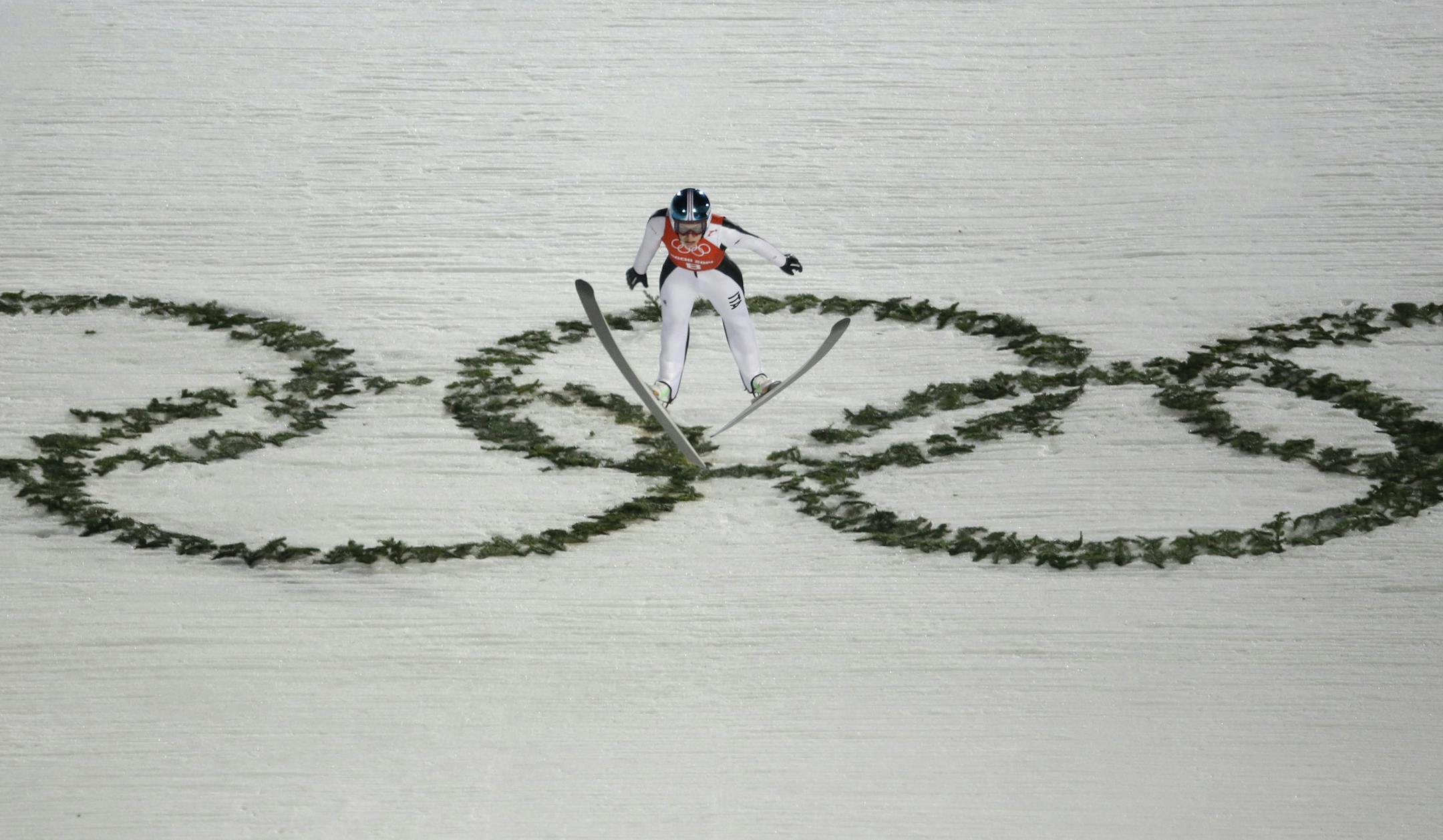
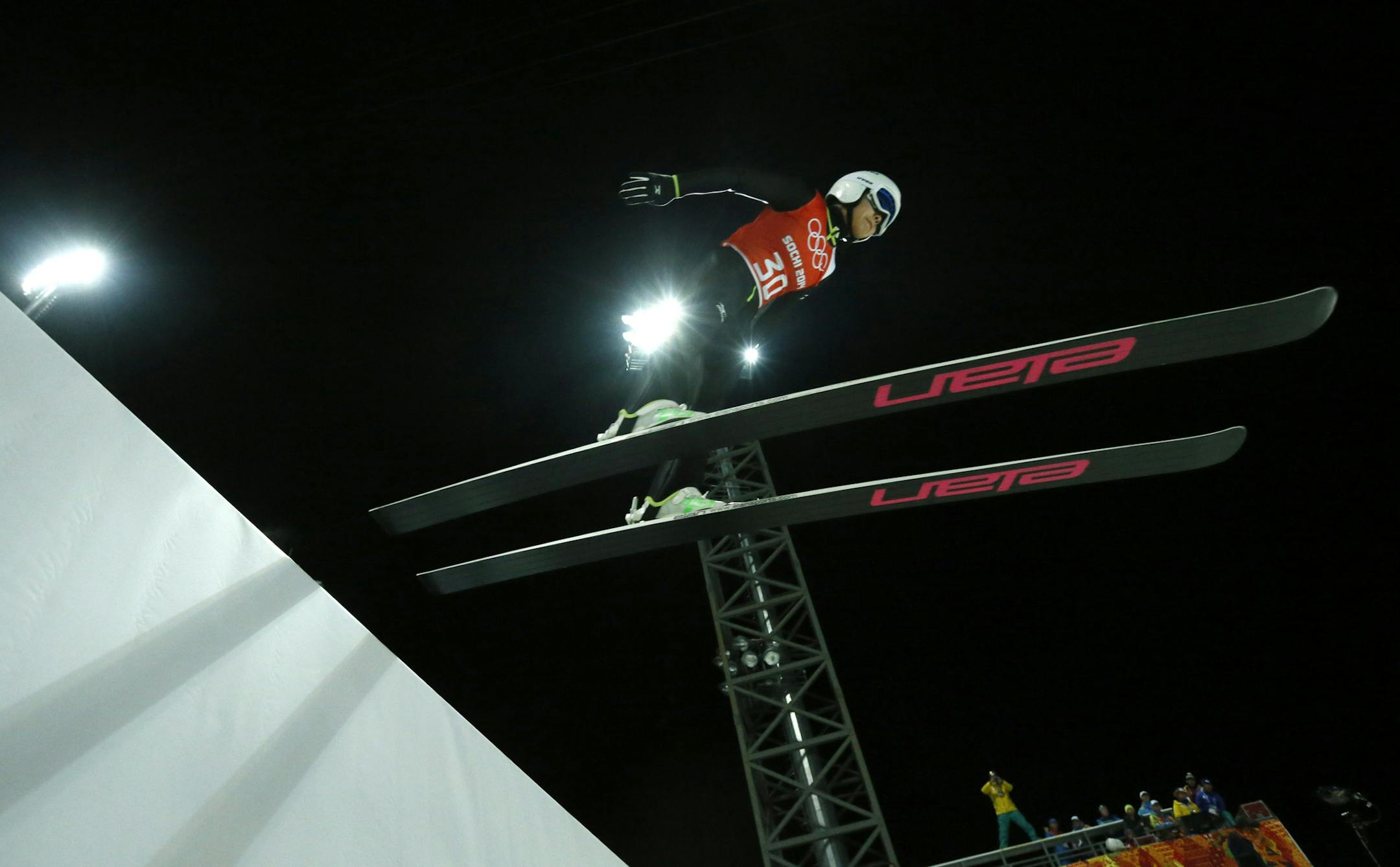
Italy's Evelyn Insam soared past the Olympic rings during a women's normal hill ski jumping training at the 2014 Winter Olympics on Monday.
Italy's Evelyn Insam soared past the Olympic rings during a women's normal hill ski jumping training at the 2014 Winter Olympics on Monday. (Associated Press/The Minnesota Star Tribune)
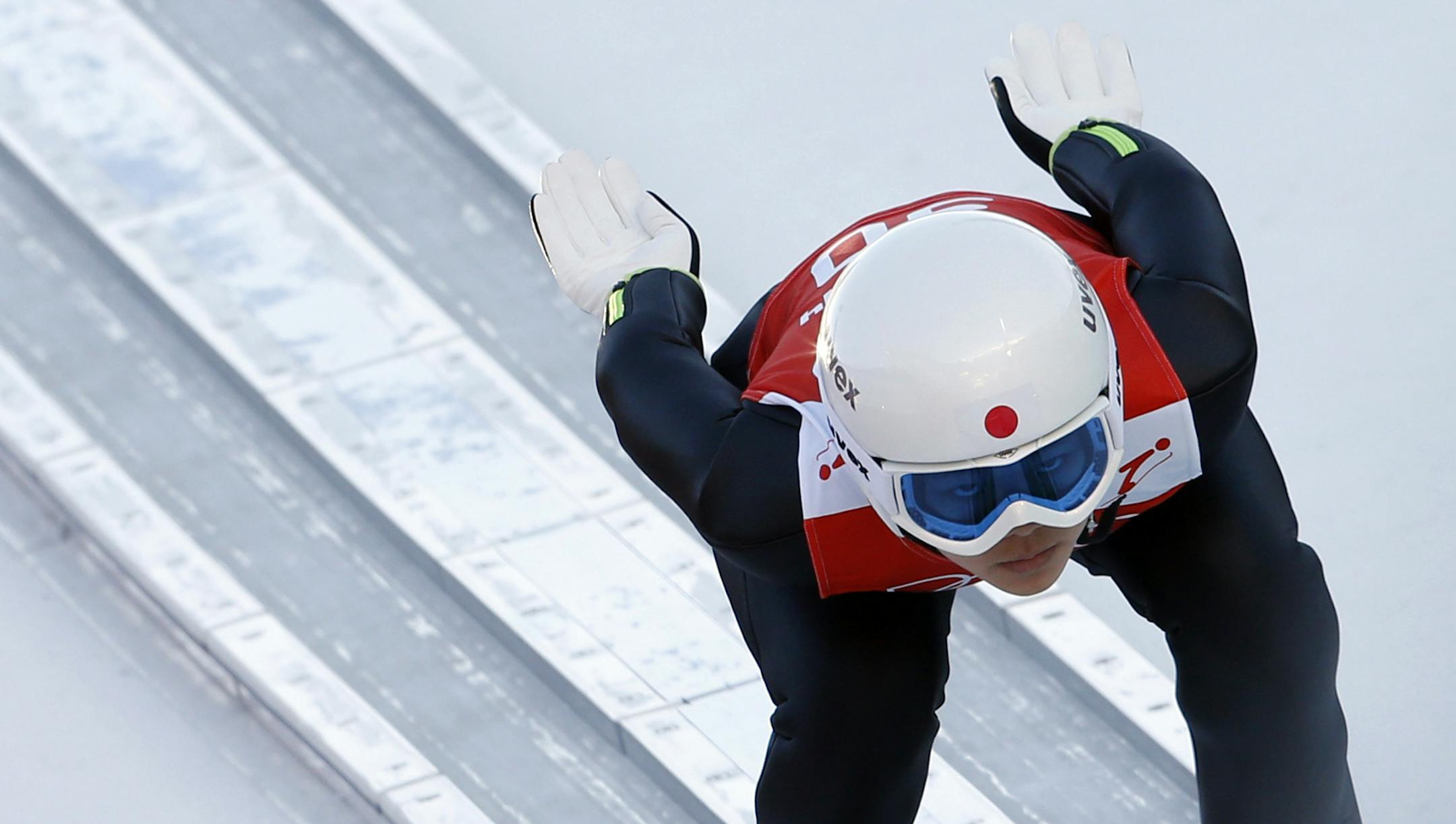
Japan's Sara Takanashi makes an attempt during a women's normal hill ski jumping training at the 2014 Winter Olympics, Monday, Feb. 10, 2014, in Krasnaya Polyana, Russia. (AP Photo/Dmitry Lovetsky)
Japan’s Sara Takanashi makes an attempt during a women’s normal hill ski jumping training at the 2014 Winter Olympics, Monday, Feb. 10, 2014, in Krasnaya Polyana, Russia. (The Minnesota Star Tribune)
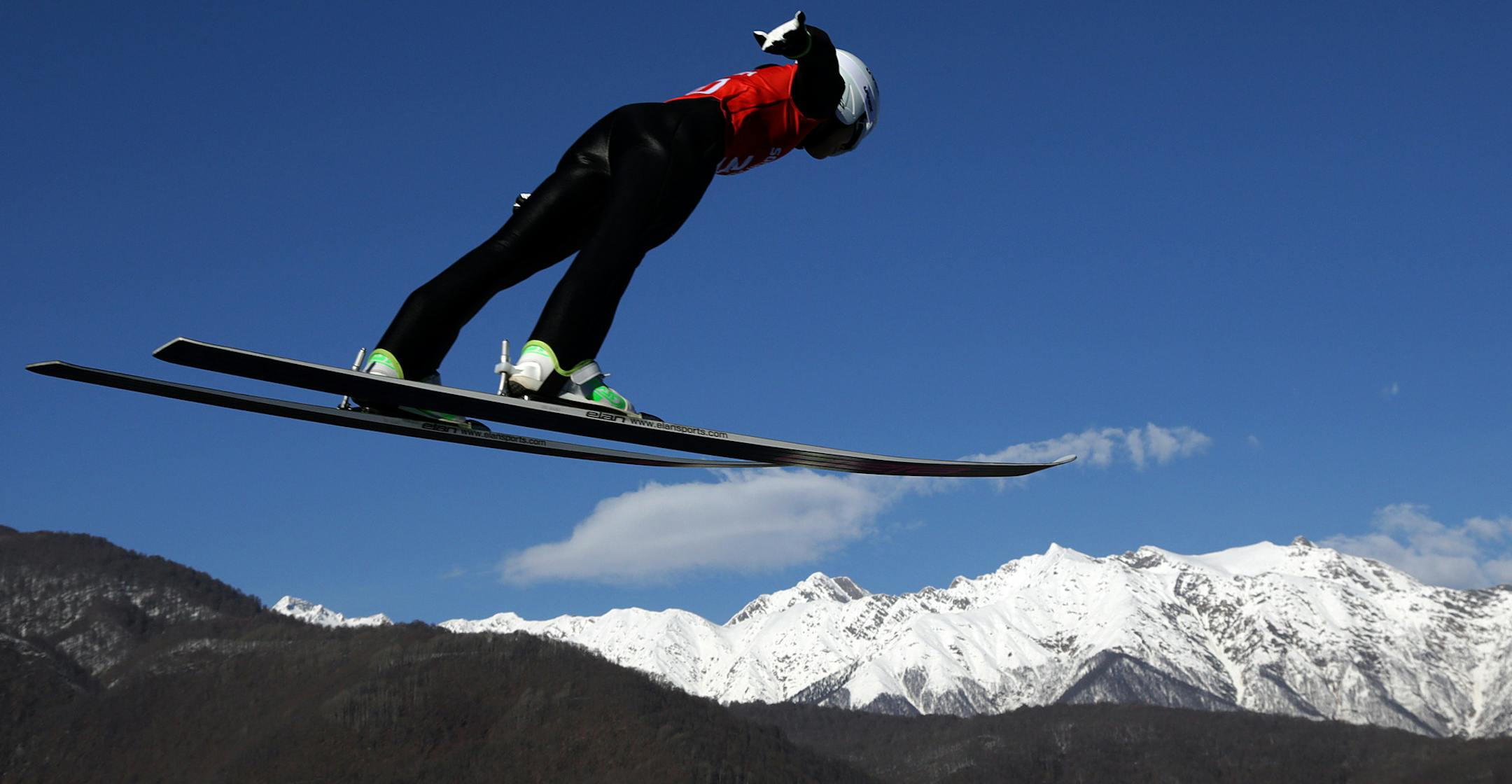
Japan's Sara Takanashi speeds down the track during a women's ski jumping training session at the 2014 Winter Olympics, Saturday, Feb. 8, 2014, in Krasnaya Polyana, Russia. (AP Photo/Matthias Schrader)
Japan's Sara Takanashi speeds down the track during a women's ski jumping training session at the 2014 Winter Olympics, Saturday, Feb. 8, 2014, in Krasnaya Polyana, Russia. (AP Photo/Matthias Schrader) (The Minnesota Star Tribune)
Japan's Sara Takanashi soars through the air during a women's ski jumping training session at the 2014 Winter Olympics, Saturday, Feb. 8, 2014, in Krasnaya Polyana, Russia. (AP Photo/Matthias Schrader)
Japan’s Sara Takanashi, just 17 years old, is one of the biggest stars on the women’s ski-jumping circuit. She finished first in two of three training rounds on Monday. (The Minnesota Star Tribune)
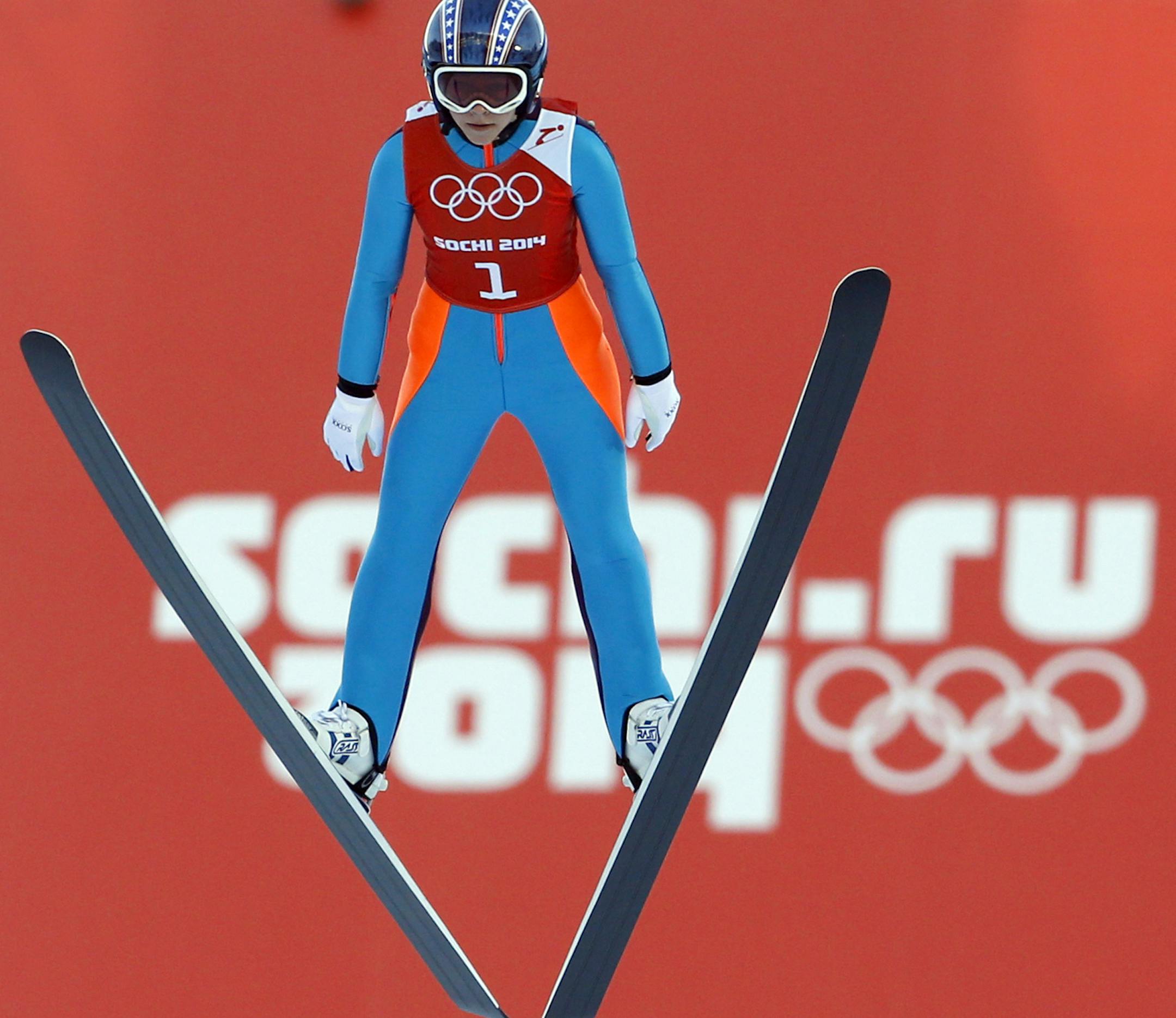
Sarah Hendrickson of the United States soars through the air during a women's ski jumping training session at the 2014 Winter Olympics, Saturday, Feb. 8, 2014, in Krasnaya Polyana, Russia. (AP Photo/Matthias Schrader)
Sarah Hendrickson of the United States won gold at the 2013 world championships but is still recovering from a serious knee injury. (The Minnesota Star Tribune)
about the writer

about the writer

Rachel Blount

Reporter/Columnist

Rachel Blount is a sports reporter for the Minnesota Star Tribune who covers a variety of topics, including the Olympics, Wild, college sports and horse racing. She has written extensively about Minnesota's Olympic athletes and has covered pro and college hockey since joining the staff in 1990.

See Moreicon

More from Sports

See More
card image
Jacquelyn Martin/The Associated Press

Lindsey Vonn, skiing with a torn ACL in her left knee, was airlifted off the Cortina downhill course after clipping a gate and crashing early in the race Sunday at the 2026 Winter Olympics.

card image
card image