

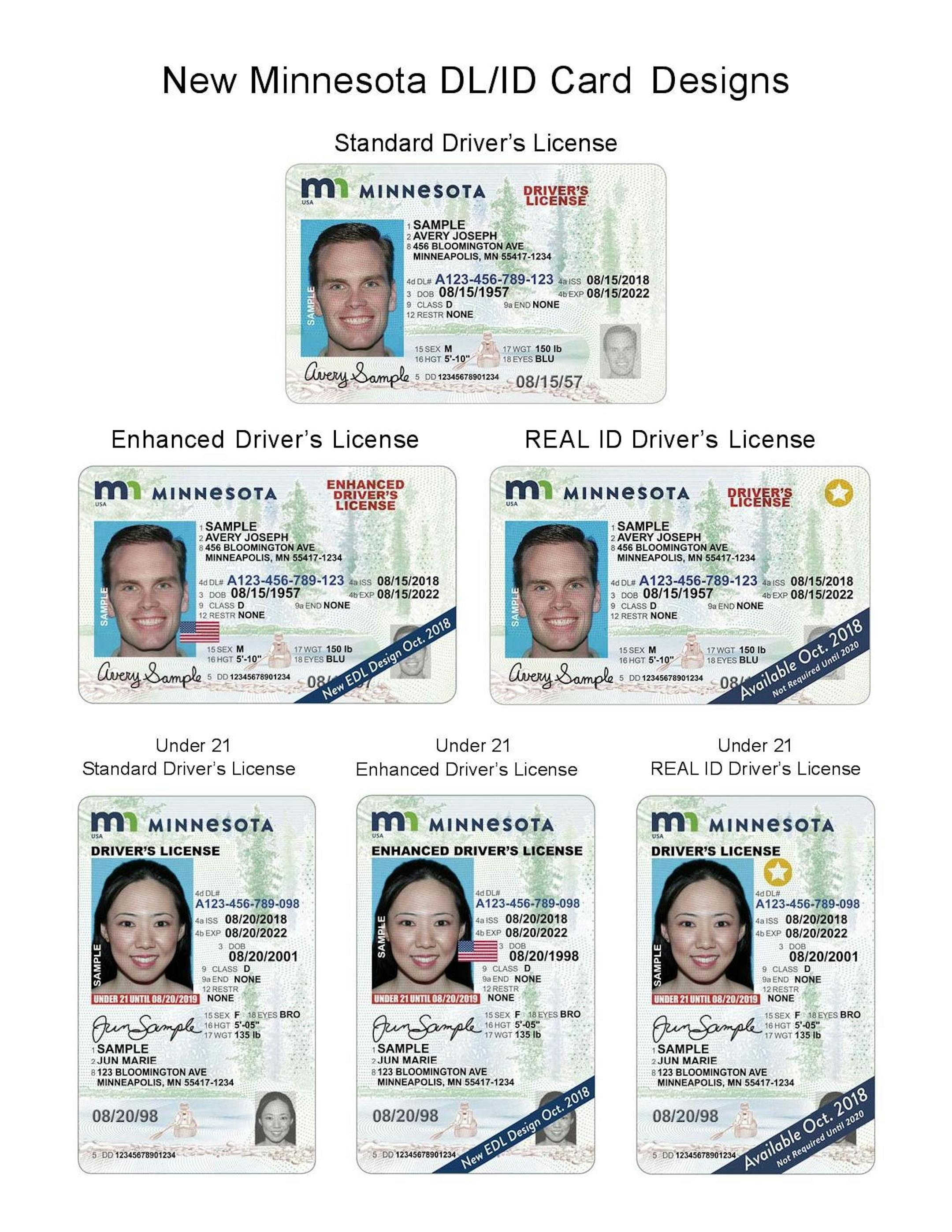
The state of Minnesota is now in full compliance with the federal Real ID requirements, ending a yearslong saga that had left residents worried about easy access to airplanes and federal buildings.
The U.S. Department of Homeland Security made the announcement on Tuesday. It comes after several years of political wrangling over the new driver's licenses, which aim to tighten security standards. Minnesota is one of the last states to bring itself into compliance with the federal requirement.
Until 2020, residents can continue to use their standard driver's license or other state-issued ID cards for domestic air travel.
By Oct. 1, 2020, Minnesotans will need to get a Real ID license or ID card for flights and for access to federal facilities. Passports will also be accepted as identification at airport security both before and after the switch to Real ID.
The Real ID will look similar to the state's revamped driver's licenses but will include the outline of a star in a yellow circle at the top right.
"I applaud Minnesota leadership in enhancing the security of its driver's licenses and identification cards," read a statement from an assistant secretary of Homeland Security.
In 2005, Congress passed the Real ID Act to set minimum security standards for state-issued driver's licenses and ID cards — one of the recommendations of the 9/11 Commission.
In 2009, the Legislature voted to defy the standards after critics raised concerns about civil liberties. But within several years, the federal government began to crack down on noncompliant states, raising the specter that Minnesotans without the proper, federally authorized IDs would not be able to fly domestically or enter certain federal facilities.


