

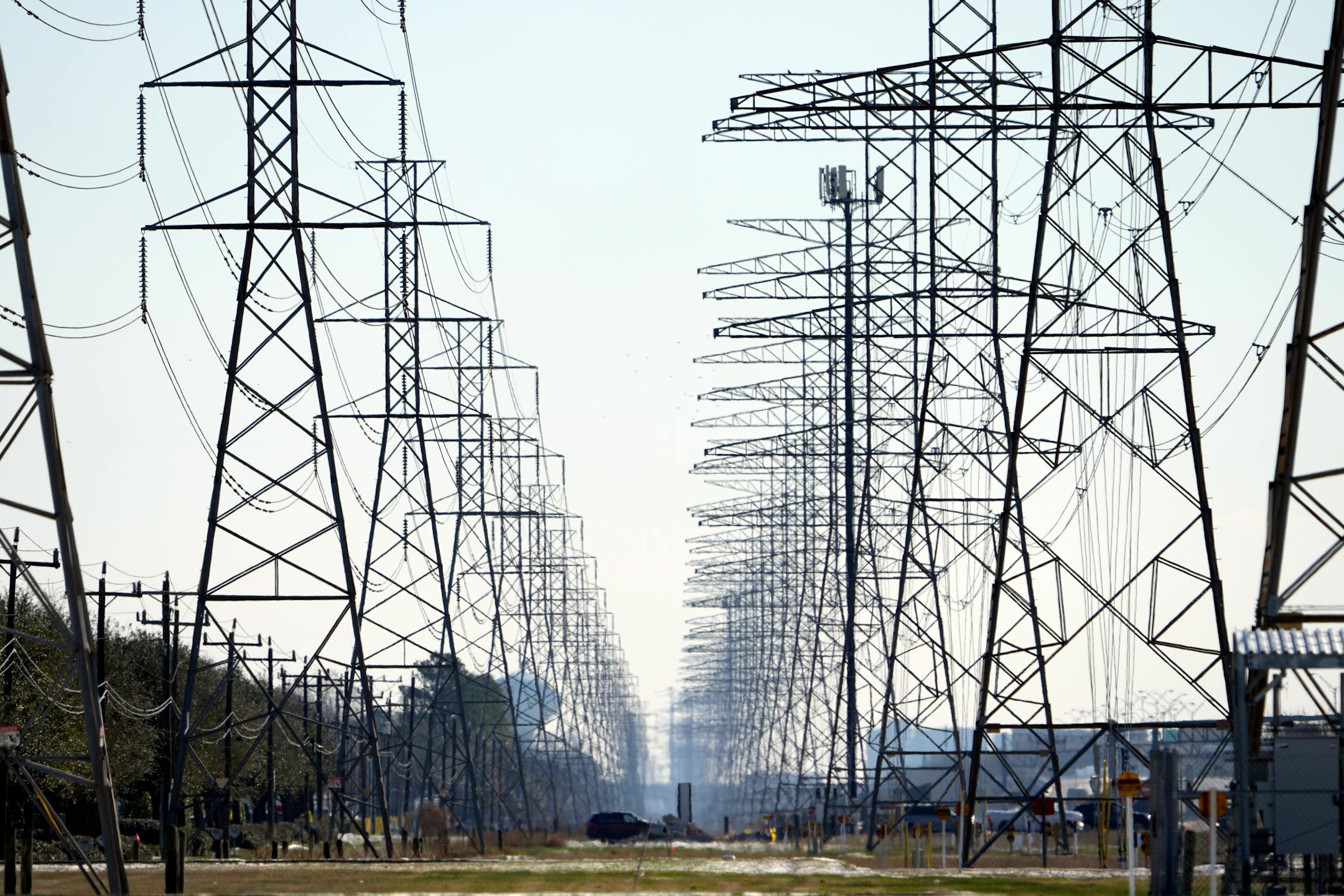
There wasn't much President Joe Biden could have done about this month's Texas energy disaster. Ditto the slow-moving vaccine rollout. The reason is the same: federalism, a system dating back to the 1780s and only seriously overhauled once.
Although federalism still has some benefits, its obsolescence is increasingly obvious when the U.S. faces crises that, like climate change and COVID-19, don't respect state boundaries. Energy and health care are only two of the crucial infrastructure systems that remain state-regulated or state-run. And many of those systems are in need of updating everywhere — not piecemeal, as federalism tends to support.
Federalism was, in important ways, an American invention — the brainchild of James Madison. It was a product of political necessity for 13 states that had been separately administered as British colonies and that had already tried and failed to function as a loose confederation between 1776 and 1787.
Unifying into a single nation would have been practical for the early United States. At the Philadelphia constitutional convention, big-state representatives, including Madison, favored a heavily national model of government to replace the failing decentralized system created by the Articles of Confederation.
But local elites in the small states did not want to give up power. They staged a walkout, returning only once they were assured of permanent protections for their states, including equal representation in the Senate.
The core idea of federalism was that states would retain sovereignty over their citizens, while the federal government would in parallel exercise its own sovereignty over the same people. The founders thus "split the atom of sovereignty," as Justice Anthony Kennedy once grandly put it: Instead of a single sovereign government, the U.S. would have a federal semi-sovereign government operating alongside the semi-sovereign states.
The devil was in the details. Which government controlled which powers became a challenge. The Civil War was fought in part over the question of whether states or the federal government would have control over the existence of slavery.
Recognizably modern national regulatory legislation began to emerge gradually in the Progressive Era. In 1887, a century after the Philadelphia convention, the Interstate Commerce Commission was created by Congress to regulate railroads, the most important interstate infrastructure of the day.


