
Federal judge rules in favor of Boundary Waters towboat operators

Motorized assists live on, despite a charge that the crafts spoil the solitude of the Minnesota wilderness

The Minnesota Star Tribune
October 1, 2025 at 8:28PM
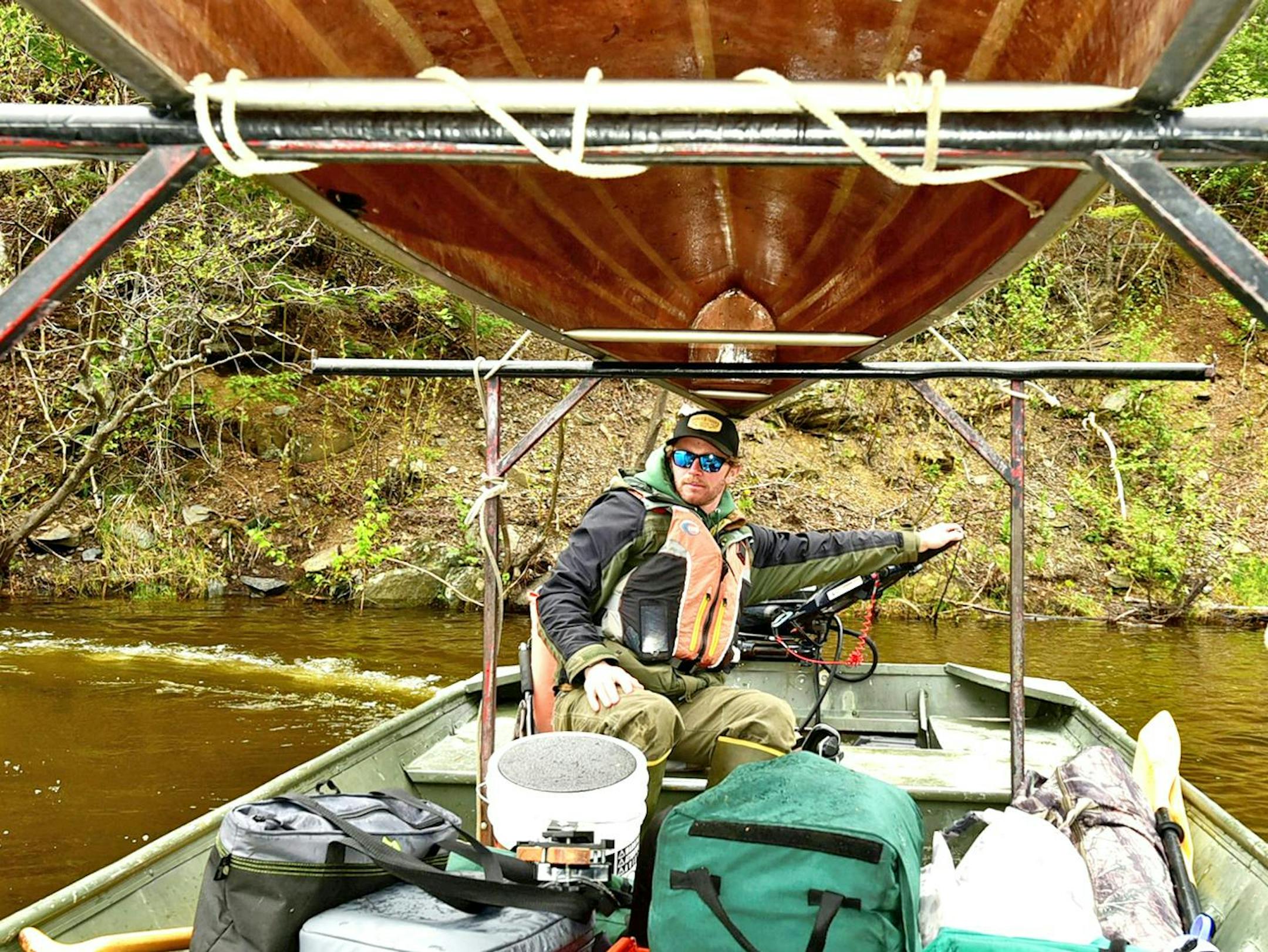
Ely area outfitter Willy Vosburgh operates a towboat service for canoeists headed into the Boundary Waters. A judge ruled that towboat operators can still work in the wilderness area. (Tony Kennedy)

A federal judge has once again upheld the use of small motor boats to tow canoeists into parts of the Boundary Waters Canoe Area Wilderness.

The towboat ruling this week by U.S. District Judge Nancy Brasel handed defeat to Wilderness Watch, an environmental group that believes the convenience degrades the primitive recreation experience intended by Congress starting in 1964.

The judge acknowledged in her decision that the U.S. Forest Service has had its own concerns about towboat overuse in parts of the Boundary Waters. But she decided that the agency’s management of 18 private outfitters authorized to shuttle canoe groups to and from the back country has been adequately restricted by a quota system.

“We’re deeply disappointed in the judge’s ruling,’’ said Kevin Proescholdt, conservation director for Wilderness Watch. “She seems to have accepted at face value nearly all of the Forest Service’s claims and justifications.’’

According to Judge Brasel’s decision, it is undisputed that the numbers of towboats, operators, and lakes permitted for motorized use have decreased over time. In addition, the number of paddle groups allowed to enter on motorized lakes has fallen over the years.

Wilderness Watch alleged in its lawsuit that the Forest Service has allowed BWCA towboat use to exceed quota limits set by a 1993 Boundary Waters wilderness plan. The judge said changes to the government’s accounting of the trips has caused confusion, but that it is “eminently reasonable” to believe the number of trips has not exceeded 1992 levels.

The judge also neutralized the environmental group’s argument that motorized towboats in the Boundary Waters violate the general prohibition of commercial enterprise as stated under the 1964 Wilderness Act. The judge noted that a section of the act allows commercial services “to the extent necessary for activities which are proper for realizing the recreational or other wilderness purposes of the area.’’

Assistant U.S. Attorney David Fuller, who handled the case for the Forest Service, said he was not surprised by the judge’s ruling. In 2023, Brasel denied a request by Wilderness Watch to immediately halt motorized towboat usage in the Boundary Waters.

In her latest decision, she also said she was not persuaded by Wilderness Watch’s argument that under the Boundary Waters Act of 1978, all commercial towboat operations were to be phased out in 1984. She noted that Wilderness Watch failed to show in its lawsuit that the Forest Service failed to preserve the wilderness character of the Boundary Waters.

Said Fuller: “We do consider it a clean victory vindicating the agency’s management of this program.’’

Proescholdt said Wilderness Watch is analyzing the judge’s decision and has not decided on a possible appeal.

Outfitters have decried the Wilderness Watch lawsuit as elitist. They say towboats that shuttle groups and their canoes over long distances help disperse BWCA visitors across the million-acre landscape of lakes, woods and rivers.

Without towboats, they say, fewer people will visit the BWCA and congestion will worsen on routes and campsites on the perimeter. The Boundary Waters contains more than 1,000 portage-linked lakes.

Willy Vosburgh, an Ely native who runs an outfitting service on Moose Lake, said he’s been delaying the purchase of new outboard motors for his towboat service because of the litigation. He saluted this week’s court ruling as “a welcome ray of sunshine.’’

“It’s what all of us were hoping for,’’ said Vosburgh, who runs Vosburgh’s Custom Cabin Rentals.

A public affairs spokeswoman for the Forest Service said all media responses to the lawsuit are on hold due to the government shutdown. Agency officials have been working on a new wilderness plan for the Boundary Waters that could include revisions to the towboat policy.

For now, 20 businesses operate 63 towboats on 14 lakes in the Boundary Waters. Popular routes include Moose Lake, Seagull Lake and Saganaga Lake. According to the most recent towboat trip data cited in the lawsuit, outfitters in 2022 provided 4,127 round trips to paddling groups throughout the season. The BWCA gets about 150,000 visitors per year.

about the writer

about the writer

Tony Kennedy

Reporter

Tony Kennedy is an outdoors writer covering Minnesota news about fishing, hunting, wildlife, conservation, BWCA, natural resource management, public land, forests and water.

See Moreicon

More from Outdoors

See More
Rising above the treeline (Top of this photo), on the shore of Birch Lake, the Twin Metals Copper Nickel Mine Plant site and Tailings Management site is part of the proposed plan. ] In theory, the copper-nickel mine Twin Metals wants to build in the headwaters of the Boundary Waters Canoe Area Wilderness is a zero-discharge mine — a closed loop that will endlessly recycle millions of gallons of water, including rainwater and the polluted process water it uses to extract ore and
Brian Peterson/The Minnesota Star Tribune

The copper-nickel mine is controversial for its proximity to the Boundary Waters Canoe Area Wilderness, and the Biden Administration had canceled its leases.

card image
card image