

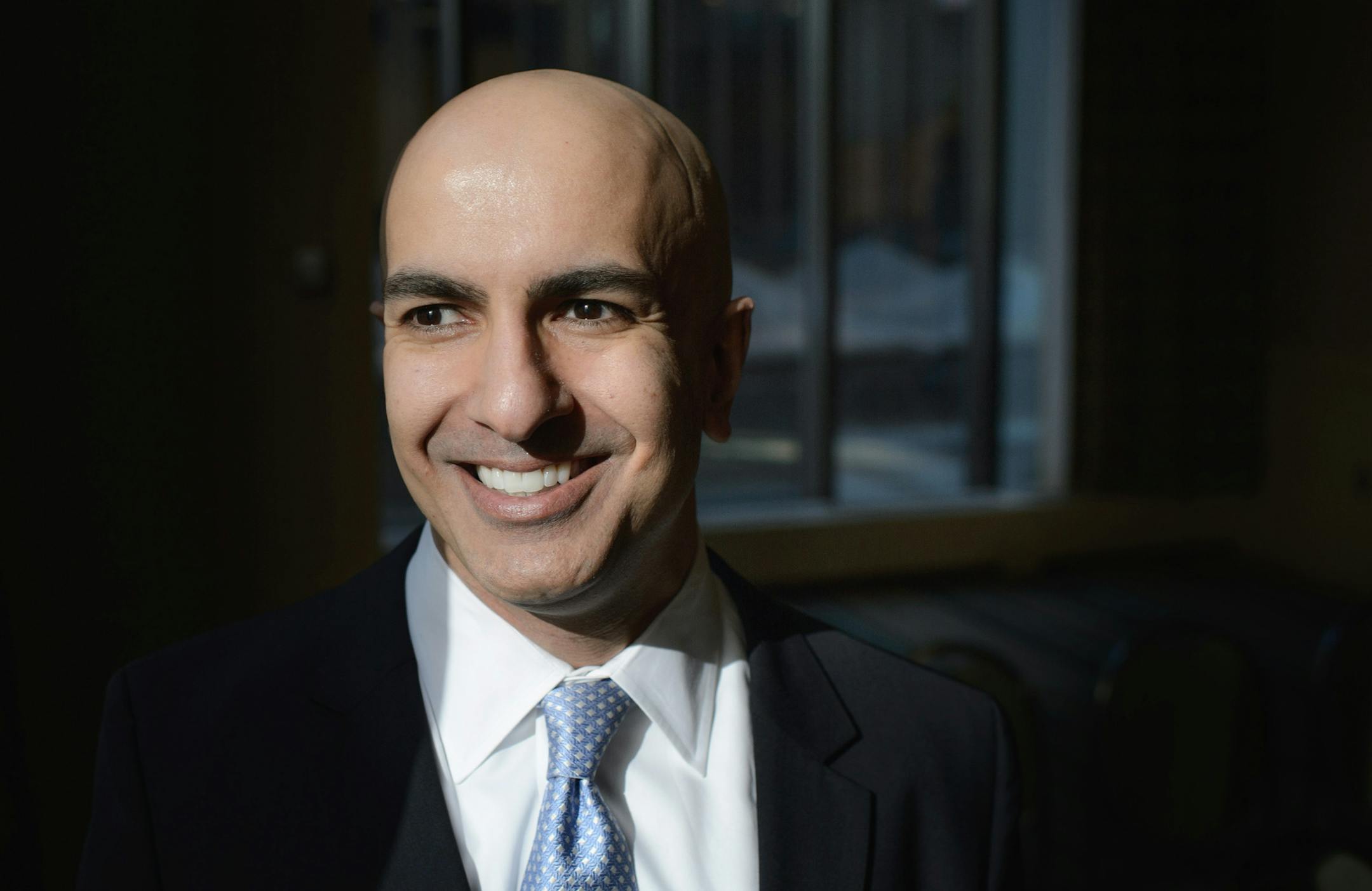
"My approach hasn't changed," Minneapolis Federal Reserve Bank President Neel Kashkari said last week. "The data has changed."
Kashkari spent much of last year as a sometimes lonely voice at the Fed opposing the idea that short-term interest rates should go up. While he's not exactly on board now with boosting them, a lot has changed since his last no vote. That was only last December.
Since then Congress has passed a massive fiscal stimulus that should bump short-term growth, in the form of a big tax cut to be largely paid for with borrowed money. There's been new inflation data, too, which Kashkari pays particularly close attention to. Inflation appears to finally be inching up to the Federal Reserve's target of 2 percent per year, though it remains puzzling why wage growth has been so anemic with an unemployment rate as low as it's been in nearly two decades.
If there's a clear takeaway from a conversation with Kashkari, it's that there isn't always a tidy story told by the data, even to Fed officials.
Kashkari remains a high-profile spokesman for the Fed on all sorts of things, even though this year he doesn't have a formal vote on the policymaking council called the Federal Open Market Committee.
It's this committee that decides whether to throw the main policy lever the Fed has, by setting a new target for short-term interest rates. Move too fast in moving them up, and economic growth could sputter. Move too slow and inflation could overshoot the 2 percent target and maybe even keep rising.
The privilege of voting gets rotated among presidents of the regional Federal Reserve Banks around the country, one of the peculiarities of a central bank created by Americans a little suspicious of central banks. Yet the style of the Fed's decisionmaking is to have all its presidents and Fed governors sit at the same table to work through what to do before a formal vote is taken.
Blogging his thinking
Kashkari drew a lot of attention last year by three times voting against the consensus to raise short-term interest rates, although Chicago Fed President Charles Evans joined him the last time with a thumb's down.



