

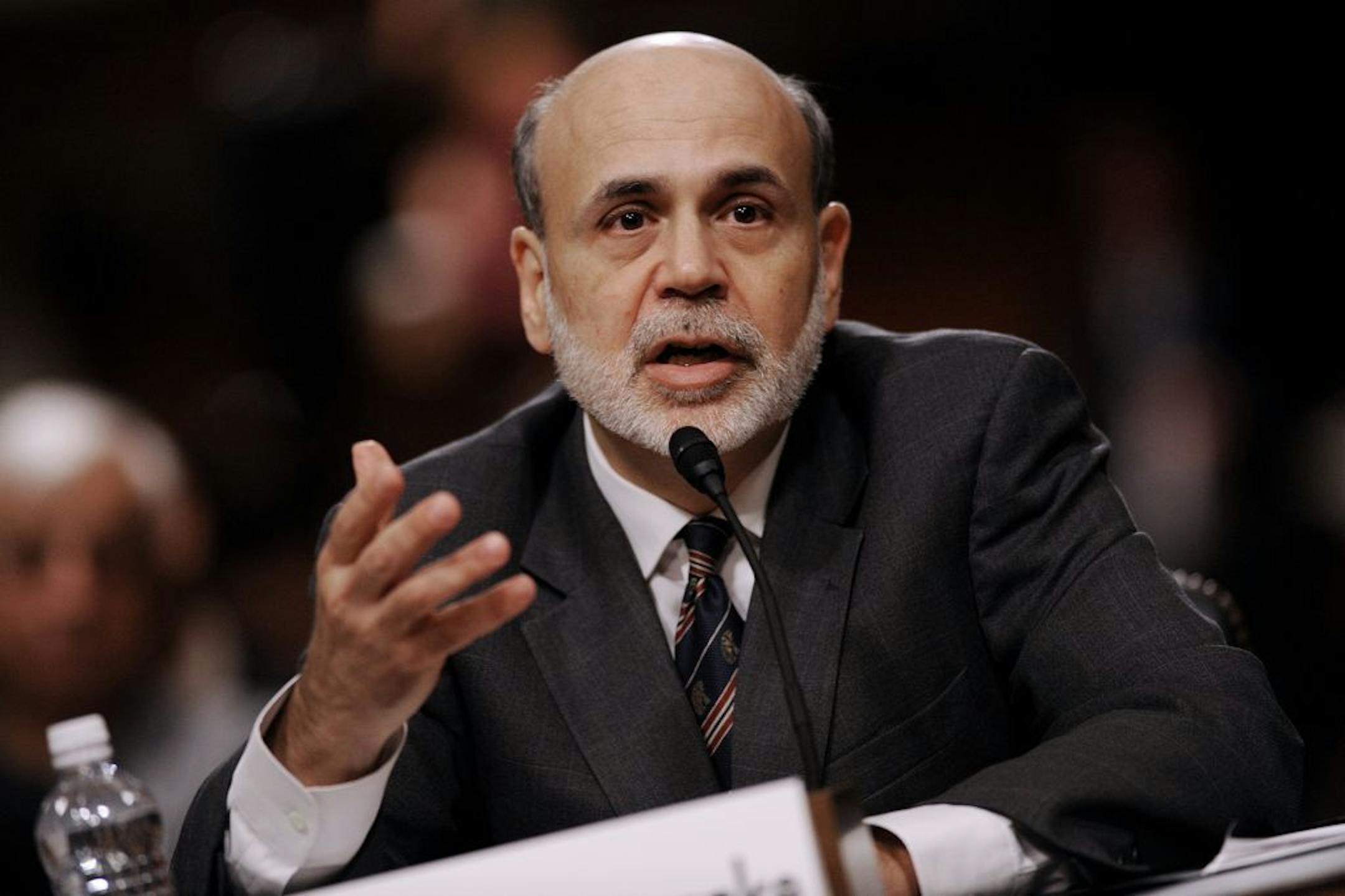
WASHINGTON -- Federal Reserve officials are nearing agreement on adopting an inflation goal as Chairman Ben Bernanke extends his push for improving transparency and communications with the public.
"We are very close to having inflation targeting in the United States," James Bullard, president of the Federal Reserve Bank of St. Louis, said in an interview last week. "We are getting closer to being able to make a committee-wide statement about these longer term policy goal issues."
An explicit numeric inflation objective would mark another step in Bernanke's unprecedented campaign to open the Fed's policy process to public view to boost accountability and effectiveness. The Fed chairman also has introduced regular press conferences and will publish the central bank's own forecasts for the benchmark lending rate this month.
At the same time, Bernanke is following a road already taken by central banks from Sweden to New Zealand.
"We're in a situation where everyone is starting to appreciate the benefits of having the Fed be able to provide clear signals," said Mark Gertler, a New York University economist and research co-author with Bernanke.
Deciding on the rate of inflation the Fed should shoot for is within reach, said Columbia University economist Frederic Mishkin, who helped shape the Fed's approach to the question as a governor from 2006 to 2008.
More difficult will be agreeing on how to define full employment, which is also part of the Fed's marching orders from Congress.
Proponents of adopting an inflation target, such as Federal Reserve Bank of Philadelphia President Charles Plosser, point out that monetary policy directly influences prices. On the other hand, the rate of maximum employment the economy can sustain before wages and prices rise is dependent on other variables, such as the infusion of technology into the economy, which boosts productivity.



