

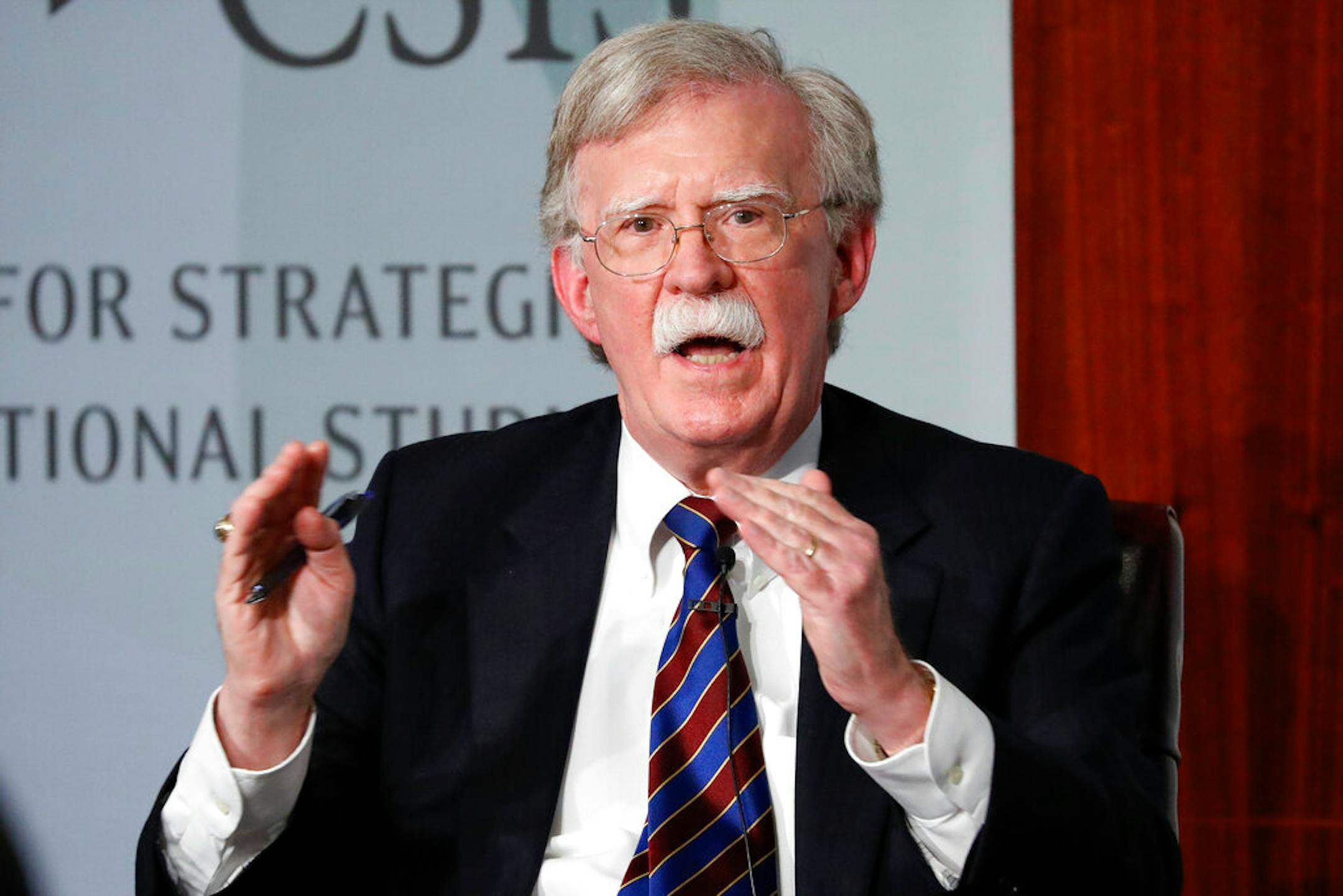
FBI agents seized several documents they described as “secret,” “confidential” or “classified” during the search of former national security adviser John Bolton’s downtown Washington office last month, according to newly unsealed court records.
The items include documents pertaining to weapons of mass destruction, U.S. interests at the United Nations, and strategic government communications, investigators said in a catalogued list of what was collected during the search.
The inventory, unsealed by a federal magistrate judge in Maryland, was filed after agents descended upon Bolton’s Bethesda, Maryland, home and office Aug. 22 as part of an investigation into whether he illegally kept classified documents that came into his possession through his role in President Donald Trump’s first term.
Bolton, a veteran diplomat and security expert who has more recently emerged as one of the president’s fiercest critics, has not spoken publicly about the probe. His lawyer, Abbe Lowell, did not immediately respond to requests for comment Wednesday.
Lowell previously described a similar inventory of items seized from Bolton’s house as “ordinary records of a 40-year career serving this country” when that list was unsealed this month.
That earlier list — which detailed seized items including folders labeled “Trump I-IV” and papers titled “statements and reflections to allied strikes” — did not indicate whether any of those materials bore classification stamps or other markings that led agents to believe they were improperly in Bolton’s possession.
In contrast, the catalogue of materials seized at Bolton’s office in Washington includes entries like “U.S. Mission to the United Nations — Confidential Documents” and “Weapons of Mass Destruction Classified Documents.” The search warrant records from that search do not say what exactly prompted agents to make the determination that they were classified or confidential.
“Law enforcement is actively reviewing evidence and interviewing witnesses,” prosecutors said in filings last month surrounding the warrant material’s release, which came in response to a request in court by a coalition of media organizations including The Washington Post.


