The rebound in manufacturing activity may be waning, but Fastenal Co. hasn't lost its bounce.
Several weeks into this summer's slowdown, the Winona-based distributor of industrial and construction supplies reported better-than-expected results for its second quarter. Since then, the company has posted healthy monthly sales gains, and analysts are sticking to their previously reported estimates of higher sales and earnings for the last half of this year.
Fastenal does not provide specific annual sales or earnings guidance, but analysts are projecting sales of about $2.7 billion for 2011. That's about 20 percent higher than 2010, a recovery year for Fastenal and others that serve the industrial sector. It's also higher than 2008, when the company's sales peaked at about $2.3 billion.
"It has shown the ability to generate positive results in a difficult economy," said Ben Marks, whose Minnetonka-based Marks Group Wealth Management is a longtime investor.
In a recent report, David Manthey, an analyst at Robert W. Baird & Co., said most industrial supply distributors he follows have told him they see few immediate trouble signs for their businesses. Even so, more than half of the 13 distributors Manthey surveyed, including Fastenal, said they have recently trimmed costs because they're nervous about economic conditions in 2012.
Fastenal's chief financial officer, Dan Florness, said in an interview that the company hasn't taken any drastic cost-cutting steps but has slowed down new store openings and hiring. "We don't want to get ahead of ourselves," he said. Still, Fastenal has added more than 80 stores this year, bringing its total at the end of August to 2,567. Its workforce through the end of August totaled 14,765, up about 18 percent from the same period last year.
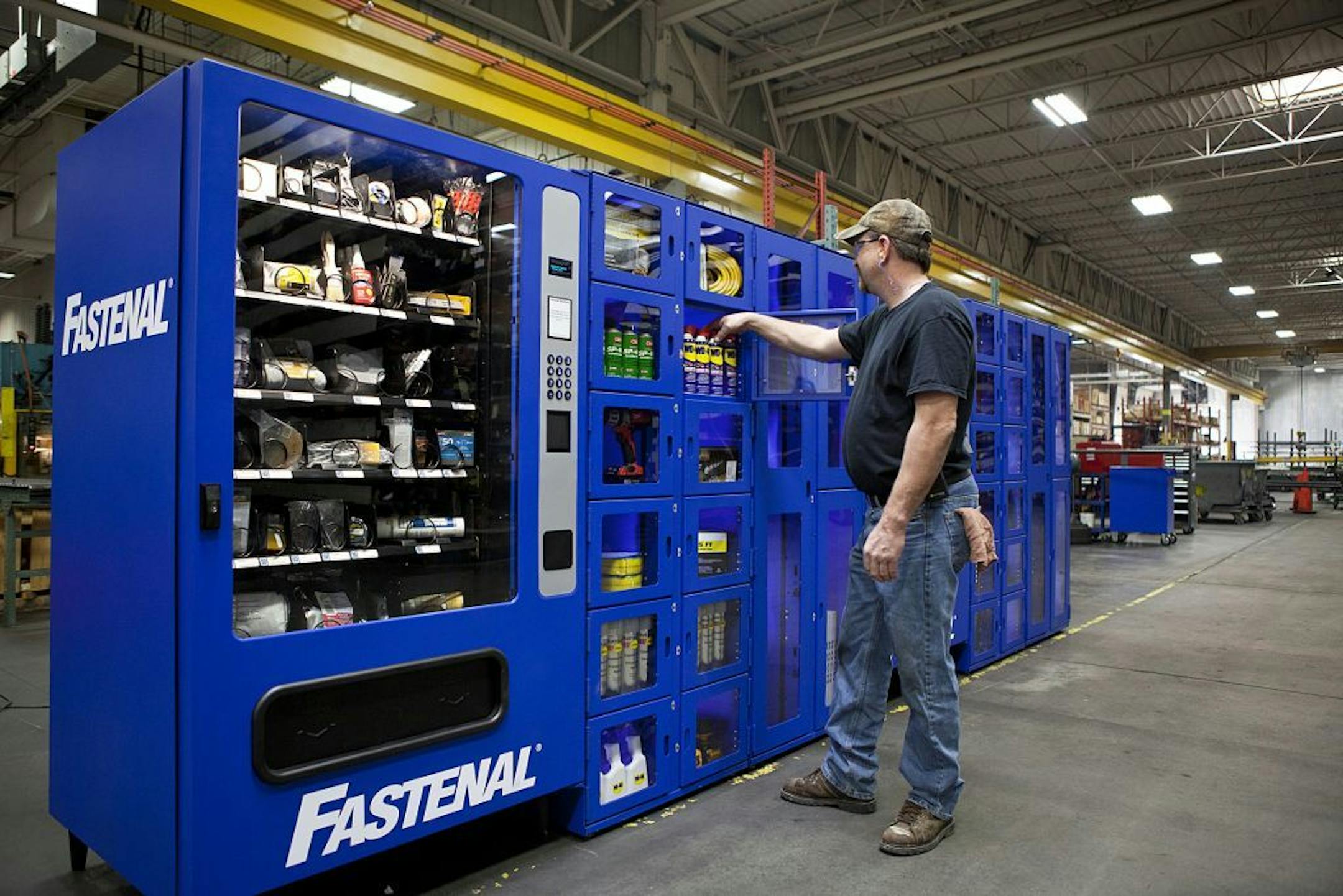
In addition to new stores, Fastenal continues to expand its network of vending machines in customers' warehouses and factories that dispense supplies with the swipe of an electronic card. Fastenal has more than 4,000 installed machines, up from about 1,400 a year ago. Daily sales growth for the machine-related business was up about 50 percent in the second quarter.
The vending machines replace traditional supply shelves and bins, a change that holds customers' employees accountable for the supplies they use.