
Fastenal discovers an old way of business

Using vending machines and swipe cards, the company offers a new way to dispense supplies.

April 20, 2011 at 8:10PM
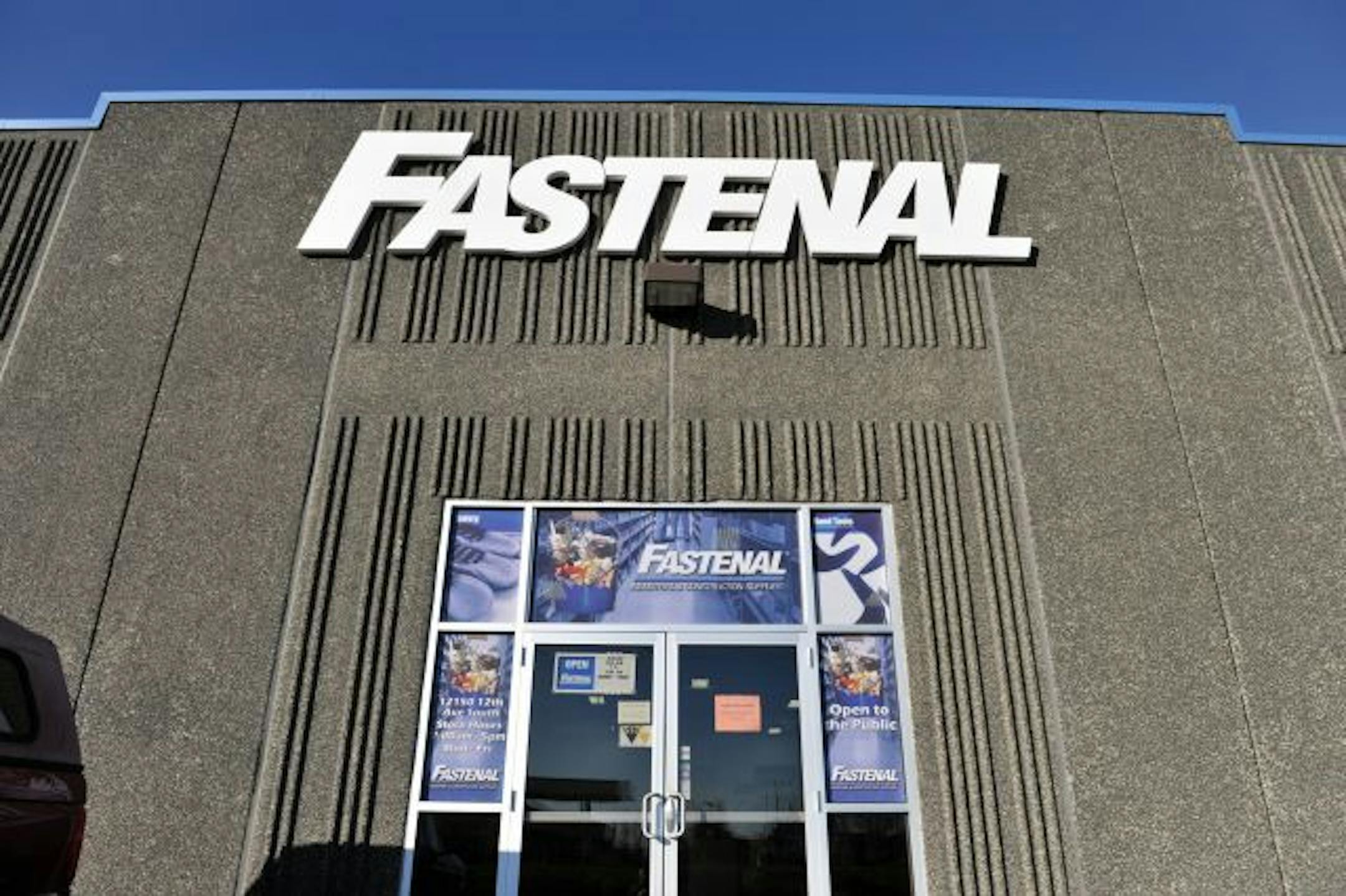
Burnsville Fastenal.
Burnsville Fastenal. (Dml - Star Tribune Star Tribune/The Minnesota Star Tribune)

WINONA, MINN.

Will Oberton, who runs a Winona-based outfit that peddles industrial supplies, has seen the future.

Vending machines. Don't laugh.

"Our guys pushed me several years ago to [buy] what looked like a candy machine," recounted Oberton.

On Tuesday, at Fastenal's annual meeting before a few hundred shareholders seated on folding chairs in one of the company's truck bays here, Oberton will report on the surprising acceleration of the "vending" strategy.

Fastenal, which has been testing the strategy in hundreds of locations, plans to install thousands of "Fast 5000" vending machines in customer warehouses and factories to dispense gloves, safety glasses, dust masks, drill bits and other supplies with a swipe of an electronic card.

Companies like the idea. It replaces traditional supply bins and storerooms, and holds employees accountable for supplies they use.

"Now, we're going full-out," Oberton said.

This back-to-the-future innovation should aid Fastenal's growth.

Fastenal, since a down year in 2009, has recovered to hit new highs in quarterly sales, earnings and stock price in the first quarter of this year. Fastenal saw net earnings rise 42 percent to $79.5 million in the first quarter on sales that rose 23 percent to $640.6 million.

Analysts expect a banner financial year in 2011 of about $2.25 per share earnings on a 17 percent jump in revenue to about $2.65 billion. The company's stock price has more than doubled to about $65 per share since the recessionary lows of March 2009.

Fastenal added 1,300 jobs in North America last year, up about 10 percent. With 127 new stores, it now has a 2,522 retail-outlet network that sells everything from nuts and bolts to cutting tools and safety supplies. It will add up to 200 stores this year.

Fastenal has given stockholders a total return, including dividends, of 295 percent since Oberton was named CEO in December 2002 to succeed Fastenal founder Bob Kierlin. By comparison, the S&P 500 industrial stock index has returned about 95 percent and the S&P 500 index about 72 percent over the period.

"We have a heck of a business model," Oberton said the other day, gazing out the window of his modest office along the Mississippi River. "We always believe we can be better. We're only 2 percent of the U.S. market for industrial supplies [of about $150 billion annually]. And we have a growing network of 2,500 little businesses out there. And we support the heck out of them."

A throwback strategy

The vending strategy, known officially as "Fastenal Automated Supply Technology" or FAST, is a bit of a throwback to the idea that Kierlin had when he was working at his dad's Winona auto parts store in the 1950s. Occasionally, Kierlin would have to run a few blocks to the hardware store to pick up a few nuts and bolts, or other fasteners. He envisioned a vending machine for such items.

Kierlin, 71, who has been non-employee chairman of Fastenal since 2003, is an engineer out of the University of Minnesota who started Fastenal in 1967 after a stint in the Peace Corps. Kierlin began as a retailer and distributor of fasteners, and gradually expanded product offerings to more than 1 million bolts, studs, washers, tools, parts, abrasives, adhesives, pipes, valves, gaskets, fittings, safety glasses and other stock items.

The vending program is designed to cut the amount of consumable items in a plant or warehouse that Fastenal supplies. Oberton says it's good in the long run for Fastenal because it strengthens the long-term relationship with customers and attracts new ones.

The automated-supply technology relies on an electronic card issued to authorized personnel who swipe it across a code reader, and then choose the supplies they need.

Fastenal has installed the vending machines in its facilities, as well as in the far-flung plants and warehouses of dozens of customers, including Donaldson Co., Xcel Energy and Sulzer Pumps. Consumption of supplies has declined up to 50 percent in the first year because employees are accountable for the amount they use.

Oberton says he's proof. Every month his wife used to gather the pens, safety glasses and other stuff he'd inadvertently carried home from the office in his pockets so he could bring it back to work.

A shareholder's delight

Fastenal has been a shareholder's delight since Kierlin took the company public in 1987. On that day in August, 1,000 shares of Fastenal were worth $9,000. By the end of 2010, those 1,000 shares, after splits, were 48,000 shares worth about $2.9 million.

Kierlin was famous during his generation as CEO for claiming $100,000 in annual salary and no stock options. His founder's stock was worth hundreds of millions. He also is a philanthropist to education, environmental and other Winona-area causes.

Oberton, 52, is a 30-year employee who joined Fastenal after graduating from St. Cloud Technical College.

He wanted to join the family dairy operation outside of Little Falls. His mom persuaded him to try something else for a few years before returning to the farm.

Oberton, who still has a license to drive a big rig, worked his way up through the stores-and-operations end of the business.

The Corporate Library, which evaluates executive compensation, this year said Oberton is "widely considered one of the more underpaid CEOs in the S&P 500." He got no bonus and a reduced salary of $485,000 in 2009, a down year. Last year, he got no salary hike, but a $2.67 million performance-indexed bonus pushed his total compensation to $3.15 million. Oberton, who gets occasional stock options, is not entitled to a pension plan or golden parachute.

Oberton, a lean, affable fellow who jogs and skis in the bluff country just outside Winona, said full-time employees at Fastenal are eligible for performance bonuses. And the company matches up to 100 percent of employee contributions to 401(k) plans, depending upon profitability.

"Will is paid for EPS growth and shareholder wealth creation," said analyst Ryan Merkel of William Blair & Co. in Chicago. "I view his compensation as modest relative to the superior performance he has delivered. ... In the management and corporate governance categories Fastenal gets an 'A' from shareholders."

That should make for another happy shareholder meeting on Tuesday.

Neal St. Anthony • 612-673-7144 • nstanthony@startribune.com

about the writer

about the writer

Neal St. Anthony

Columnist, reporter

Neal St. Anthony has been a Star Tribune business columnist/reporter since 1984. 

See Moreicon

More from Business

See More
card image
Jeremy Olson/The Minnesota Star Tribune

Triage unit treats many children without ever taking them into the actual ER, freeing up time for the rest of the emergency medical staff.

card image
card image