

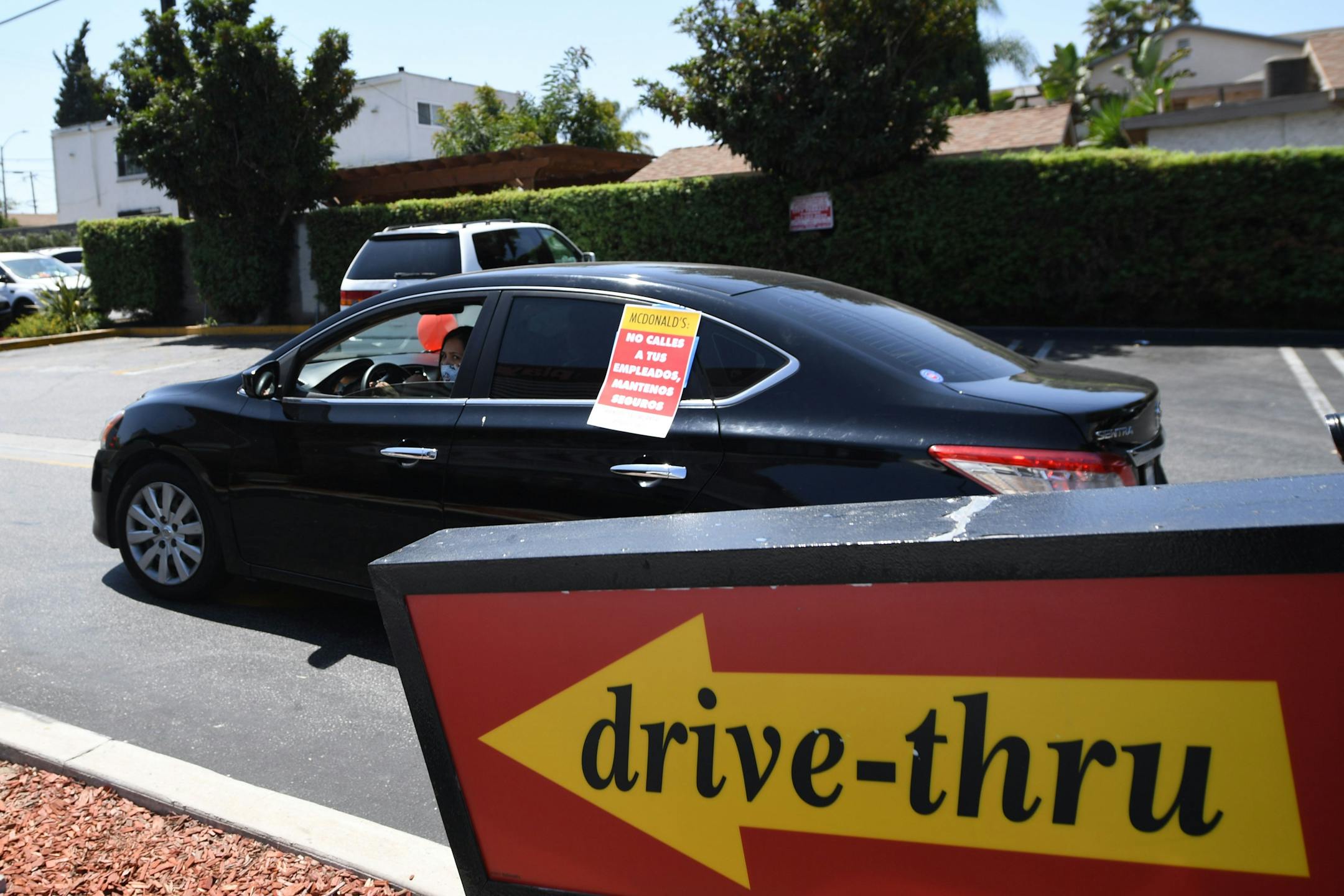
When you pass a McDonald's you might assume it's operated by the global mega-corporation. But in many cases, it's a franchise owned and run as a small business.
This model has been a pathway for entrepreneurs — many of whom are women, immigrants and minorities — to build wealth and become upwardly mobile. But it has also left workers in one of America's largest industries with little formal recourse for poor wages or unsafe work conditions.
Fast-food workers at stores scattered across California plan to walk off the job Nov. 9 and rally outside McDonald's locations in San Diego, Los Angeles, San Jose, Oakland and Sacramento in a push to expand legal liability beyond individual franchisees to their corporate franchisers and to protest workplace health and safety conditions.
The protests aim to pressure state lawmakers to support AB 257, a proposed law that would establish a statewide Fast Food Sector Council made up of workers, corporate representatives, franchisees and state officials that would meet every three years to negotiate industry standards on wages, work hours and other conditions for fast-food workers.
The bill would hold fast-food corporations responsible for ensuring their franchisees comply with a variety of employment and public health and safety orders, including those related to unfair business practices, employment discrimination, the California Retail Food Code, as well as new standards issued by the council. The bill would make franchisee violations of employment laws enforceable against franchiser and franchisee equally.
The planned action comes during a burst of protests and strikes this fall as workers push for better workplace conditions and wages. The coronavirus pandemic has given many blue-collar workers new frustration and visibility as they continue to operate in often grueling, lower-paying jobs.
The fractured nature of the franchise arrangement — in which an establishment owned as a small business pays royalties and is contractually bound to its corporate franchiser — means that although a corporation holds the reins regarding how the store operates, it can abdicate responsibility for wages and working conditions.
Franchising has also long hampered collective bargaining in the fast-food industry.


