

House and Senate conferees are reportedly close to agreement on a five-year farm bill to replace the one that expired Sept. 30, 2012.
According to much conventional wisdom, this is cause for celebration. The gridlock that forced the farm sector to get by with temporary bills for more than a year is "the poster child for the state of dysfunction in Congress and American politics," as Congress-watcher Norman Ornstein of the American Enterprise Institute put it.
Actually, Congress' willingness to debate ag policy at length is a sign of political health. The farm bill long has been an irrational, subsidy-laden monstrosity. It's about time somebody challenged the ag lobby's hammerlock on Capitol Hill.
Why do we even need a farm bill, with its billions in subsidized crop insurance and definitions of "milk marketing orders" and "base acreage"? Is there something about farming, as opposed to other businesses, that makes market economics uniquely inapplicable?
Supposedly the goal is food security: making sure agriculture pays well enough that rural America can always provide affordable commodities to the cities and suburbs where 82 percent of the population lives. Perhaps government intervention was necessary to achieve this during the Great Depression, when the New Deal first federalized farm policy.
But that's preposterous now. This obesity-plagued nation is ankle-deep in cheap food. In 2012, the average U.S. household devoted just 6.4 percent of its spending to food eaten at home, easily the lowest percentage in the developed world, according to the Agriculture Department (USDA). Yet the average person in the United States consumed 474 calories per day more in 2010 than in 1970.
Meanwhile, the USDA forecasts record farm net income of $131 billion in 2013, spread among many fewer farms than we had in the 1930s. U.S. farms export about a quarter of what they produce in a typical year, according to the American Farm Bureau Federation.
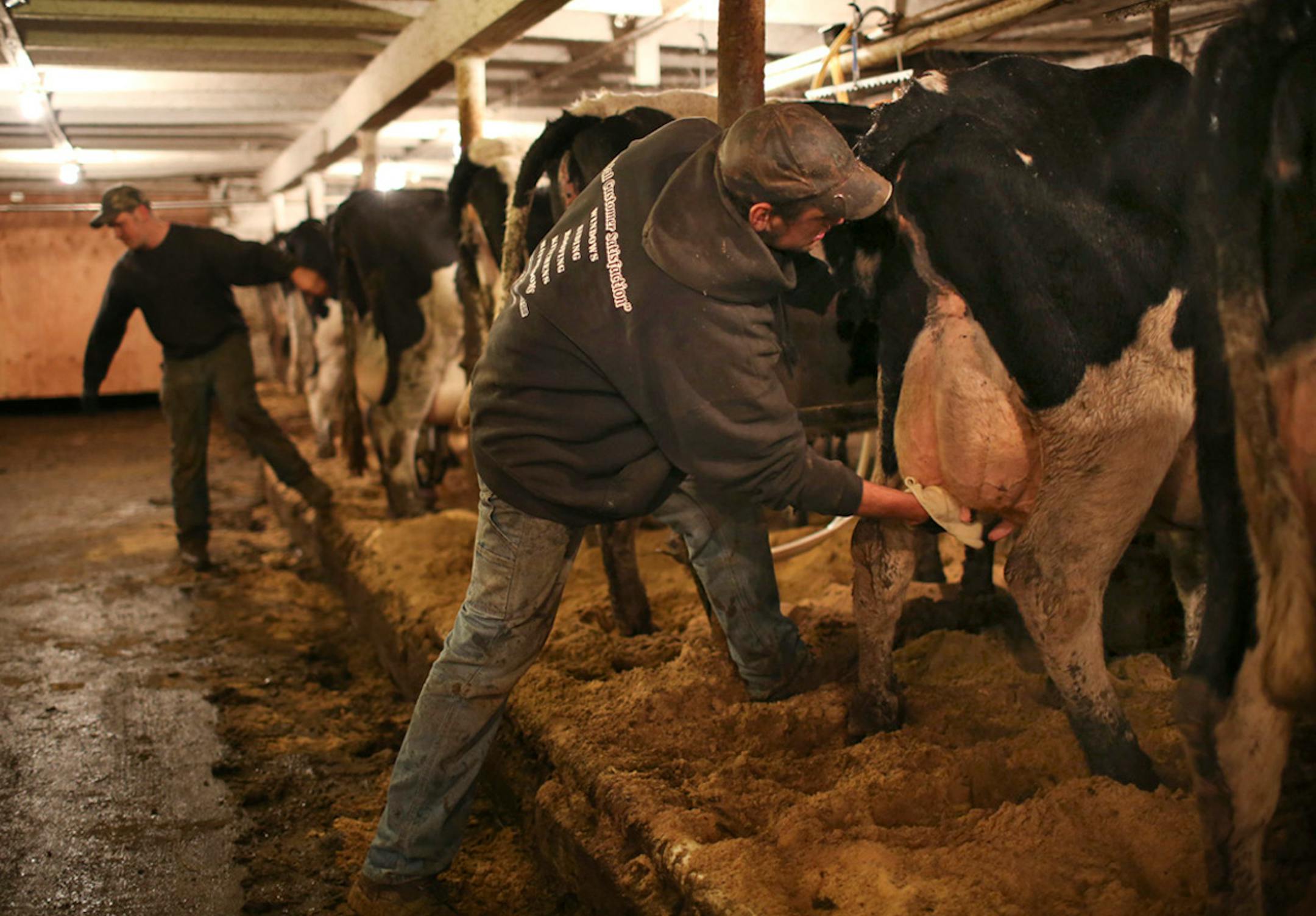
The cause of this abundance is simple: U.S. farms produce 262 percent more food than they did in 1950 while using essentially the same quantities of labor, seeds, feed and fertilizer, the Farm Bureau says. In 1950, the average dairy cow produced 5,300 pounds of milk; today, she gives 22,000 pounds.


