
After tenants sweltered, this suburb could be the first Minnesota city to pass standards for rental AC

City cooling ordinances are increasingly common in U.S. cities as summer temperatures climb. If adopted, Falcon Heights’ may be first in Minnesota.

The Minnesota Star Tribune
December 8, 2025 at 12:00PM
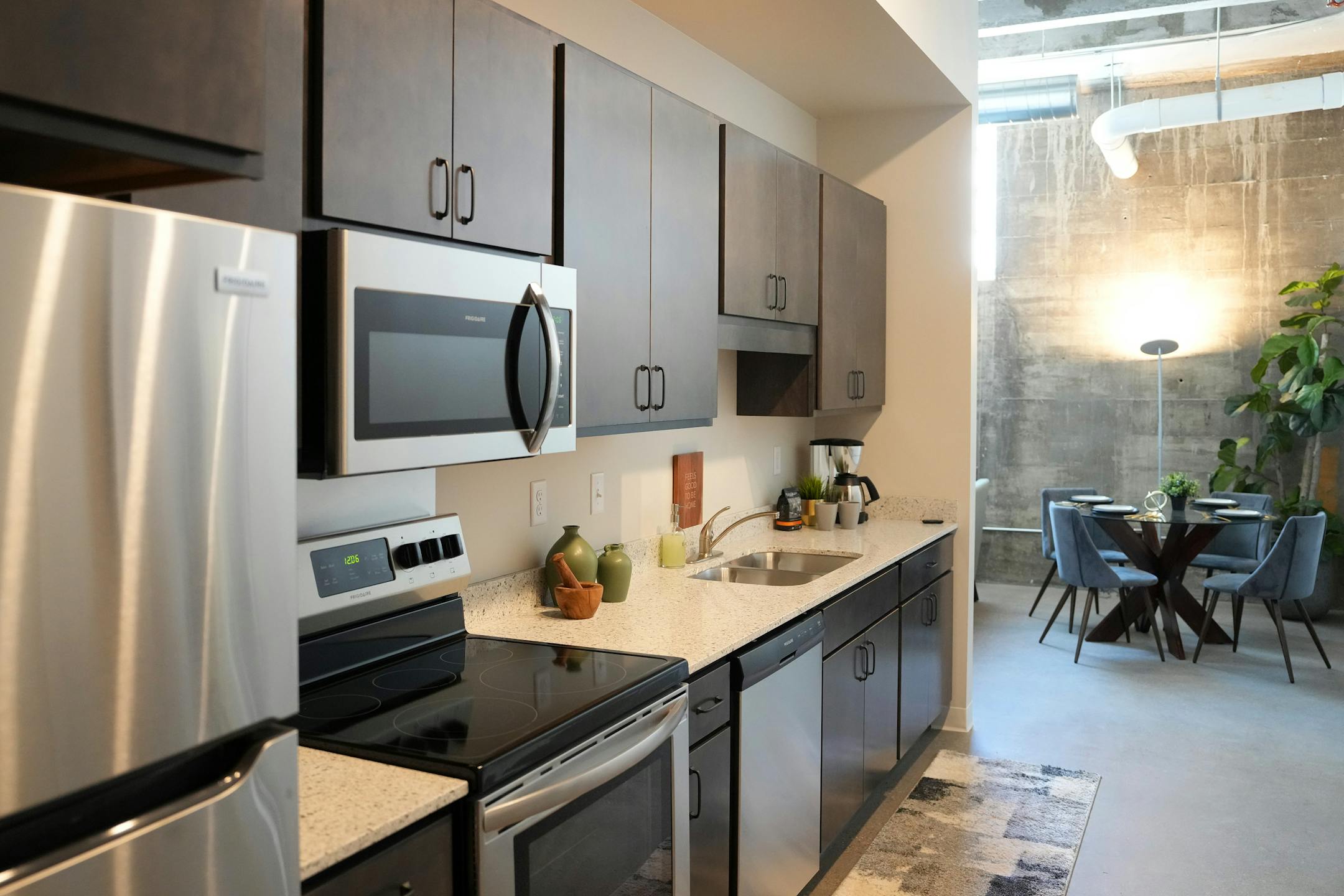
The interior of a two-bedroom unit at the Amber Union Apartments in Falcon Heights. (Anthony Souffle)

In a state known for cold winters, some Minnesota cities have long required landlords to provide working heat to renters.

After residents of a newly renovated apartment building sweltered for weeks in the summer of 2024 with broken air conditioning and no ability to open their windows, Falcon Heights is poised to require air conditioning — when it’s provided in rental units — works, too.

Air conditioning rental standards are increasingly common in U.S. cities, including Dallas, Phoenix and Los Angeles, as summer temperatures warm.

But if approved at this week’s City Council meeting, Falcon Heights is believed to be the first Minnesota city to pass air conditioning-specific requirements.

“If your lease includes cooling equipment, it should be working,” said Council Member Paula Mielke, who pushed for the ordinance, noting the trend toward warmer temperatures for more days of the year in Minnesota.

No air conditioning, only box fans

The early summer of 2024 got hot for residents of Amber Union, a 125-unit Art Deco office-turned-affordable apartment building at the corner of Snelling and Larpenteur avenues.

By mid-July, residents had spent weeks without working air conditioning. One recorded a temperature of 95 degrees in her apartment, Mielke said in a Facebook post. Some approached the city for help.

“It’s a building where you can’t open your windows,” Mielke said. “So they cannot open their windows, and the only solution that the owner offered was giving them box fans, which did nothing.” Many of the building’s residents didn’t have other places to go, she said. Representatives for Amber Union did not respond to a request for comment.

The air conditioning was ultimately fixed, but Mielke began looking into air conditioning ordinances in other cities.

Cooling ordinances take off

In 2024, a Minnesota law took effect standardizing rental heat requirements across the state.

Nationally, heat requirements are far more common than cooling ones, though rules for the latter have taken off since 2020, said Ashley Ward, the director of the Heat Policy Innovation Hub at Duke University, in an email.

They’re more common in hotter parts of the country but are starting to appear in moderate climates, too, “suggesting a rise in the recognition that extreme heat is a threat to our public health and community well-being,” Ward said.

That’s a bit of a paradigm shift, as historically, air conditioning has been seen as more of a luxury, she said.

Cooling ordinances take on different forms. Some cities require new builds to include air conditioning. Others, like Falcon Heights’ proposed ordinance, require air conditioning that’s included in a lease to work, and attempt to set a threshold to define what that means.

Falcon Heights’ proposed ordinance would require air conditioning, when provided as part of a lease, to be capable of keeping at least one habitable room — a bedroom, living space or kitchen — at no more than 80 degrees, also setting standards for how that’s measured.

The city settled on making that a requirement between May 1 and Sept. 30 of each year. The ordinance also outlines fines for noncompliance.

State requirements

Eric Hauge, the co-executive director of renter advocacy group HOME Line, said he believes Falcon Heights will be the first Minnesota city to regulate air conditioning. The Legislature in 2023, however, added air conditioning — when included in a lease — to the list of appliances over which tenants can file an emergency repair action in court.

Hauge said it’s not clear how effectively Falcon Heights’ ordinance would supplement the state requirement.

But unlike the state, Falcon Heights’ ordinance does create a temperature-specific definition of what a non-working air conditioner is. Also, Falcon Heights will have the third-party fire marshal enforce air conditioning rules, rather than a tenant having to file an action in court under the state law.

Hauge urged Falcon Heights to consider stronger language in the ordinance, arguing air conditioning “capable of” maintaining 80 degrees might not mean the temperature is required to stay that temperature.

City Administrator Jack Linehan said the city contacted landlords for feedback on the proposed ordinance and heard little. “Nobody’s too worried,” he said at a Council Workshop last week.

The city is expected to vote on the ordinance at its next meeting on Tuesday.

The discussion comes as Falcon Heights is poised to see an increase in renters, with plans to develop the University of Minnesota’s Les Bolstad Golf Course. Currently, about 40% of Falcon Heights households rent.

Falcon Heights Mayor Randy Gustafson said Falcon Heights might as well give the air conditioning ordinance a try. If it works, he said, it can be a model for other cities. If it doesn’t, the city can adjust accordingly.

“We want people to live in our rental units. We want them to be part of our community,” he said. “That’s the goal of everything, is to try to make Falcon Heights a great place to live, work, raise a family and do what we can to make it a good experience.”

about the writer

about the writer

Greta Kaul

Reporter

Greta Kaul is the Star Tribune’s built environment reporter.

See Moreicon

More from Twin Cities Suburbs

See More
card image
Anthony Souffle

City cooling ordinances are increasingly common in U.S. cities as summer temperatures climb. If adopted, Falcon Heights’ may be first in Minnesota.

card image
card image