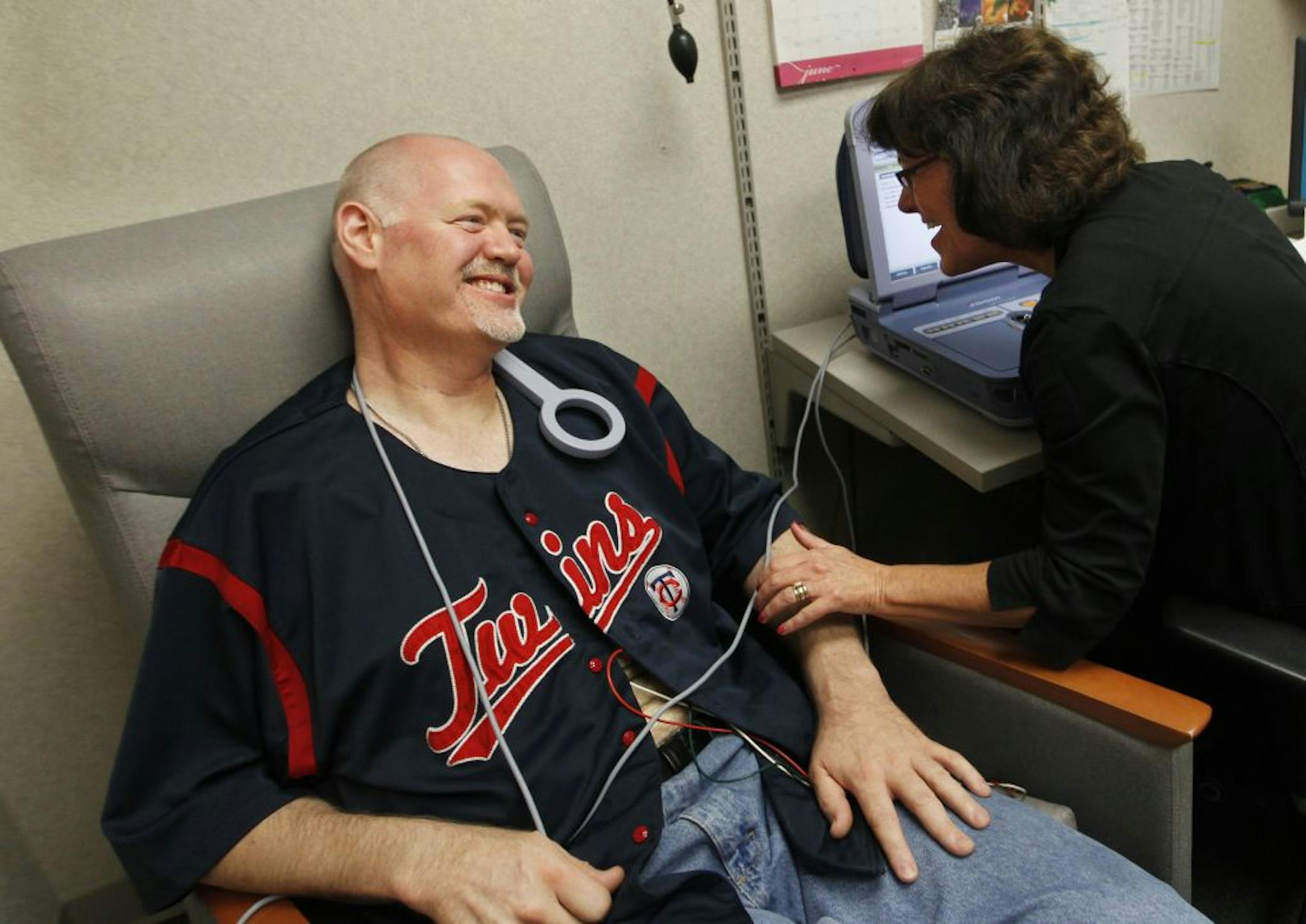
Brian Kruger never felt the jolt of the defibrillator that gave his heart a jump-start last month. He fainted, and smashed face first into the concrete floor while on the job at a Sears Auto Center.
By the time paramedics wheeled him into Fairview Southdale Hospital in Edina, a team of heart specialists who knew him well had already swung into action. Emergency room doctors had Kruger's history of heart problems at their fingertips. A favorite nurse was soon at his bedside.
"The phone calls had already been made before I got there," said Kruger, 49, who is part of an intensive heart program through Fairview known as the C.O.R.E. Clinic. "It helped to see a familiar face."
With a team of nurses and cardiologists scrutinizing the condition of patients and coaching them on lifestyle choices, the Fairview program has had measurable success keeping Kruger and other heart-failure patients from boomeranging back into the hospital.
Since 2003, when the C.O.R.E. Clinic launched, heart-failure patients have had a 67 percent lower rehospitalization rate compared with those not in the program, according to Fairview. Last year, about 14 percent of patients with heart failure were readmitted within 30 days, compared with the national average of 25 percent.
Keeping Kruger and others like him out of the hospital for good may be an unrealistic goal. The Apple Valley man was diagnosed with an enlarged heart when he was 38 and has multiple other health issues, including diabetes.
But C.O.R.E.'s five-step approach of evaluation and intensive follow-up to stay on top of symptoms has been effective enough that Fairview is in the process of rolling it out to other heart clinics, starting with the University of Minnesota Medical Center and Fairview Ridges. Officials hope it could be used as a national model.
"The breakthrough had to do with the fact that these patients were being seen frequently, that educational issues were being introduced and reintroduced, and the time was actually spent with the patient talking about things specifically regarding their lifestyle," said Dr. Eric Ernst, a cardiologist and medical director of the C.O.R.E. Clinic. "In the past, heart failure was managed by individual doctors who saw their patients occasionally, when they had time -- typically when their patients were having problems."