Fairgoers leave 1,000 tons of trash every year. What happens to it?

With more than a million visitors annually, the Minnesota State Fair has hundreds of people working daily to keep the grounds clean.

The Minnesota Star Tribune
August 29, 2025 at 4:57PM
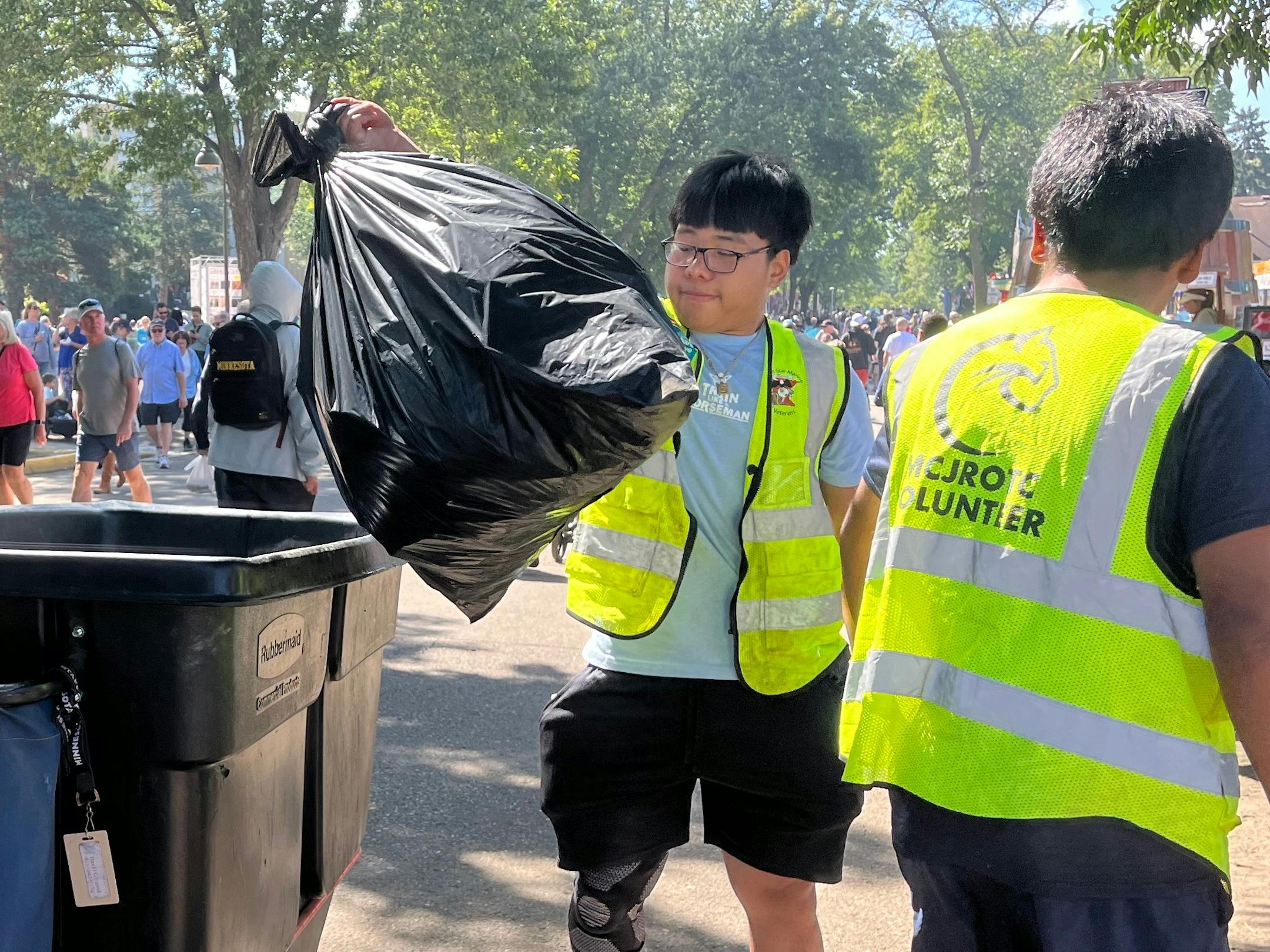
David Thaung, a senior at Como Park Senior High School, throws a full trash bag into a trash cart on his route around the State Fair grounds. (Eleanor Hildebrandt/The Minnesota Star Tribune)

The Minnesota State Fair averages 1.8 million attendees, who generate more than 1,100 tons of trash, recyclables and compost. So, where does it all go?

Operations Director Cory Franzmeier said most of the waste — 1,000 of those tons — is trash.

“Keeping it clean is the most important thing,” he said. “Then, it’s diverting as much waste into recycling as possible.”

More than 900 recycling bins and 1,100 trash bins are scattered across the fairgrounds. Franzmeier said his team is continually looking for ways to decrease trash and create more accessible recycling and composting options. Eighty tons of compost material and 50 tons of recyclables are collected every year.

Recyclable items are taken to Eureka Recycling in Minneapolis nightly, while compostable waste goes to SET & The Mulch Store in Burnsville and trash to Ramsey/Washington County Recycling & Energy Center in Newport.

Fairgoers might see a new sanitation item at the State Fair: larger, 96 gallon recycling bins. The new bins are located on Underwood and Cooper Streets.

“They’re easier for the public and for us to maintain,” Franzmeier said about the new bins. “They’re working really well, because it eliminates the bag. In a lot of ways, with bags, you’re creating more trash by trying to do the right thing [recycling], which is a little redundant. We’re trying to stop that.”
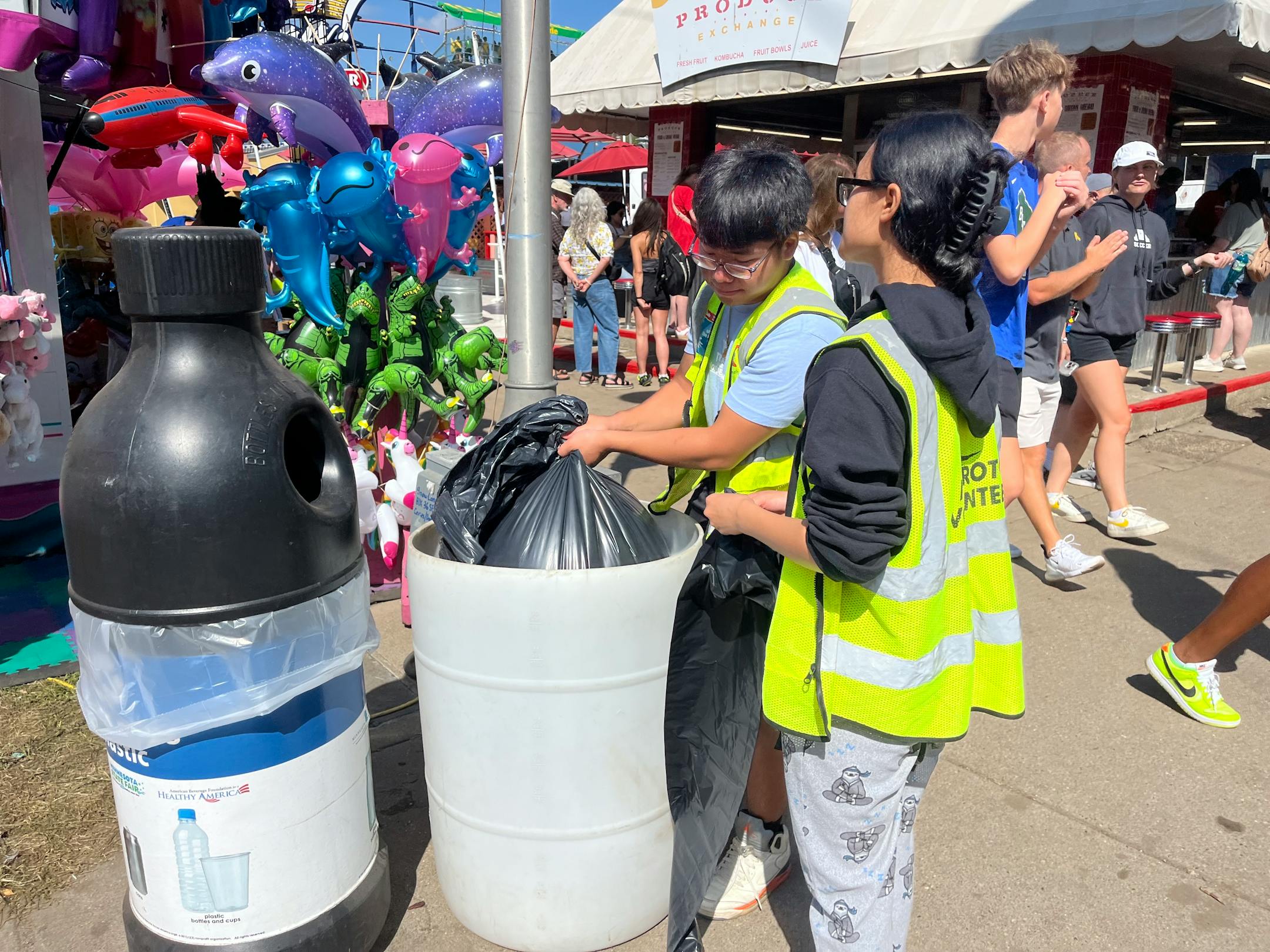
David Thaung and Nally See, two seniors from Como Park Senior High School JROTC, take trash out of a bin and replace the bag on Underwood St. on Wednesday. (Eleanor Hildebrandt/The Minnesota Star Tribune)

How sanitation works

Franzmeier said more than 150 paid employees handle the 24-hour trash cycle. In addition, more than 100 groups of sanitation volunteers do a significant amount of daily cleanup.

Sergeant Major James Kirkland brings his cadets from Como Park Senior High School’s JROTC program seven of the 12 fair days to pick up trash. He said they have an average of 60 or more students daily. In return, the State Fair makes a donation to the program.

“Volunteering keeps this program alive,” Kirkland said. Como Park’s JROTC has sent volunteers for 20 years.

Groups of students haul a trash cart and trash bags out into a block of the fairgrounds. They put on gloves and take trash out of the bins if they are halfway or more full. Another student walks around with an orange trash bin and a grabber to pick up things from the street or sidewalks.

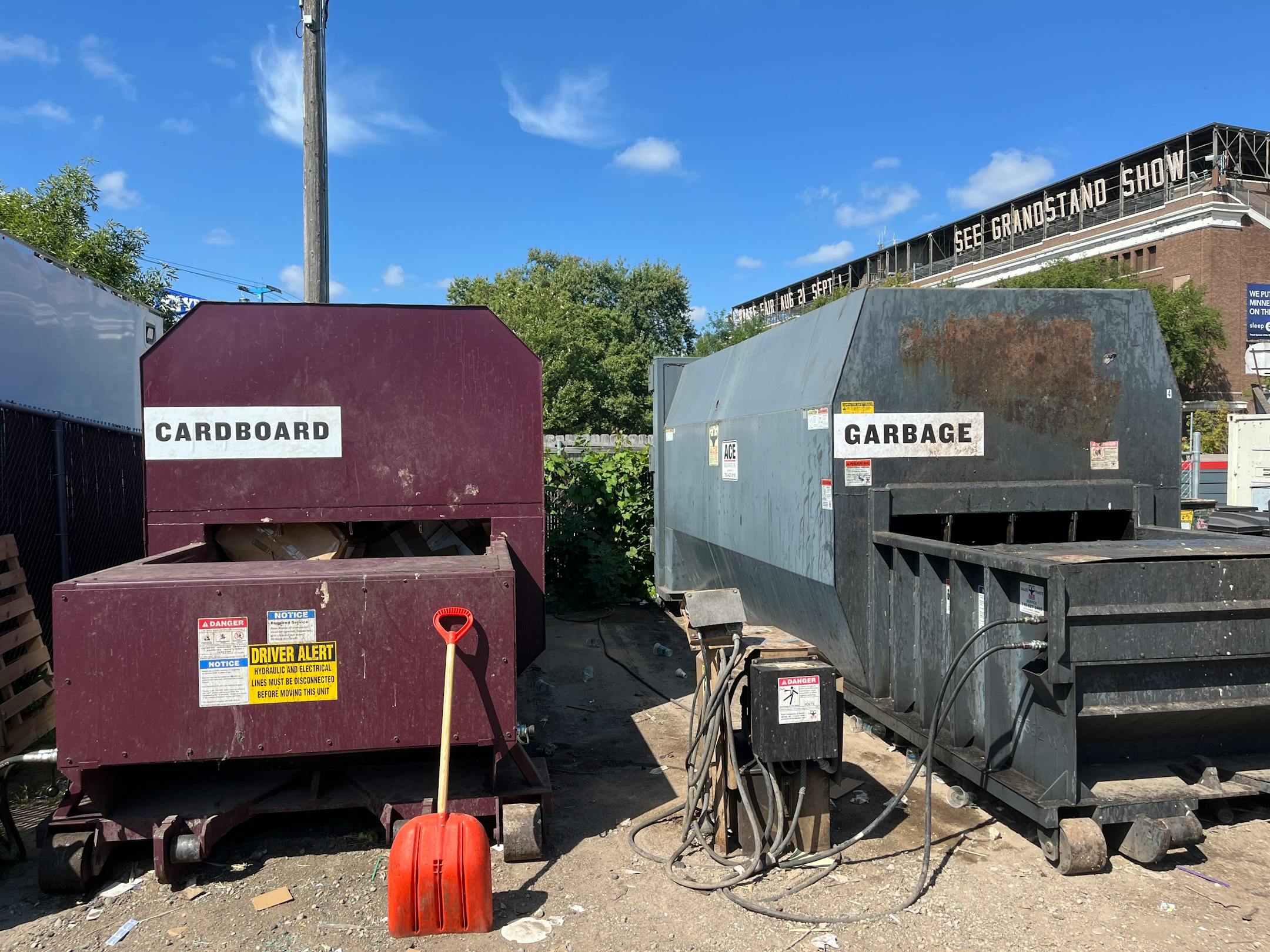
A garbage and cardboard compressor are behind the Giant Slide. Volunteers bring the trash bags they pick up to compact the waste. (Eleanor Hildebrandt/The Minnesota Star Tribune)

Once the students finish their block, they take the cart of trash to a compressor behind the Giant Slide. The JROTC cadets take multiple breaks a day, eating snacks at their “home base” behind Fan Central, and receive two food vouchers for their nine hours of work.

“The first day is the hardest simply because your body has to get used to the work and you might get blisters,” said Joshua Klett, a 16-year-old junior at Como Park. “I have my phone on and it’s like 13 miles per day and it can be up to like 15 or 16 miles depending on your role.”

Nally See, a senior and one of the leaders of the trash pickup, said the toughest time for trash runs is during lunch hours and when the evening entertainment starts up. That’s when things start to overflow and lead to litter.

“It gets chaotic,” she said. “I wish people appreciated us more as we pick up trash. Sometimes they try to throw things away when we’re changing the bags.”

Fairgoers may notice bees and flies around trash and food during their visits. See said a student has been stung by a bee before on a shift, but there are first-aid materials at their base in case.

Franzmeier said the bees are inevitable with food waste, but the State Fair teams try to minimize their presence.

“It’s been an unusual year this year for bees, but the majority are honeybees,” he said. “It comes down to cleaning and the better the vendors clean their stands, they won’t have as many bees and same with us.”

Individual food vendors compost behind their booths in a nonvisual area, Franzmeier said, contributing to the compostable waste every year at the fair.

Volunteering goes as late as 9 or 10 p.m. some nights, Kirkland said. Some students, including Klett, come all seven days and work from morning to evening to clean the grounds. Klett said he often sees things in the trash that shouldn’t be there.

“There are sticks in the trash a lot, from trees,” he said. “Those belong on the ground. I also see a lot of good food wasted. It looks like someone took one bite and threw it away.”

See said she has to be careful of the food sticks that people toss since they can stick out of bags. It’s something she warns new volunteers about, too, she said.

The cleanliness of the fair is important to the fairgoer experience, Franzmeier said, and the volunteers are essential. When they go home, he said the overnight, paid crew has from 11 p.m. until 6 a.m. to get the fair back in shape, including moving all the waste offsite.

For the 2025 fair and beyond, Franzmeier said his team is focused on the goal of minimizing trash.

“As times change, we want to find more ways to get more recycling and food waste out of the waste stream,” he said. “But it takes people and you need people that are passionate about making that difference.”

about the writer

about the writer

Eleanor Hildebrandt

Reporter

Eleanor Hildebrandt is a reporter for the Minnesota Star Tribune.

See Moreicon

More from State Fair

See More
Rod Stewart early in his set Sunday night at Xcel Energy Center.
Jeff Wheeler/The Minnesota Star Tribune

The U.K. rock legend is hinting at retirement ahead of his Sept. 1, 2026, show at the grandstand, where he last played in 1984.

card image