
Facts you might not know about bees

July 31, 2013 at 7:19PM
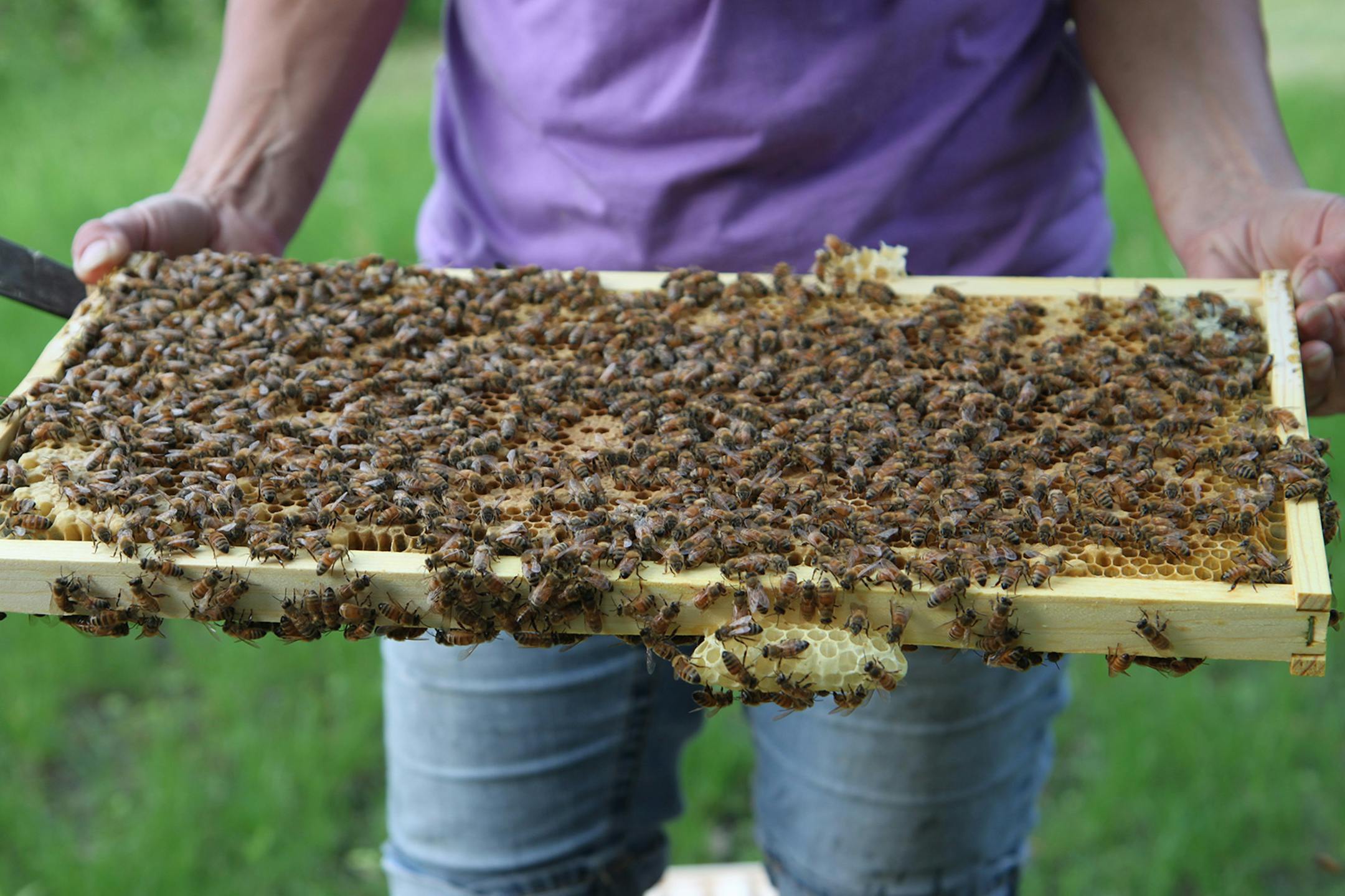
Mary Jo Hoffman, Special to the Star Tribune Becky Masterson of the University of Minnesota Entomology Department's Bee Squad with bees.
Bees will fly as far as 2 miles away to find flowers, and their life expectancy is only two to three weeks. (The Minnesota Star Tribune)

Did you know? Facts from the Bee Squad:

• A bee visits between 50 and 100 flowers on each trip from the hive.

• About 500 honeybees work to make 1 pound of honey.

• More than 40,000 bees are in a hive during midsummer.

• Bees eat nectar and honey for their carbohydrates and pollen for protein.

• Honeybees eat honey to make wax. They convert the sugar to wax in their wax glands. They must eat eight pounds of honey to make one pound of beeswax.

• A bee colony consists of one queen, several hundred male drones, and more than 30,000 workers, all female.

• Bees use enzymes in their saliva to convert nectar (sugar water) into honey.

• On their return flight to the hive, worker bees can carry nectar and pollen equal to their body weight.

• Life expectancy for honeybees is only 2 to 3 weeks.

• Bees can generate “air conditioning” in the summer by bringing water into the hive on their bodies and fanning it with their wings.

• Bees can generate enough warmth by shivering to heat the hive to 70 degrees even through Minnesota winters.

• Honeybees have the ability to tell their hive mates where to find the best nectar by doing a dance called the waggle. It’s like a honeybee form of GPS.

• Ancient Romans, Greeks, and Chinese all used honey to treat wounds. It was a popular wound dressing during World War I before the introduction of antibiotics. Honey is still being studied for its antimicrobial properties.

• There are at least 300 varieties of honey in the U.S., according to the National Honey Board. Worldwide there are probably as many as 3,000. No two honeys are exactly alike.

• When measuring honey for cooking, brush your measuring cup with vegetable oil and the honey will slip out easily.

• Honey is found in an array of colors, from almost white to dark amber. The blossoms from which the bees gathered their nectar determine the color of the honey. In general, the lighter the honey the milder it tastes.

about the writer

about the writer

More from Food & Culture

See More
card image
Raphael Brion/The Minnesota Star Tribune

Owners across Minnesota describe staffing shortages, closures and fear — and tell us what actually makes a difference.

card image
card image