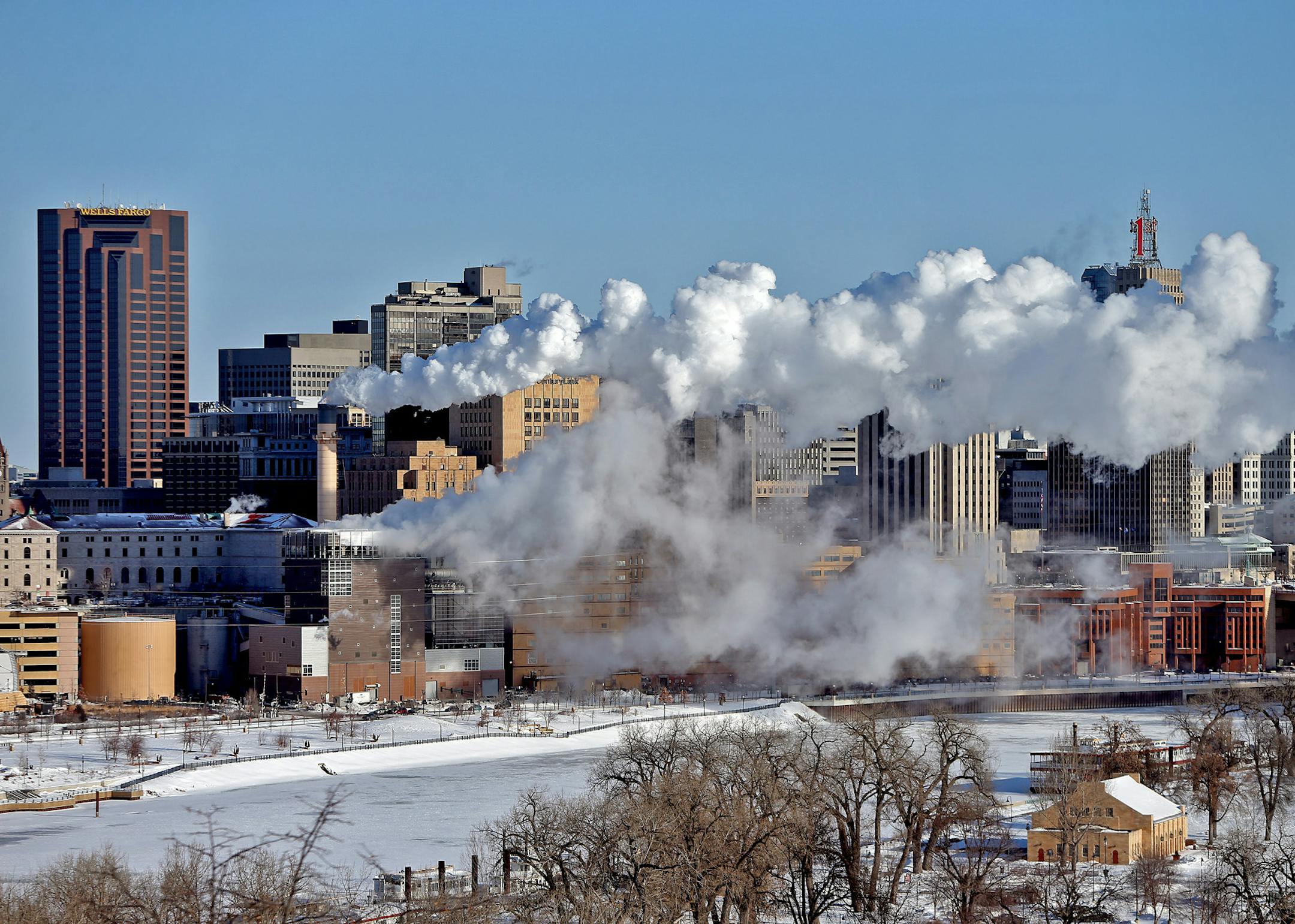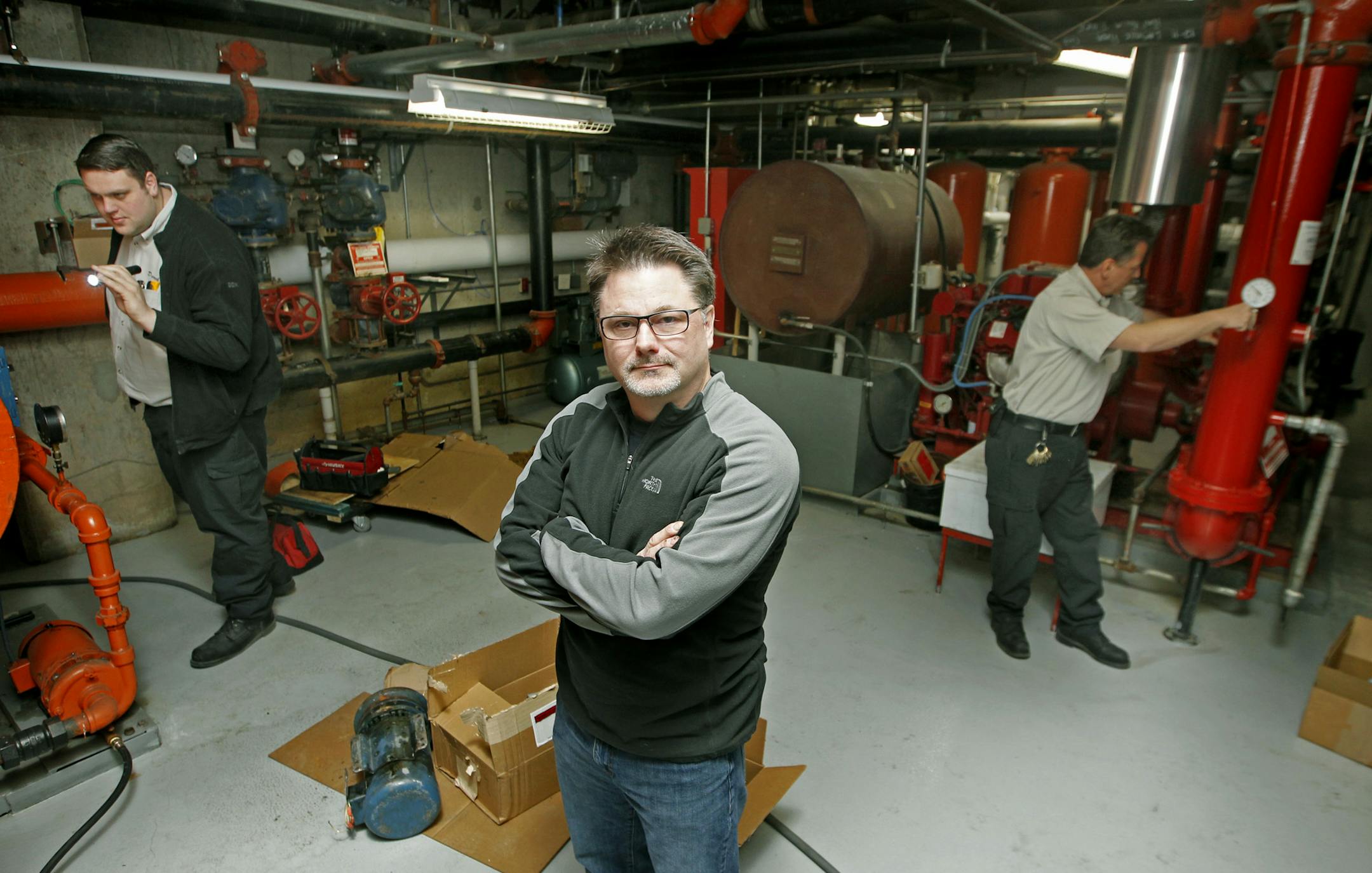
This unusually frigid winter has resulted in many headaches, but keeping some of the Twin Cities' biggest commercial buildings operating smoothly this season has proved especially daunting for property managers.
"It's been a rough year, as bad as it's ever been," said Chuck Palm, senior vice president of Occupier and Investor Services for the Bloomington real estate firm Cushman & Wakefield/NorthMarq. Palm oversees engineering and maintenance for more than 400 properties, about 70 percent of them in Minnesota.
This winter was the ninth coldest on record in the Twin Cities, and the most frigid since 1979, with 50 days recording a temperature below zero. It also ranked as the fourth snowiest on record.
"It's been a real treat, and I say that with love and affection," said a wry Bill Thurmes, the property manager at US Bank Center in downtown St. Paul. "When it gets so bitter, bitter cold, it throws off the balance of a building."
The "design temperature" for buildings in the Twin Cities is minus-11 degrees, said Larry Schoen, president of Schoen Engineering, a Maryland-based consulting firm. That means engineers design buildings here on the belief that it will be warmer than minus-11 99 percent of the time, he said. "You don't design for the absolute worst temperatures," he said. "There are limits to engineering."
So when temperatures dip below that level for any length of time, as they have in Minnesota this winter, some serious issues may arise.
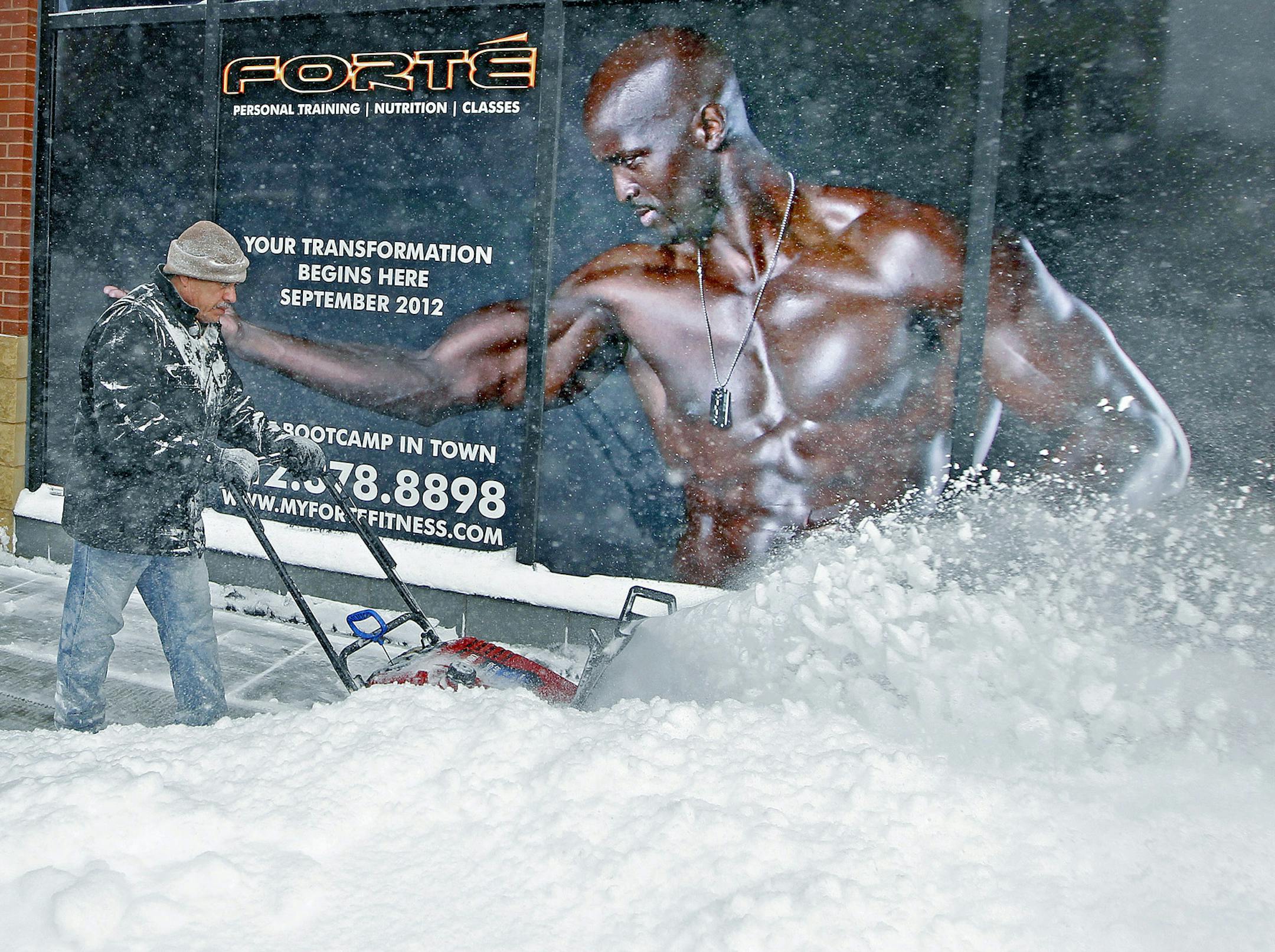
An obvious challenge is snow removal. Most property managers try to estimate the impending season's snowfall and budget accordingly. But this year, "snow removal budgets were blown out," Palm said.
"We do all our own snow removal, and we've been running our snow machines constantly," said Mike Blomberg, operations manager for LaSalle Plaza in downtown Minneapolis. Once the city plows the streets, Blomberg's crew must haul away that churned-up snowpack, as well. "Our snow budget was crushed this year," he said, especially given the frequent mini snowfalls of an inch or two that still required attention.