

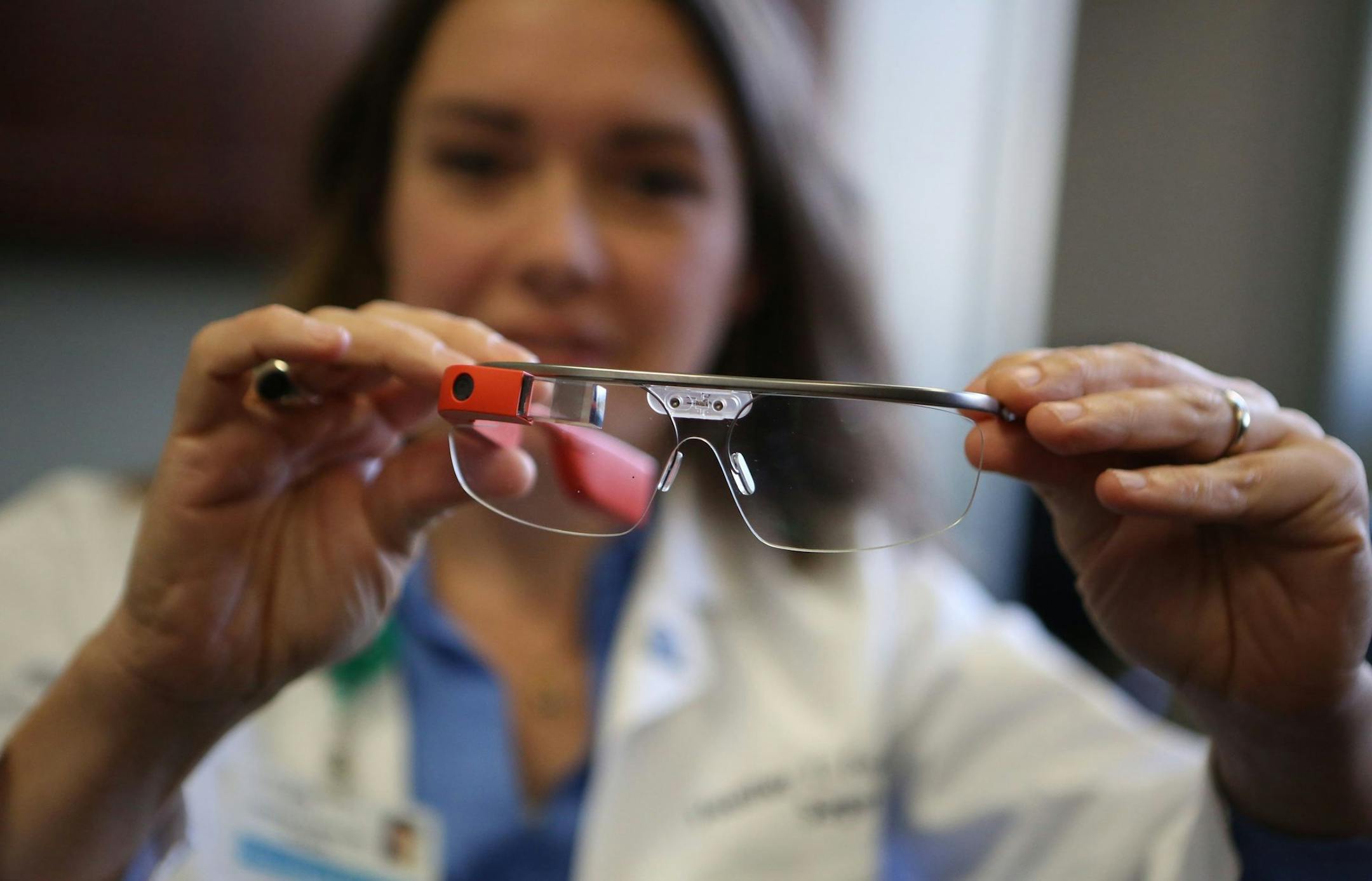
When Dr. Heather Evans, a trauma surgeon at Seattle's Harborview Medical Center, stepped into the operating room wearing an eyeglasses-like, Internet-connected device known as Google Glass, she quickly realized its potential and its pitfalls.
With Glass, if she was in the middle of surgery and encountered an unexpected or unfamiliar condition — a rare tumor, say — she could use real-time video to show it to the world's expert and receive help.
With Glass' eye-level screen, which projects information right onto the wearer's retina, she could instantly see relevant parts of a patient's chart or get lab results.
And she would never have to put down her surgical instruments or turn away from her patient on the operating table.
As a teacher, she could have her students wear Glass and see through their eyes just where they were having trouble as they learned a difficult procedure — putting in a large, intravenous catheter known as a "central line," for example.
Evans is one of about 8,000 people nationwide selected by Google as "explorers," testing and experimenting with uses for Glass, expected to be available for sale next year.
Tweet was a winner
Like her fellow surgeon/explorers, Evans won the chance to spend $1,500 on the device by penning a winning tweet early this year, finishing the phrase: ifihadglass …
With a computer in the earpiece, and a tiny, eye-level rectangle that can project text, maps and other information to the wearer's eye, Glass responds to voice commands and can take pictures, stream videos, make phone calls and do other tasks.



