Editor's Pick

Editor's Pick

Legal experts question ‘highly unusual’ DOJ probe of Minnesota officials

The Department of Justice issued subpoenas to the offices of Gov. Tim Walz, Jacob Frey and others as part of probe into whether they obstructed immigration enforcement.

The Minnesota Star Tribune
January 25, 2026 at 12:00PM
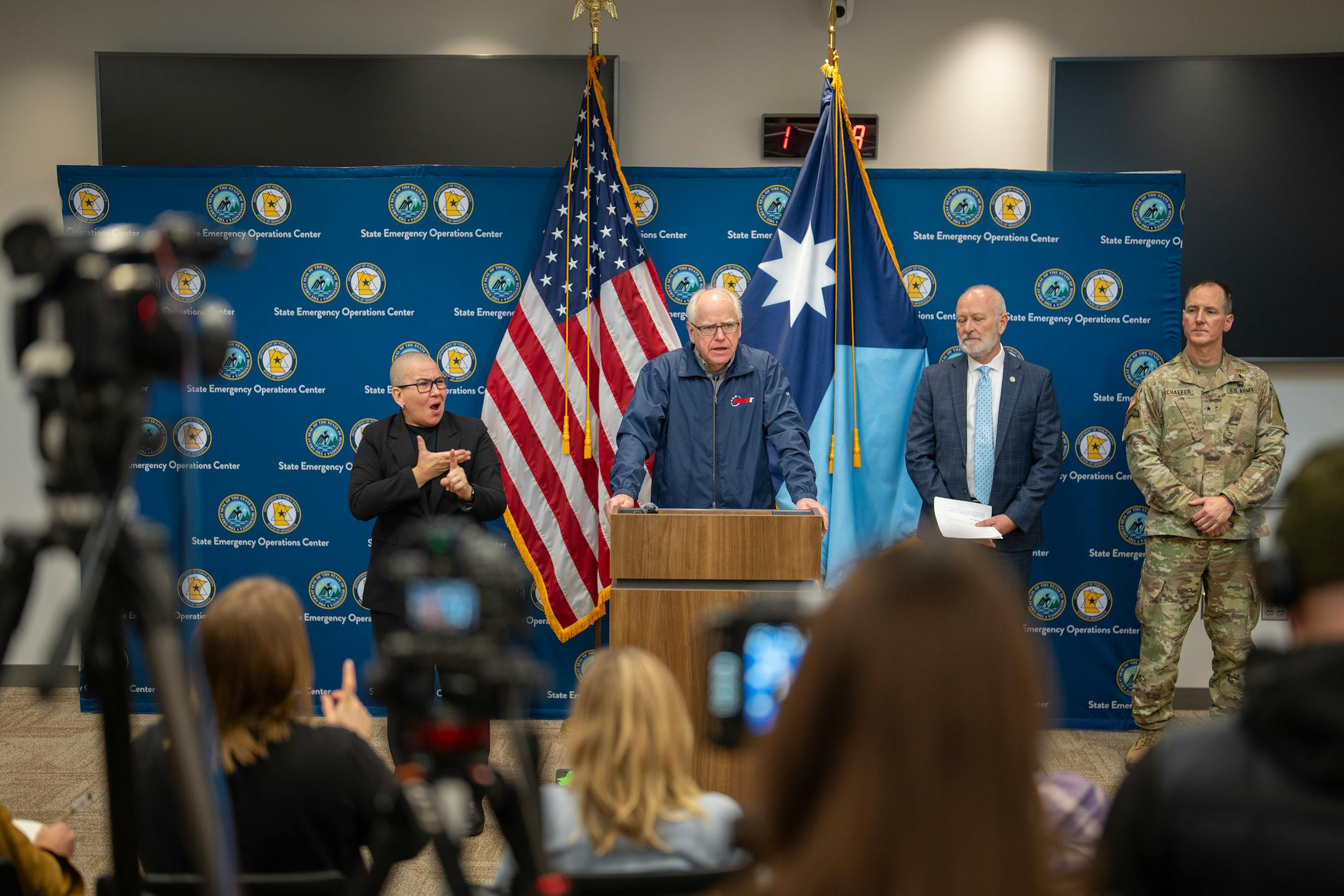
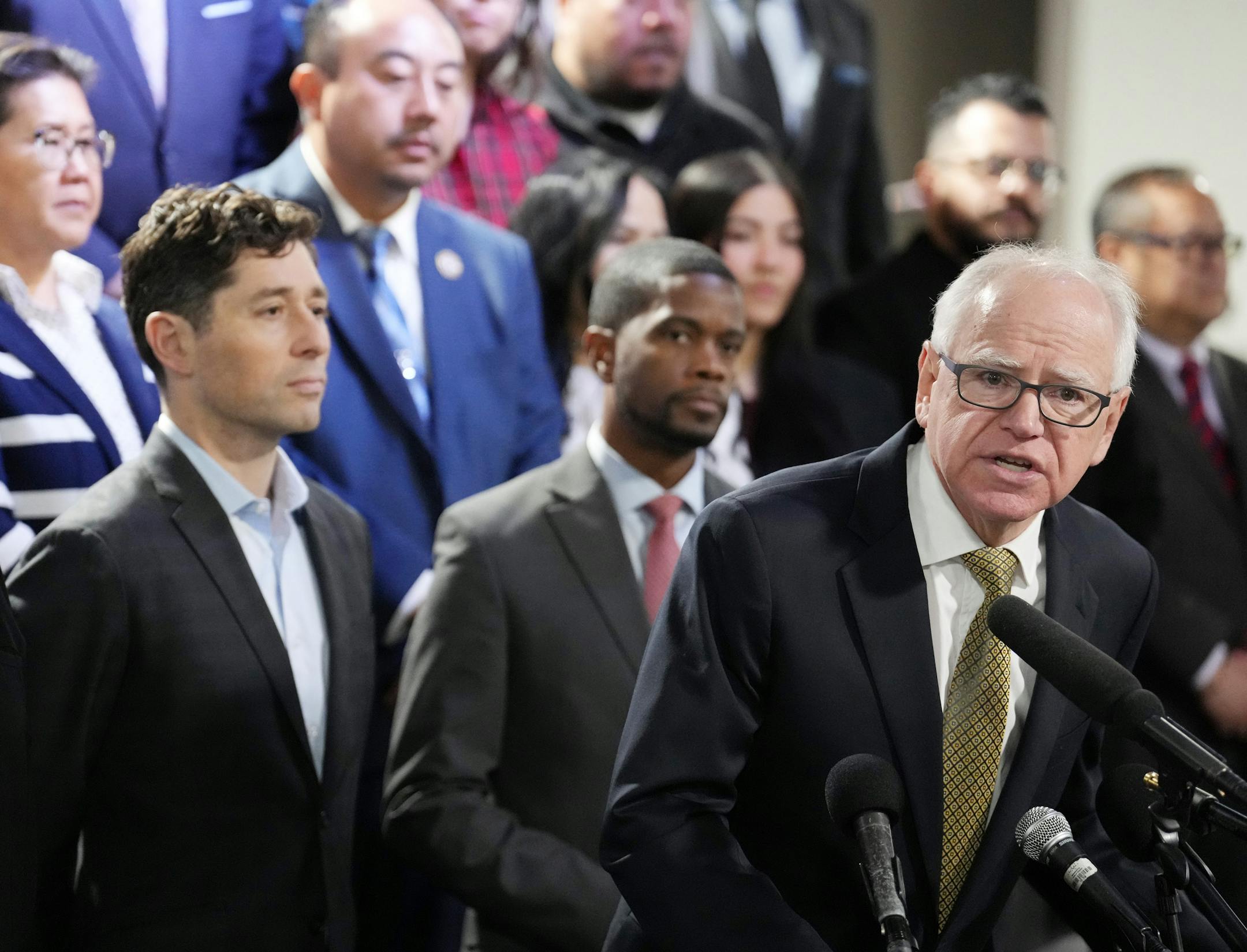
Minnesota Gov. Tim Walz speaks during a news conference with Minneapolis Mayor Jacob Frey and other officials in December 2025. Behind Frey is then St. Paul Mayor-elect Kaohly Her. The three are among several state officials who received subpoenas from federal prosecutors. (Anthony Soufflé/The Minnesota Star Tribune)

Several legal experts say they haven’t seen any evidence to support the allegation that several Minnesota officials obstructed recent federal immigration enforcement as members of the Trump administration have suggested.

Federal prosecutors last week delivered subpoenas to the offices of Gov. Tim Walz, the mayors of Minneapolis and St. Paul, and other officials, as the Justice Department seeks records for violations of unspecified federal laws during the intense immigration enforcement crackdown in the state.

The subpoenas are related to whether the state and local officials hindered the federal enforcement through public statements they’ve made, according to the Associated Press, which reported the investigation is focused on the potential violation of a conspiracy statute.

Minnesota officials have characterized the subpoenas as “political theater,” intimidation tactics and an attack on their First Amendment rights.

“Going on TV and saying ICE is violating constitutional rights of citizens and noncitizens, that is not impeding federal immigration,” said Jill Hasday, a professor at the University of Minnesota’s Law School. “That is exercising First Amendment freedoms.

“I haven’t seen any evidence where they are actually impeding federal immigration enforcement.”

Hasday called the Justice Department’s probe of local officials “highly unusual,” a sentiment echoed by several constitutional law experts who spoke with the Minnesota Star Tribune.

The experts said comments made publicly by Democrats Walz and Frey, including fierce condemnations of the ICE crackdown and calls for residents to record activity and peacefully demonstrate, are constitutionally protected. (This story was reported before remarks made Saturday, Jan. 24, when Alex Pretti was fatally shot by an agent or agents with U.S. Border Patrol.)
Many Republicans have criticized the Minnesota officials for those statements, although after Pretti’s killing, President Donald Trump went further, accusing Walz and Frey of “inciting Insurrection” in a social media post that cited “their pompous, dangerous, and arrogant rhetoric.”

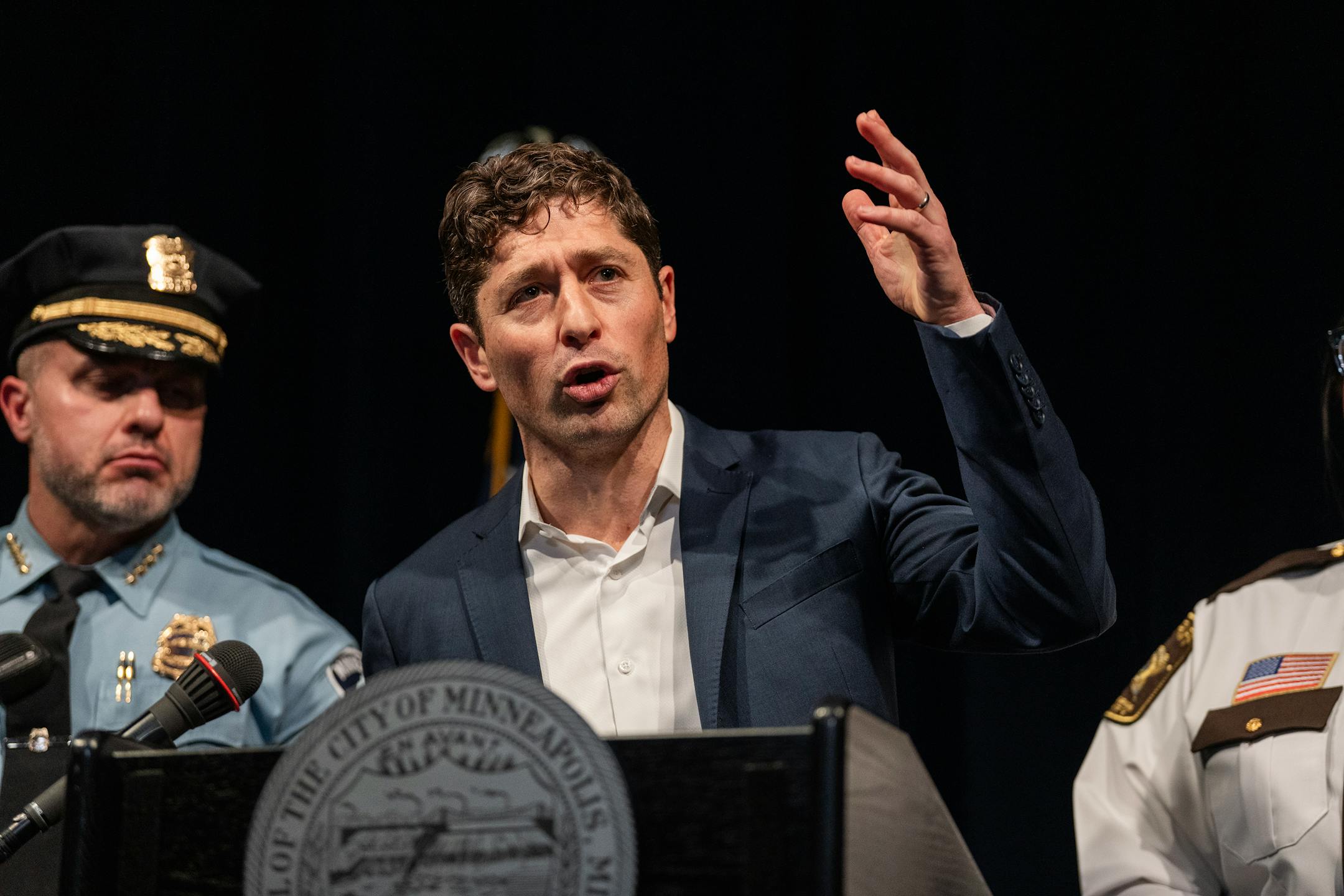
Minneapolis Mayor Jacob Frey speaks during a news conference after a federal agent shot and killed Renee Good on Jan. 7. (Richard Tsong-Taatarii/The Minnesota Star Tribune)

Subpoenas cast a ‘wide net’

The Justice Department has not elaborated on its investigation to the Star Tribune. But the content of the subpoenas — legal orders to testify or produce documents related to a potential investigation — offer clearer insight into what federal prosecutors are seeking.

The subpoena issued to Frey’s office, which it shared, requires testimony before a grand jury on Feb. 3. It also requires the office to produce records, including documents related to the city’s cooperation with or refusal to aid immigration enforcement, refusal to comply with detainers and hindering, doxxing, or surveilling immigration officers.

“Issuing subpoenas is an aggressive move,” Hasday said.

In 2018, she said, the Trump administration threatened to subpoena local officials over sanctuary city policies, making similar arguments about interfering with federal authorities. It ultimately did not carry through with the threat.

The Justice Department has filed civil lawsuits against several states and cities with sanctuary policies, alleging an obstruction of federal immigration law enforcement. In July, a federal judge dismissed such a lawsuit in Illinois. But the latest action shows an escalated approach as the department pursues a criminal investigation.

Peter Larsen, an assistant professor at Mitchell Hamline School of Law, said such subpoenas “tend to be pretty exploratory in nature.”

“Grand jury processes themselves are very deferential, so to get a subpoena for this, you don’t have to prove that a crime occurred,” he said. “You don’t even have to really show good cause that a crime occurred.

“You only really need to show that you’re seeking materials that are relevant to a possible investigation.”

Ultimately, grand juries can decide to recommend charges or not.

The subpoena issued to Frey’s office also asks for emails, text messages, voice recordings and other communication related to federal immigration enforcement.

Federal prosecutors are likely casting a “wide net,” said Richard Painter, a law professor at the University of Minnesota Law School and former White House ethics lawyer under George W. Bush.

“They’re looking for the needle in the haystack,” said Painter, an outspoken critic of Trump. “They’re probably trying to look for some hothead who said something really stupid.

“They’re going to go through thousands of emails to find something. I’d be extremely surprised if they found anything that would be grounds for any type of serious criminal investigation.”

However, he said, “Could they find something potentially embarrassing? Yes.”

Mary McCord, a Georgetown University law professor and former federal prosecutor and Justice Department official, said the subpoena of Frey’s office suggests the government is “criminally investigating state and local officials for doing what they’re entitled do to, which is not voluntarily cooperate with ICE or DHS, and instead do just what is required by law.”

Not cooperating with ICE beyond what is required by law would not amount to impeding federal immigration enforcement, she said.

McCord is also the executive director of the nonpartisan Institute for Constitutional Advocacy and Protection at Georgetown, which has brought litigation against the Trump administration.

“Impeding would have to be something more than that. Impeding would require some sort of force,” she said. “I have not seen even a suggestion that these officials have engaged in force or even incited others to engage in force. They’ve been telling people to be peaceful.”

Minnesota Governor Tim Walz speaks at a news conference on Jan. 8 to update the public on the killing of Renee Good by a federal officer the day before. (Alex Kormann/The Minnesota Star Tribune)

An unusual move

Federal subpoenas of local officials or their offices usually stem from corruption scandals, misappropriated federal funds or criminal activities, University of Minnesota Law School professor Myron Orfield said — not policy disagreement.

Several constitutional law professors struggled to find a historic example of local officials being investigated over allegations of interfering with federal law enforcement.

Orfield said the closest example he can think of is the massive resistance by several Southern governors to federal court-ordered integration during the civil rights movement of the 1950s and ’60s.

“Many governors opposed federal court orders on integration and used very strong language, called the federal government communists and everything you can think of,” Orfield said. “And they were never investigated” for their political views or statements.

Another example, Larsen said, is when the government brought charges against several members of the Ku Klux Klan and local law enforcement in the killings of three civil rights workers in Mississippi in 1964.

The suspects were charged with conspiring to deprive the three men of their civil rights (loosely, the basis of the movie “Mississippi Burning.”) At the time, the state declined to press murder charges.

“That’s the comparator we have, really. We really don’t see this happening in other times and places,” Larsen said.

At the same time, he said, this is different.

“We’re talking about criminal obstruction,” he said. “With criminal obstruction, typically that’s a much higher bar and we don’t see that in modern history.”

Ultimately, Larsen said, a grand jury could recommend issuing charges, or it could reject the prosecutors’ argument and decline charges. Such was the case in December when a grand jury declined to federally indict New York Attorney General Leticia James.

“A lot of investigations that do come before grand juries tend to end quietly and tend to end without charges,” Larsen said. “Also if the [Justice Department] did ultimately bring charges, this would be a pretty novel application, it’s a break from historical practice, and it’s a major escalation in this federal-state conflict.”

Deena Winter and Sarah Nelson of the Minnesota Star Tribune contributed to this report.

about the writers

about the writers

Greta Kaul

Reporter

Greta Kaul is the Star Tribune’s built environment reporter.

See Moreicon

Sarah Ritter

Reporter

Sarah Ritter covers the north metro for the Minnesota Star Tribune.

See Moreicon

More from News & Politics

See More
card image
Anthony Soufflé/The Minnesota Star Tribune

A review of statements by Greg Bovino and Kristi Noem finds several assertions unverified or contradicted by video and witness accounts.

card image
card image