

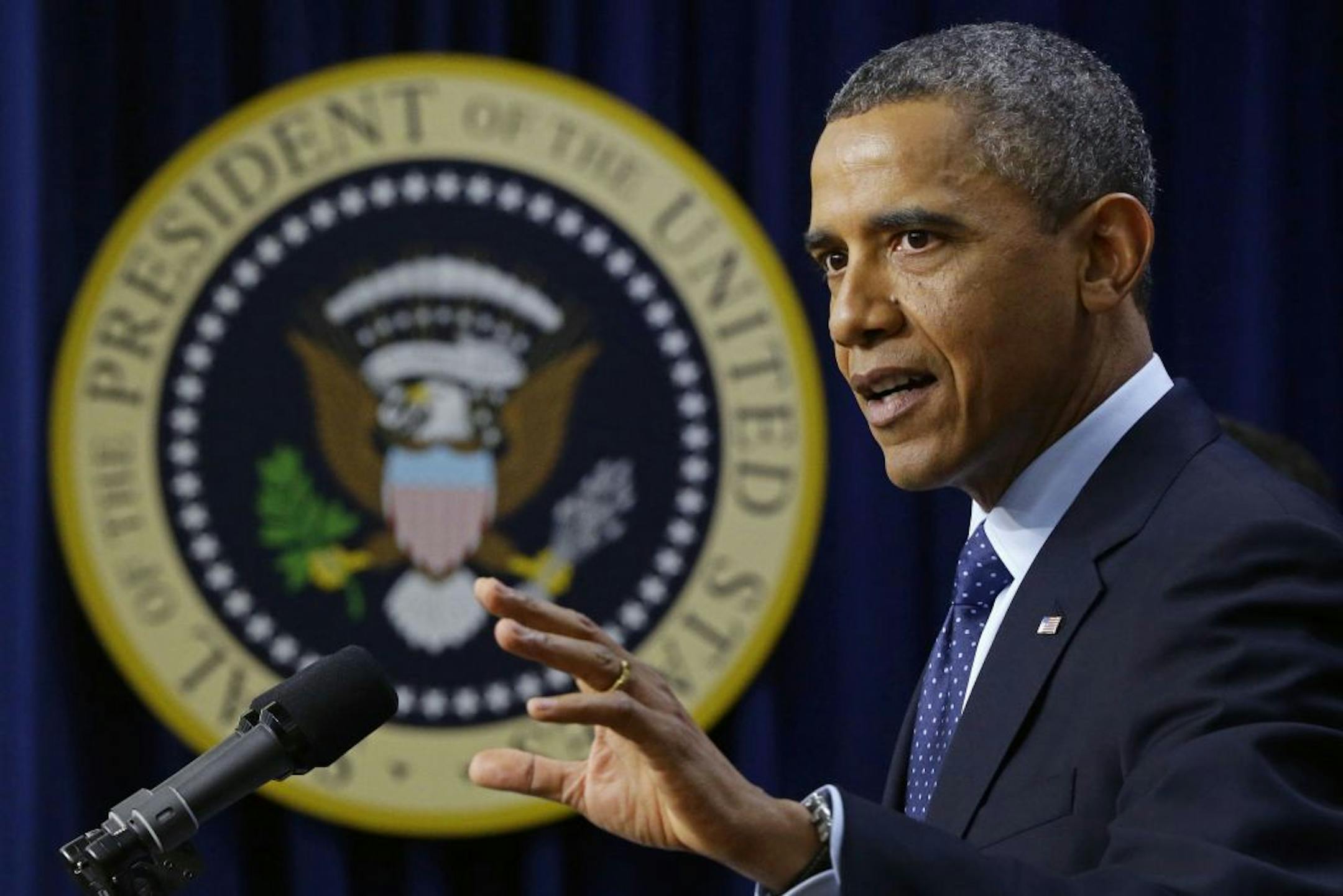
Tom Donohue, the president of the U.S. Chamber of Commerce, last week said higher taxes and a "flood of new regulations" will damage an already subpar economy. "In many ways, we're going backwards," he said.
Such complaints, echoed by corporate executives throughout President Obama's first term, obscure one fact: American business has never had it so good.
U.S. corporations' after-tax profits have grown by 171 percent under Obama, more than under any president since World War II, and are now at their highest level relative to the size of the economy since the government began keeping records in 1947, according to data compiled by Bloomberg.
Profits are more than twice as high as their peak during President Ronald Reagan's administration and more than 50 percent greater than during the late-1990s Internet boom, measured by the size of the economy.
Business leaders cite low labor costs in an era of high unemployment, the Federal Reserve's easy-money policies and their own management savvy for the profit boom.
Prosperity has come in spite of the president, not because of him, they say. For four years, American business has seen the Democratic president as an advocate of big government who was intent on imposing red tape.
"I don't think he deserves any credit," John Engler, president of the Business Roundtable, a Washington-based association of chief executive officers, said in an interview.
Many economists disagree. In a February 2012 survey, 80 percent of senior economics professors said unemployment was lower at the end of 2010 than it would have been without Obama's stimulus spending.



