When Joanell and I were married in 1962, there were two Christmas presents. She gave me one and I gave her one.
Now, if every one of our 16 extended family members gives other members a present, there would be 240 presents under our tree at Christmas. That assumes that grandmothers can constrain themselves to one present per grandchild, which is of course a highly improbable assumption.
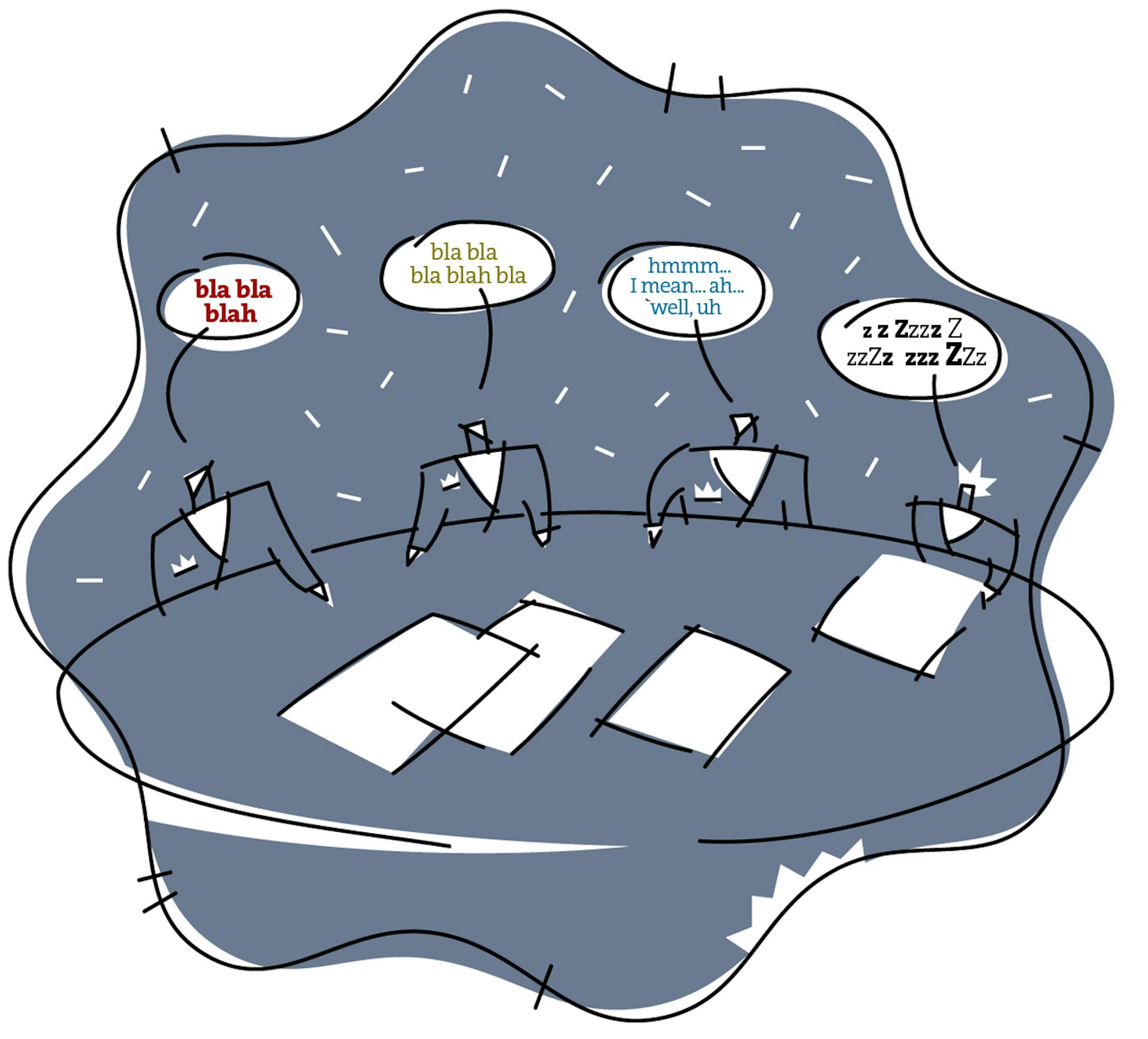
Organizational communications and interactions follow the same geometric pattern. Communications expand exponentially with the number of people involved. After a while, large fractions of an organization's employees spend nearly all of their time communicating with one another. Little actual work gets done.
This is why companies, governments, universities and other organizations flounder and often ultimately fail — too many people are communicating.
In 1974, I attended a meeting with 22 vice presidents and a general manager at Control Data Corp. to review an order for an $11 million supercomputer system for processing oil exploration data in the Soviet Union. It was a highly profitable order with all of the cash up front.
The contract required Control Data to build a controller capable of transferring data from Russian seismic magnetic tapes. That task was not difficult, but the engineering department wanted extra money because of the added cost of deciphering the documentation. There were other minor changes desired. Finally I asked, "Why don't we turn the order down? Then we can go back and negotiate a little better deal."
After a long silence, one of the dignitaries asked, "Are you sure we have the authority to turn the order down?"
His question turned out to be a precursor of the bureaucracy that eventually did so much to bring down that respected technical company with nearly 60,000 employees worldwide.