

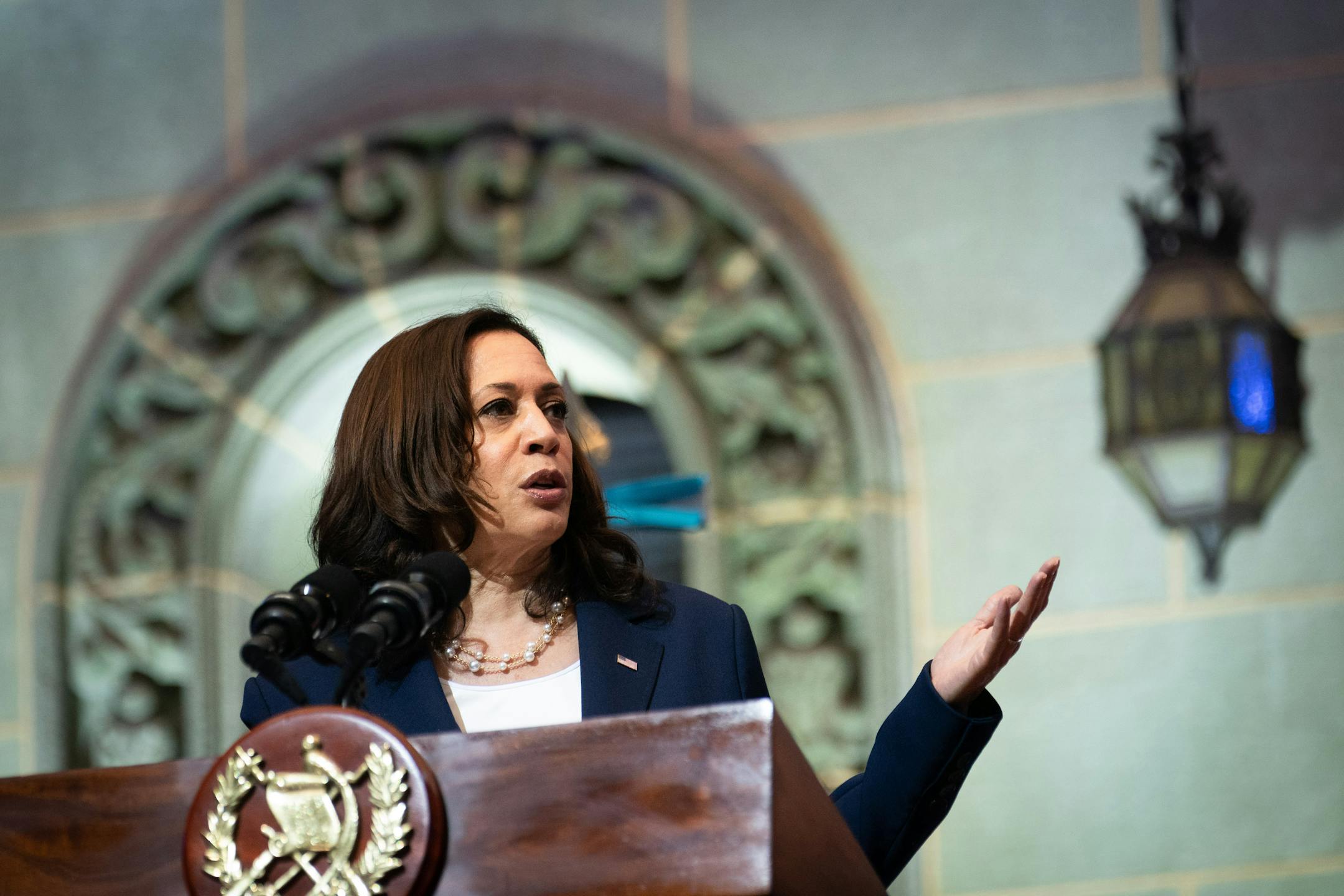
Kamala Harris' first international trip as vice president started in Guatemala with a blunt message for migrants: "Do not come," she said, shaking her head at a news conference with Guatemala's President Alejandro Giammattei. "Do not come."
It's possible that the message was meant less for the ears of migrants than for Fox News pundits and Republicans who relentlessly mischaracterize the Biden administration's halfhearted steps toward a humane immigration policy as "open borders."
Regardless, with those three words — "do not come" — Harris signaled disdain for the rights of asylum seekers under federal and international laws and dashed many people's hopes that she might reform U.S. foreign policy in the region, which has long involved a contradictory combination of humanitarian aid and support for militaries that attack human rights.
Harris traveled to Guatemala to address the "root causes" of immigration, such as poverty and violence. But she made no mention of the U.S. role in those conditions, such as training right-wing death squads, financing coups or investing in extractive and exploitative industries. She promised to fight corruption but left out the U.S. role in fueling corruption.
Our understanding of corruption in countries south of the U.S.-Mexico border is deeply flawed because it conceives of the problem as separate from ourselves and endemic to the region, rather than tangled up with American foreign policy, investments, gun smuggling and firearms exports. When U.S. leaders talk of corruption in Latin America, it fuels racist tropes about Latinos by failing to acknowledge U.S. complicity.
Instead of tackling that complicity, Harris announced tens of millions of dollars in more aid, such as a $40 million "empowerment" initiative for "young, primarily Indigenous women," and bragged about convening "some of our biggest CEOs" to increase investments.
But even a cursory glance at those CEOs reveals disregard for history's lessons. Among the companies is Nespresso, which was found to have Guatemalan child labor in its supply chain last year. Many coffee producers dread the Nestlé-owned company.
"Nestlé hurts us a lot," Miguel Tejero, a coffee industry leader in Oaxaca, Mexico, told me. He said the company floods markets with cheaper Robusta coffee, decreasing demand for the high-quality Arabica that small-scale producers grow. Studies show that less than 10% of the wealth from coffee stays in producing countries.


