

While some women scream for their husbands whenever they see a spider in the house, I scream for my 14-year-old daughter, Brianna. She comes running, jokes me for being afraid, gently scoops up the wayward spider and then takes her outside. Brianna has loved insects and spiders her entire life and has always shown great compassion toward them. She's constantly rescuing dragonflies who get caught in our screened-in porch and can catch houseflies like a ninja, with one hand movement. We call her "the bug whisperer."
Just as Bri wouldn't hurt a fly - really - she certainly would never take live cockroaches, cut them up and implant electrodes into them for "fun." I would like to think that no child would. Yet this is exactly what a Michigan-based company called Backyard Brains is encouraging kids to do with its new RoboRoach kits.
Unbelievably, the company is trying to pass off this insect torture as "educational." I say the only thing that RoboRoach teaches kids is that it's OK to hurt and torment animals.
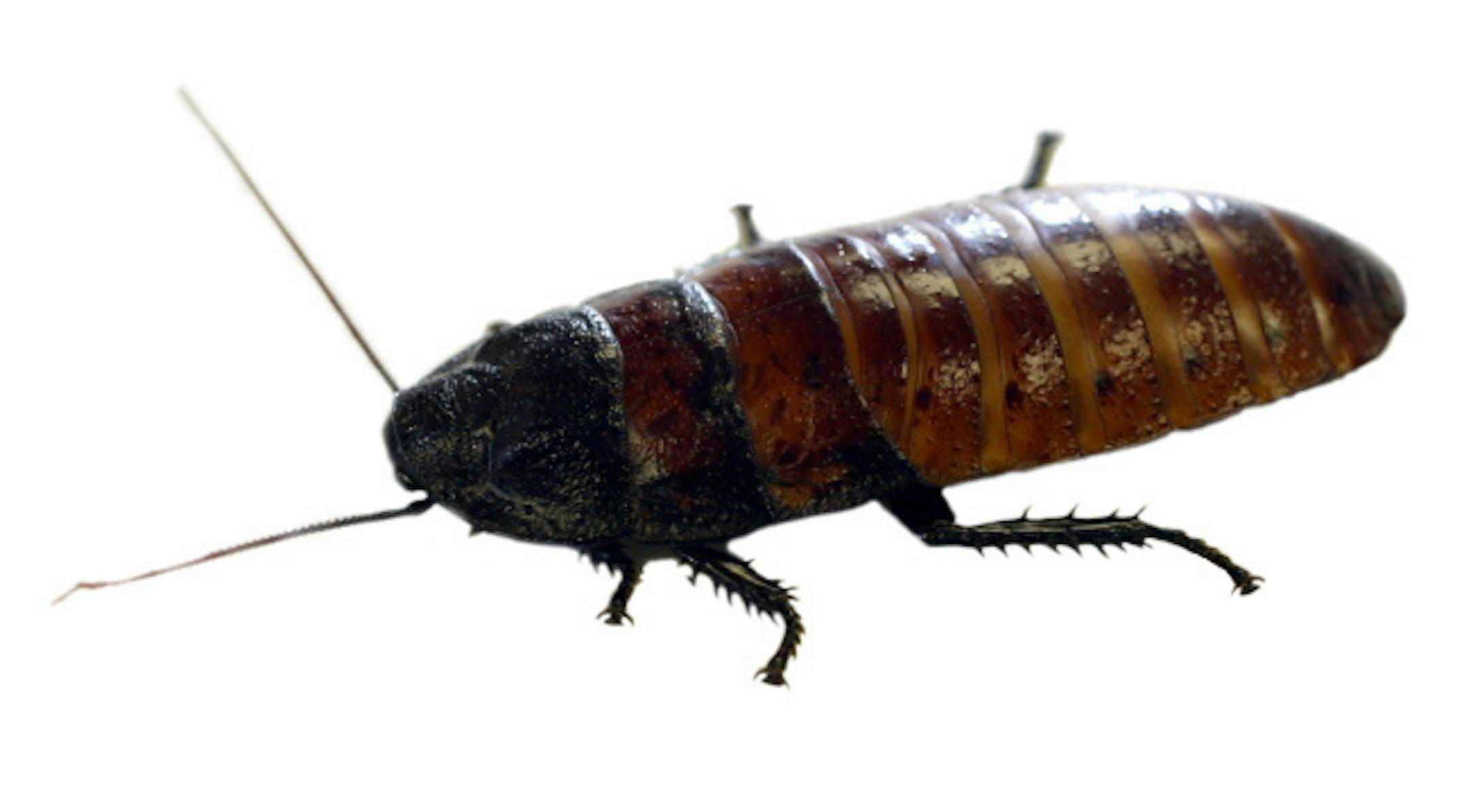
RoboRoach kits instruct kids to "anesthetize" a live cockroach by placing him or her in ice water for several minutes. Then they are supposed to sand down the animal's thorax (yes, you read that right) in order to remove the waxy substance that coats cockroaches' bodies (which keeps them hydrated). Next, they are to use a needle to puncture the thorax, superglue an electrode connector to it, cut off most of the roach's antennae (which roaches need in order to navigate), and superglue electrodes to the stubs. Finally, they are instructed to use a hot glue gun to attach a battery pack to the roach's back. And voil: At the completion of all that live-animal mutilation, kids will be rewarded by being able to control the cockroach's movements via a smartphone app.
Wired calls the RoboRoach "an ethics-free lesson in mind control for the pursuit of entertainment." PETA calls it cruel and is asking Michigan authorities, including the state attorney general, to investigate and take appropriate enforcement action for any violations that they may find.
It's also bad science. RoboRoach gives kids the idea that all you need to become a skilled neuroscientist (or veterinary surgeon) is a steady hand, a smartphone and a "disposable" insect.
Here's what we should be teaching our kids instead: All animals, no matter how tiny or unpopular, deserve to be treated with compassion. There's no reason to believe that cockroaches can't feel pain — in fact, studies indicate that they do. Other studies have found that cockroaches are social beings who "talk" to one another, can recognize individual members of their family and live together in closely bonded groups. They make collective decisions — about where to seek shelter, for instance — that will benefit the entire cockroach clan.
Researchers have also used computer simulations to show that, even with their tiny brains, insects have enough neural circuits to possess consciousness. As Professor Lars Chittka, one of the researchers, explains, "Animals with bigger brains are not necessarily more intelligent."


