

Businesses are beginning to sprout up to meet the demand for new kinds of working arrangements. The pandemic showed us how obsolete the one-size-fits-all 40-hour office week has become.
Knowledge workers are looking for new models, and what's emerging are hybrids of the old approaches. One such model I'm optimistic about is the "neighborhood clubhouse," an option that exists somewhere between a coffee shop and a co-working space.
Think about how three existing workplace models have fallen short for many workers. The traditional centralized office might be in an inconvenient location, or just unnecessary for the kind of work being done — which is one reason remote work has been so popular to begin with.
Working from home has its limitations as well; not everyone has a spare bedroom to turn into a home office, or a worker might be sharing a home with young children or other family members that can be disruptive to a workday. Some people would rather work around other professionals rather than spend the day alone.
Until now, the alternative has been a traditional co-working model — something like a WeWork Co. or Industrious space — but those, too, have their limitations. They're often in central business districts, and if you're not looking to travel into the city to go to an office, you probably don't want to commute to a WeWork either. They're also expensive, depending on what you want the space for.
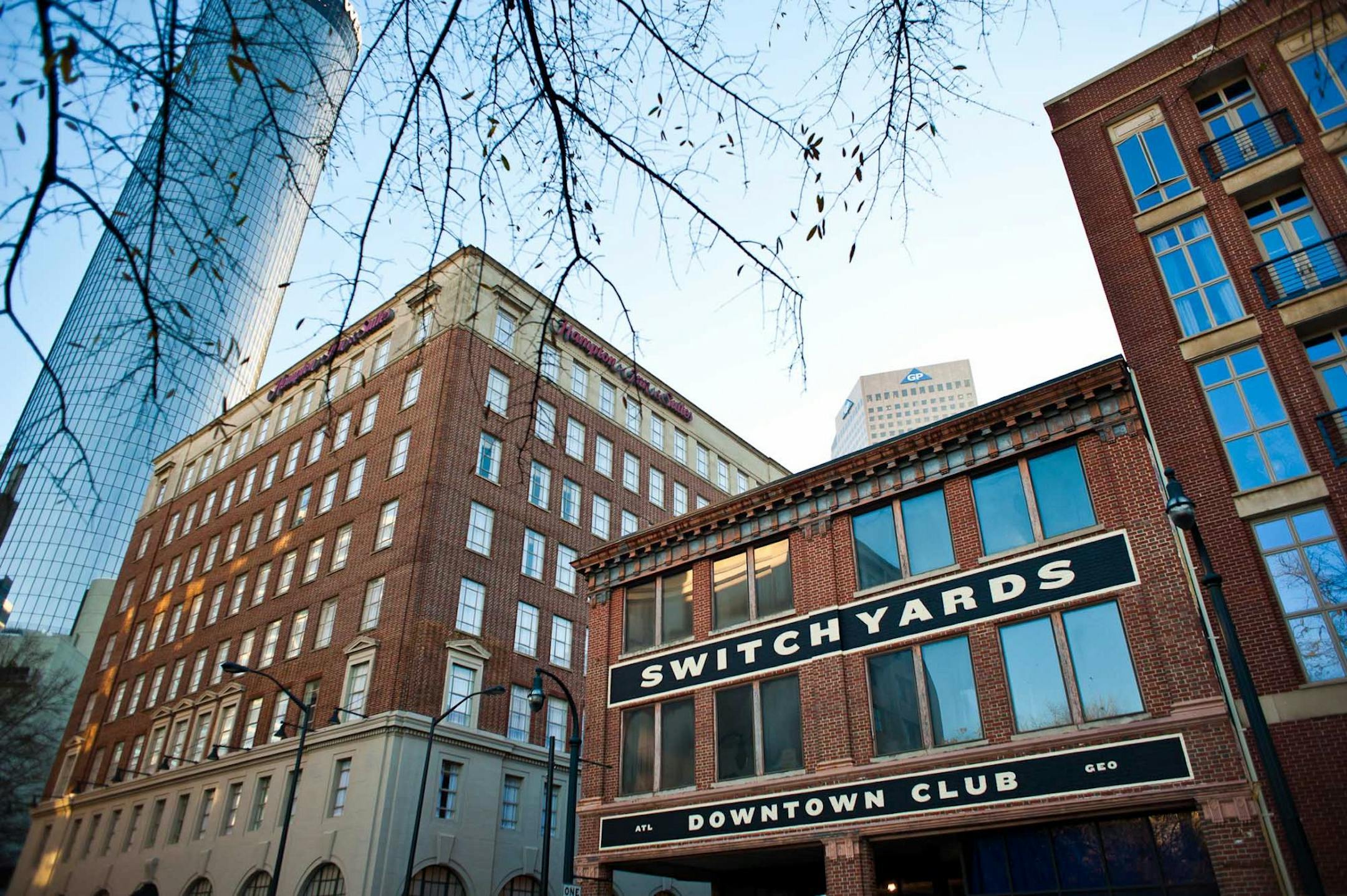
Enter the neighborhood clubhouse. I was introduced to one such establishment, Switchyards in Atlanta, when I reconnected with the founder, an old local business acquaintance, a couple of weeks ago.
I like to describe it as flipping the model of a coffee shop. In a coffee shop, you pay for a drink and then, if the coffee shop is laid out with comfortable seating and tables, you might end up working there for a couple of hours, effectively renting the space for free. In the clubhouse model, you pay a monthly fee — in the case of Switchyards, $50 per month — and then you get a drink for free.
Switchyards has three locations in Atlanta, two of which are in communities full of creative workers. The idea is to plant locations in people's neighborhoods rather than in traditional office districts.



