

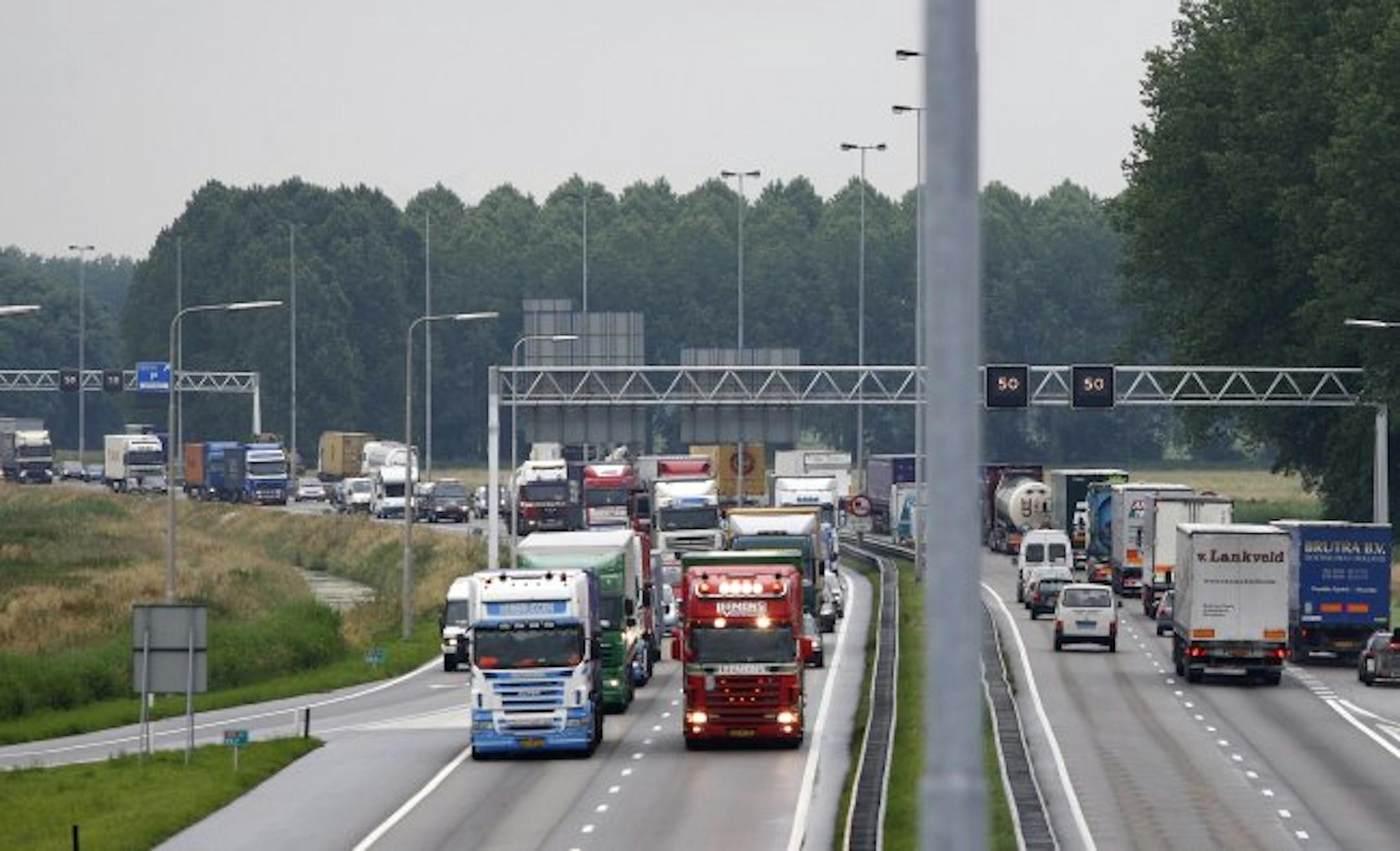
Nearly 23 years ago, I barely survived a truck crash that left me permanently disfigured. My recovery has been long and painful and seemingly endless, with future surgeries still planned to maintain my progress and function. As a result of my experience, and finding out that I am but one of the tens of thousands of yearly survivors seriously injured in truck crashes, I became a truck-safety advocate to make improvements and reduce the unacceptably high, yearly toll of truck-crash-related deaths and injuries.
I was appalled, while reading about a truck convoy that rolled through downtown Duluth in protest of weight restrictions on interstate highways, to learn that U.S. Rep. Chip Cravaack and Sen. Amy Klobuchar support the push by the Associated Contract Loggers and Truckers of Minnesota for a special-interest exemption from the federal 80,000-pound truck weight limit on interstate roads. In addition to being a bad precedent, it is downright irresponsible for members of Congress to put the request of one industry before the safety of the general public.
Bigger trucks are more deadly, more destructive to road and bridge infrastructure, and more costly to taxpayers, who will be forced to pay the bill for the damage. When Congress granted Maine and Vermont special pilot projects to exceed federal weight limits, the results were disastrous. According to the Vermont Pilot Program Final Report, the bigger trucks proved to be:
More dangerous ...
• "On Vermont's non-Interstate highways, where significant safety gains were expected with the shift of trucks to the Interstates, the number of crashes increased by 24 percent."
• "Injury-related truck crashes on Vermont's non-Interstate highways, increased by 28 percent."
• "The total number of truck crashes on Vermont's Interstate highways increased by 10 percent."
... and more damaging and costly, even with the addition of a sixth axle:


