

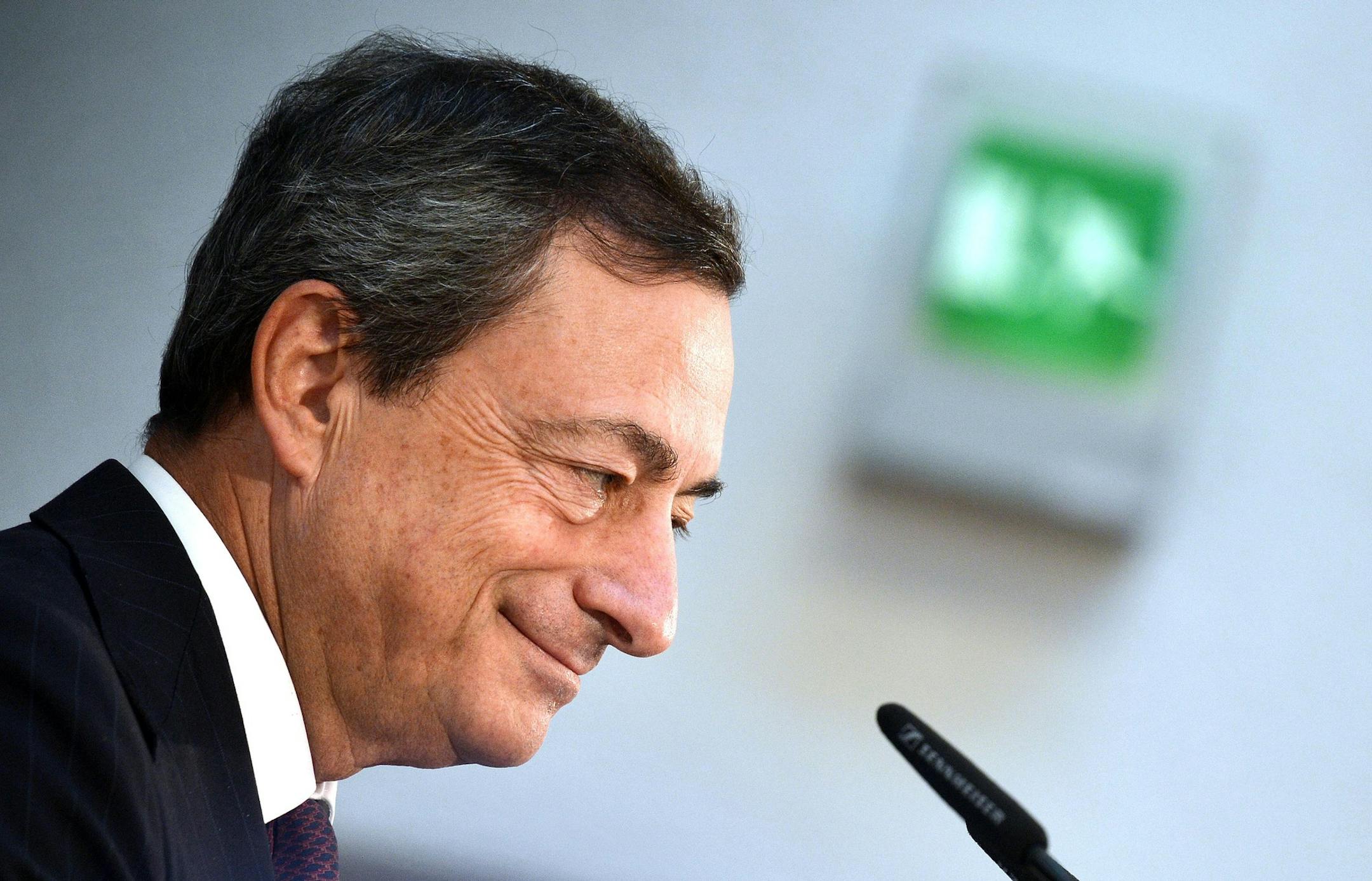
VILNIUS, Lithuania – European Central Bank President Mario Draghi Monday put his weight behind a European Union banking union during a trip to Berlin, two days after Germany led an attack on a proposal to centralize control of failing lenders.
German Finance Minister Wolfgang Schaeuble sought to keep responsibility for failing banks in national hands during two days of meetings last week in Vilnius, Lithuania. He led a chorus of dissent against the European Commission's plan to give itself final say over when to close banks and to create a 55 billion-euro ($73 billion) common fund for resolution costs.
If Germany derails momentum toward a year-end deal on a Single Resolution Mechanism, it may imperil efforts to restore confidence in the eurozone's financial system. Draghi said the European Union needs to press ahead.
"Banking union should help speed up the repair of banks — that is if, as I hope, we end up with a strong single resolution mechanism," Draghi said in Berlin Monday. "We need a mechanism that allows non-viable banks to be wound down without financial stability risks, as we see in the U.S."
If the plan doesn't move forward quickly, the ECB won't be able to count on cross-border backstops if it encounters problems at euro-area banks. The ECB is scheduled to begin supervising lenders in the currency zone as soon as October 2014, forcing the European Union to grapple with who should decide when to close a bank and who will pay for it.
ECB Executive Board member Yves Mersch said Monday that the banking union is the "most immediate concern." The ECB has started preparatory work on a review of banks' balance sheets and will provide a proposal for the assessment in coming weeks, he said.
Schaeuble said the European Commission's proposal must be overhauled because it's on shaky legal ground and could endanger national control of budgets. In Vilnius, Schaeuble was joined by critics from Sweden to Slovakia.
At the same time, finance ministers renewed pledges to strive for an agreement quickly so financial markets won't lose confidence that the currency zone is overcoming its crisis.


