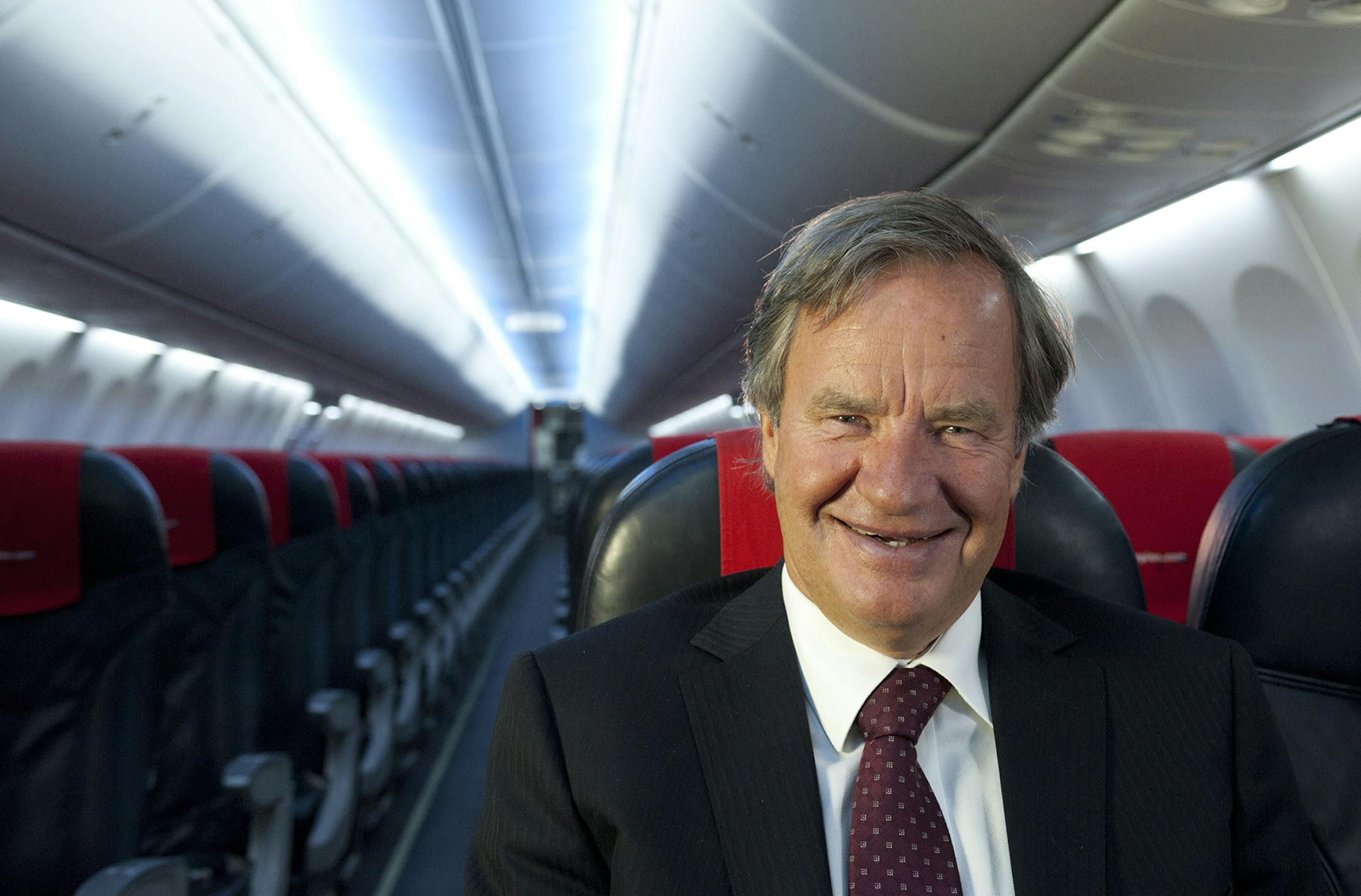
He was a pilot in Norway's air force, then a lawyer. Like many Scandinavians, he has penned a thriller in his spare time. But Bjorn Kjos is celebrated in his home country as the man who brought low-cost flying to one of Europe's most expensive countries.
Last year the airline he co-founded and runs, Norwegian Air Shuttle (NAS), placed the biggest aircraft order Europe has yet seen. It will buy 222 Boeing and Airbus jets for around $10 billion, aiming to compete with Ryanair and easyJet, Europe's champions of cheap aviation.
This is on top of an earlier order for a fleet of Boeing 787 Dreamliners, which NAS will use (now that their battery problems have been fixed) to launch flights to Asia and America later this year. Offering such a long-haul, low-cost service will be fiendishly hard, but Kjos has the ambition and appetite for risk of a Viking hopping on a longboat and paddling off to pillage Northumberland.
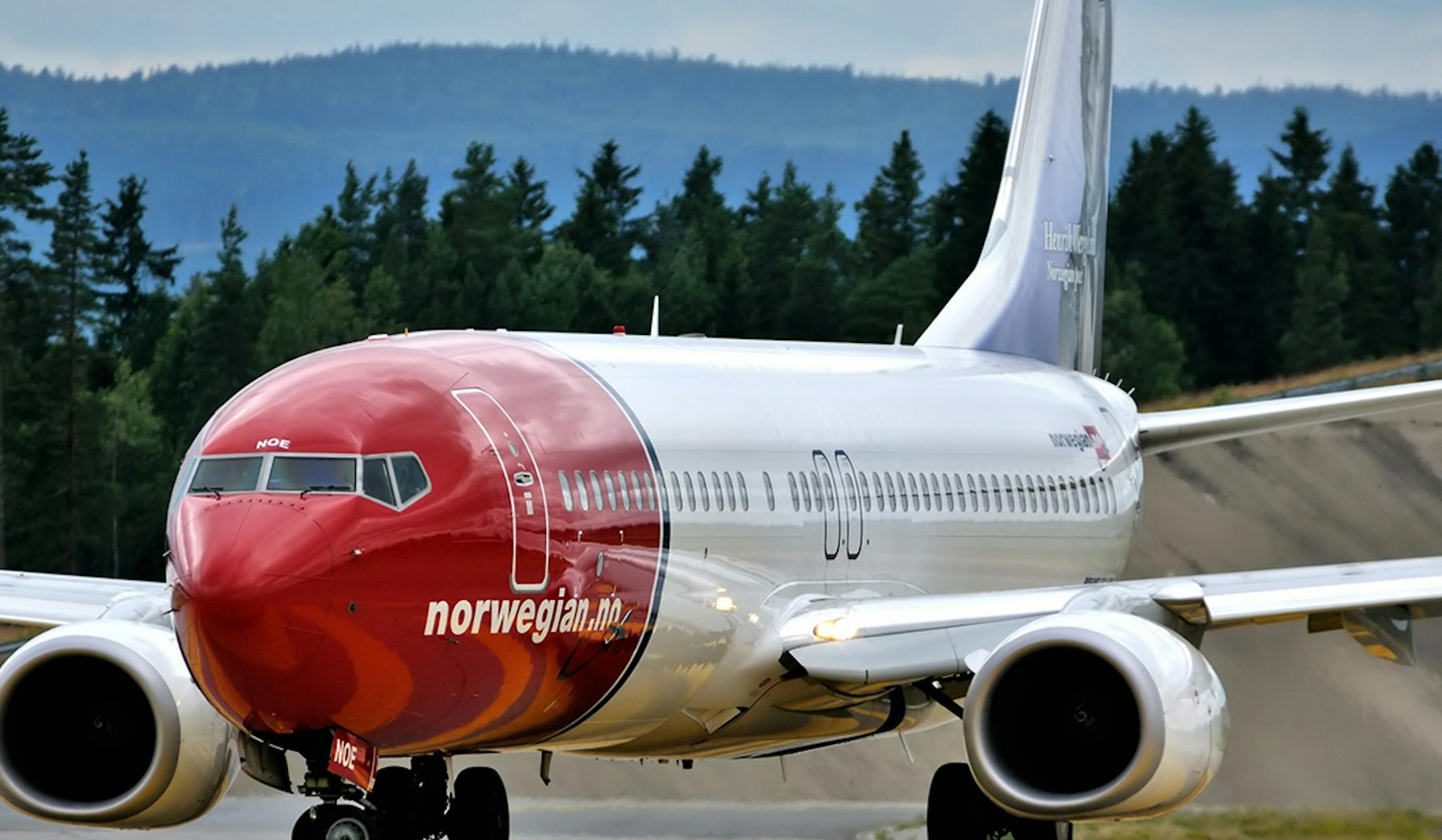
To escape high Nordic labor costs and taxes, NAS is increasingly basing planes and hiring people elsewhere: in Spanish resorts and at London's Gatwick Airport. Its back office is in Latvia; its IT department is in Ukraine. It plans to run its Asian flights out of Bangkok, and hopes to fill the planes mostly with newly rich Asians enjoying their first foreign holidays. NAS's planes, which like Santa's chief reindeer have shiny red noses, are set to become a familiar sight.
Kjos became a buccaneering airline boss largely by accident. In 1993, when he was a partner in a law firm, friends asked him to draft an investment plan to revive their collapsed aviation company, which was flying commuter routes under contract to another carrier, Braathens. Finding fresh investors proved hard, so after all the work he had put in, Kjos and his brother decided to take a 55 percent stake (since reduced to 27 percent) in what became NAS. In 2001 Braathens was taken over by SAS, a struggling carrier part-owned by the governments of Sweden, Denmark and Norway, and took the commuter routes in-house. Thus Kjos was forced to relaunch NAS as a low-cost airline, mainly serving Scandinavia.
Axing costs with a fleet of new planes
As fuel prices soared in the mid-2000s, and competition from the likes of Ryanair and easyJet intensified, Kjos realized that the only route to survival was to buy lots of new, fuel-efficient planes to achieve economies of scale, and to base some of them in cheaper countries. Boeing and Airbus are straining to keep up with booming demand for new aircraft, so by reserving a large chunk of their delivery slots NAS is denying potential rivals the chance to refresh their fleets with better planes.
Preben Rasch-Olsen of Carnegie, an investment bank in Oslo, reckons that Kjos' gamble will pay off. Even before NAS's planned expansion across Europe and beyond, there is much scope in the Nordic countries for swiping passengers from SAS — perhaps enough to fill all the new planes NAS will receive in the next five years.
Last month Ryanair announced a big order of its own, saying it would buy 175 Boeing 737s for around $8 billion. But whereas NAS is mainly ordering the re-engined MAX version of the 737, to be launched in 2017, Ryanair is choosing a less fuel-efficient version. Its boss, Michael O'Leary, seems to be betting on a lower fuel price than Kjos.