

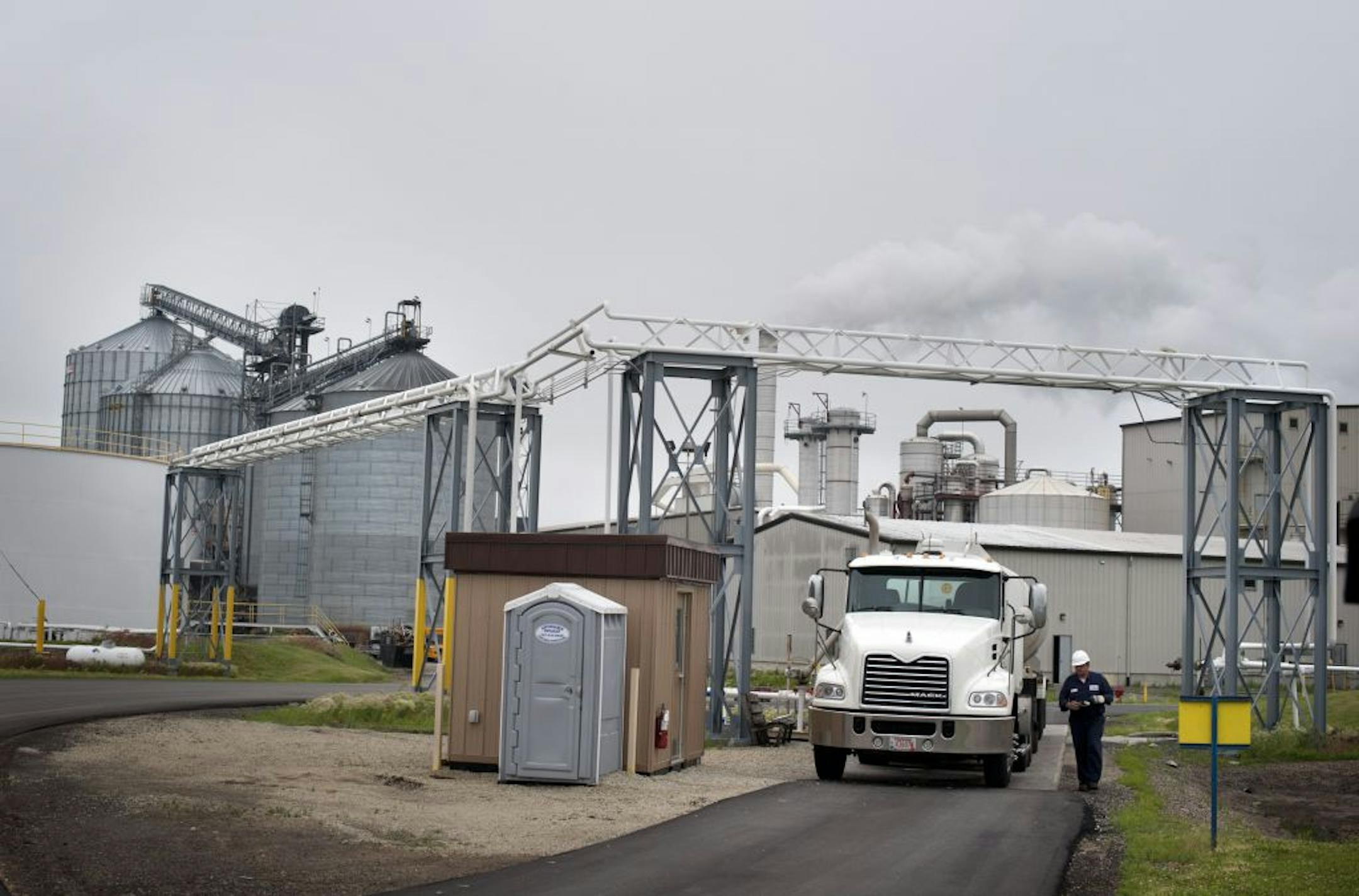
Minnesota's ethanol makers are caught in an unprofitable squeeze.
Seven producers tracked by the Star Tribune have reported net losses for the quarter ending in June or July, the second bad quarter in a row.
Across the industry, companies are pressured on two sides -- high prices for corn, their single largest cost, and lagging prices for ethanol, their main product.
"The conditions are tough at best," said Brian Kletscher, president of the Minnesota Biofuels Association and CEO of Highwater Ethanol, whose plant in Lamberton, Minn., posted a net loss of $1 million in the second quarter.
In a major shift, the production of ethanol alone -- not counting byproducts -- is no longer a break-even proposition, according to a Willmar, Minn., firm that tracks 60 ethanol producers.
"The big story is that the cost of the corn is higher on a per-gallon basis than what we can sell the ethanol for," said John Christianson, principal in Christianson & Associates, which recently published its annual Biofuels Benchmarking Industry Report. "That dynamic happened in the first two quarters of 2012."
To break even, or stave off bigger losses, ethanol producers now rely more heavily on sales of an animal feed byproduct, called distillers' grains, and industrial corn oil. Some plants also sell carbon dioxide captured from fermentation.
These byproducts accounted for 23 percent of average ethanol plant revenues in 2012, up from 16 percent in 2008, Christianson said. Yet even when those revenues are added in, the least efficient ethanol plants still didn't make money, he said.



