

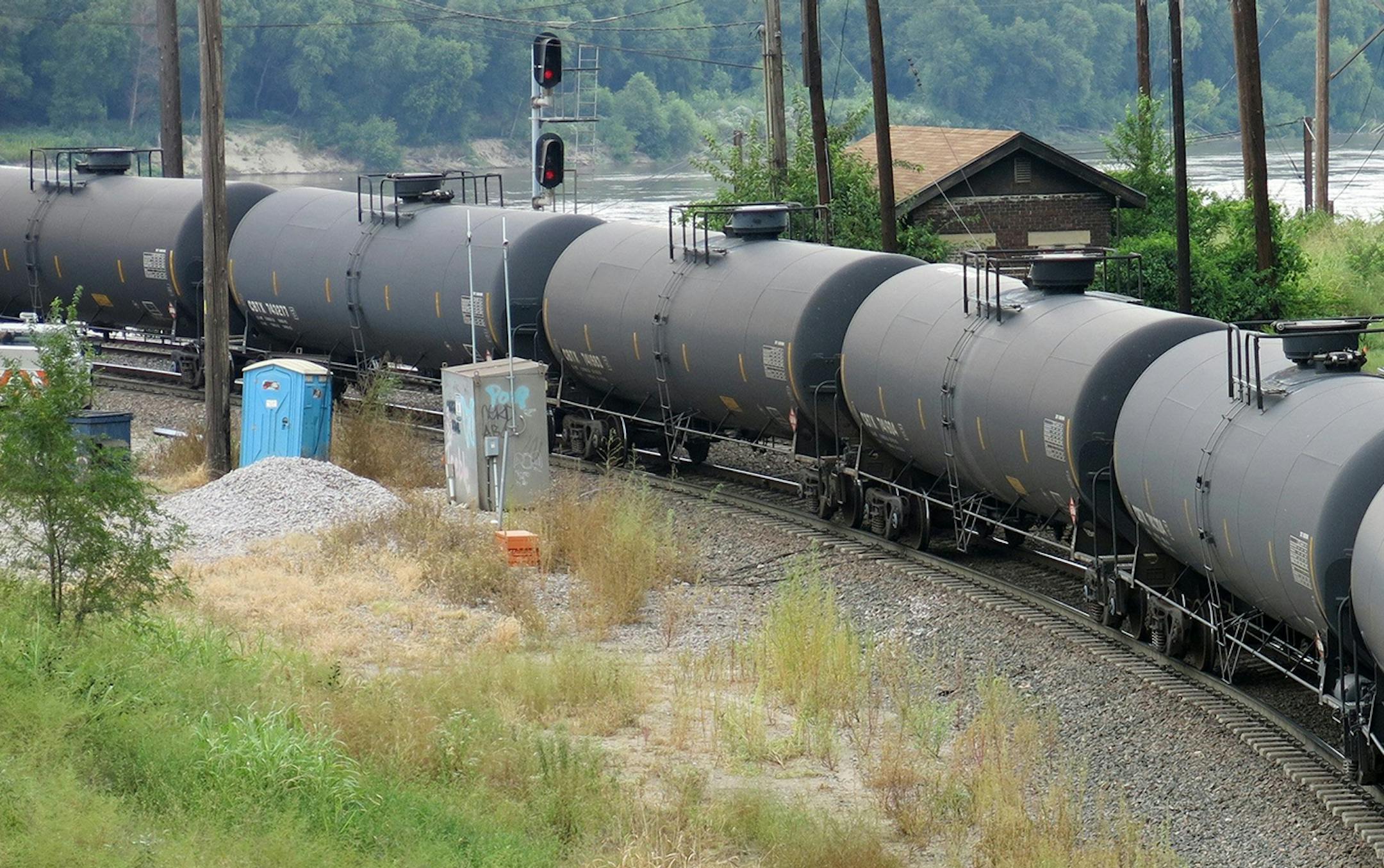
WASHINGTON – Ethanol producers are pushing back hard against new rail safety rules after a federal study found that ethanol poses hazards equal to or greater than crude oil in rail transportation.
An analysis of tank car damage in derailments published last month by the Federal Railroad Administration found that tank cars carrying ethanol were 1.5 times more likely to explode when exposed to fire for prolonged periods. The Renewable Fuels Association dismissed the report, blaming track defects for the explosions.
But even as the rail and petroleum industries settled this week on a new tank car design to improve the safety of transporting crude oil by rail, the ethanol industry, which uses similar tank cars, says the safety benefits of the improved cars don't justify the cost.
"Regulatory priorities should focus on preventing the derailments," said Bob Dinneen, president and CEO of the Renewable Fuels Association.
The public comment period for new rules intended to improve the safety of rail shipments of flammable liquids ended Tuesday, and the U.S. Department of Transportation would like to make the rules final by year's end.
In comments filed late Tuesday, Dinneen's organization, the ethanol industry's principal advocacy group, argued that ethanol is less volatile than crude oil. "Ethanol should not be included with volatile crude oil when considering rule-making for tank car packaging designs or timelines for those designs," he said.
The original push to improve tank car safety, however, came after a string of derailments involving ethanol. One, in June 2009 in Cherry Valley, Ill., killed a motorist waiting at a road crossing. The National Transportation Safety Board had been warning for years about the poor performance of the DOT-111 tank car in derailments, and in its report on the Cherry Valley accident, the NTSB again called on federal regulators to improve the design.
The Federal Railroad Administration analysis examined 16 rail accidents going back to 2006 involving the DOT-111 tank car, which has a thin steel shell that lacks protection from punctures or fire exposure. In nine of those accidents, the agency compared cars carrying ethanol and crude oil that were not compromised when they derailed but failed in the fire that followed.



