

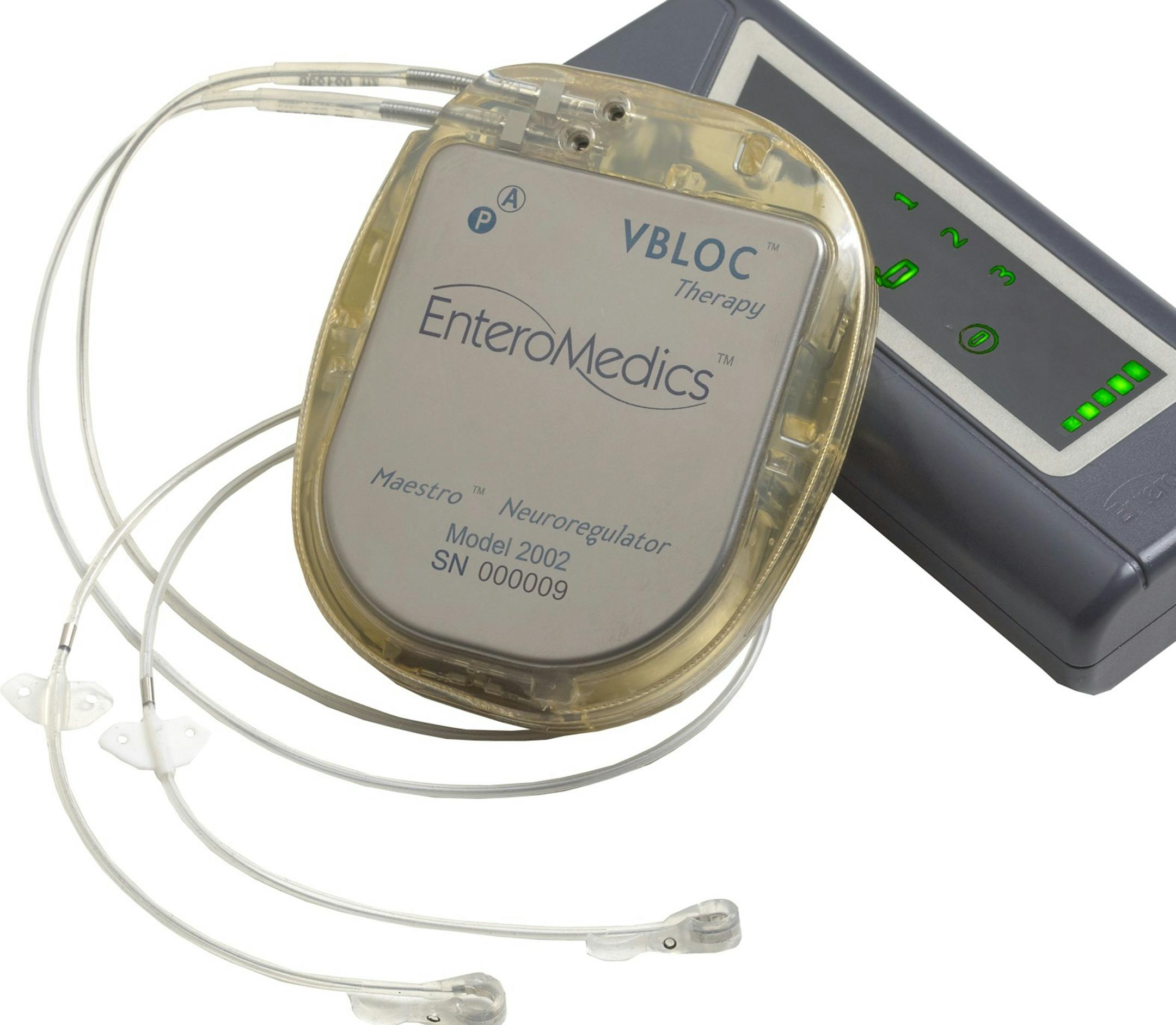
Roseville-based EnteroMedics, which sells a novel nerve-stimulator that can cause weight loss in patients with obesity, is hoping that positive new results from a "real world" study will be strong enough to convince insurers to pay for the medical device.
The Food and Drug Administration approved EnteroMedics' implantable Maestro Rechargeable System in January 2015 for treatment of obesity. But as often happens with new therapies, commercial insurers are reluctant to provide coverage until they can see more data on patients outside of a controlled clinical trial.
So far no insurer has a policy to cover the device, though patients at Veterans Affairs hospitals can get it through a five-year sole-source deal that EnteroMedics announced in October with a VA supplier, Academy Medical LLC.
That means patients paid out of pocket for virtually all of the 59 units that were sold between January and October this year. The company has been using consumer advertising in places like Los Angeles to find its potential patients.
The pacemaker-like device carries a list price of $19,000, though cash-paying patients may be eligible of promotional price of $10,000, EnteroMedics CEO Dan Gladney said Friday. The patient usually also has to cover the hospital and physician fees, which can drive the total cost of the procedure to $20,000 or more, depending on the location.
The device delivers what EnteroMedics calls "vBloc Neurometabolic Therapy," in which electric pulses are transmitted to the body's vagus nerve to block the natural electric signals that cause feelings of hunger and tell the stomach to expand in preparation for a meal. One result, Gladney said, is that the device doesn't impose any new restrictions on patients' diets.
The device is implanted through minimally invasive laparoscopic surgery. Although its battery is contained by a hermetically sealed case inside the body, it is recharged several times a week using a small loop placed on the skin near where the device is implanted in the abdomen.
The device therapy is seen as an alternative to surgical treatments that alter the anatomy, such as gastric bypass and gastric band procedures.


