

Energy costs: Less power means more profit

The Minnesota Chamber of Commerce is powering up its Energy Smart conservation program.

October 18, 2008 at 4:48AM
With water misters like the one over his head, dik Bolger said he saved over $46,000 in the first nine months they were use at Bolger Printing. they used to rely on old fashioned boilers to keep the winter humidity at 42 percent, necessary to keep down static electricity.
Water misters like the one over CEO dik Bolger’s head saved $43,000 in the first nine months they were in use at Bolger Printing, he said. The company used to rely on old-fashioned boilers to keep the winter humidity at 42 percent, necessary to keep down static electricity. (Star Tribune/The Minnesota Star Tribune)

Bolger Vision Beyond Print spent more than $800,000 last year to heat, cool and power equipment at the 75-year-old commercial printer's three Minneapolis buildings.

Concerned about spiraling energy costs and the company's environmental impact, CEO dik Bolger launched an initiative that's starting to deliver thousands of dollars of energy savings as it also increases effectiveness and employee comfort.

"Every dollar we save drops directly to the bottom line and reduces our environmental footprint," said Bolger, 53, who runs a $55 million-sales business. In these days of tight credit and slower consumer and business spending, green cost-saving initiatives can have significant paybacks.

Standing under ultra-efficient "T-8" lights, Bolger said the company has cut energy consumption for lighting by 42 percent while increasing illumination by 12 percent, important in a visual business that's about design, graphics and color. The payback on the lighting investment is about 3 1/2 years.

In a nearby production room, there is a new array of misters that maintain constant humidity levels in the plant. The misters, which cost $75,000, replaced the tubs of heated water that served the same function. Bolger said he already has saved $43,000 in the first nine months of this year because the company no longer has to heat the water tubs. And he got a $22,000 energy-saving rebate from Xcel Energy on the investment.

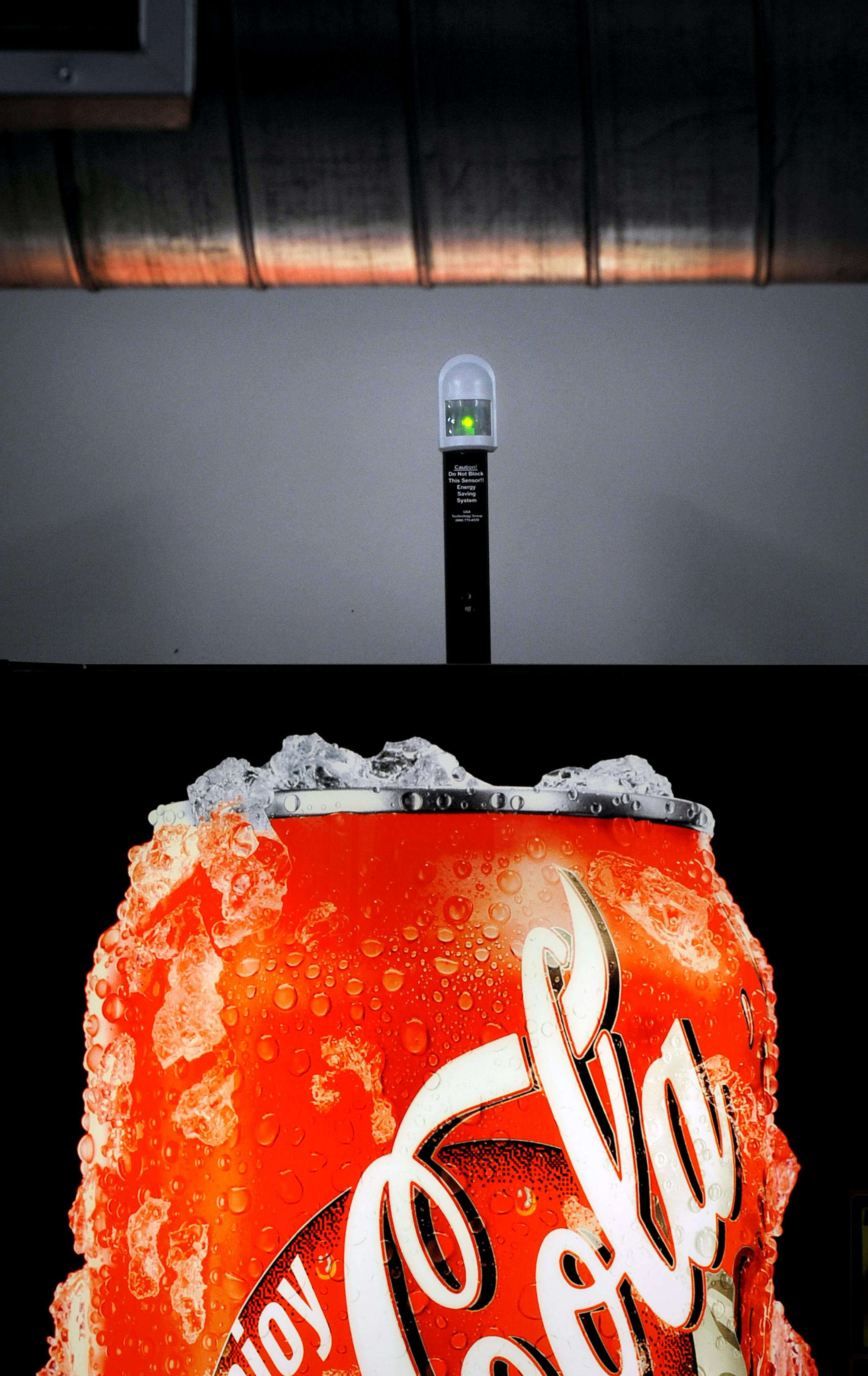
Even the vending machines have gone green. Bolger will recoup its money in nearly a year on a device called a "vending miser" that cuts in half the $380 annual electric tab for running a vending machine.

This week, the 2,400-member Minnesota Chamber of Commerce launched Energy Smart, a pilot program funded by the state's large electrical utilities to help business cut energy costs. The initiative also will help Xcel Energy, Minnesota Power, Otter Tail and Interstate Power and Light cut retail electric sales by 1.5 percent annually by 2010. Bolger has agreed to serve as an example of how investing in conservation pays off.

"We care about energy and the environment," said Bolger, who is starting to see energy cost per dollar of revenue growth drop markedly. "And our customers care. I just wish the Energy Smart program had existed when we started this process."
Powerful incentives

Minnesota power producers have incentives to conserve power, the cheapest form of energy, and produce more through wind, waste, solar and other alternative energies under the Next Generation Energy Act signed into law by Gov. Tim Pawlenty in 2007.

The chamber, working with affiliated local chambers throughout Minnesota, was picked to act as a clearinghouse and adviser to industry on best practices, referrals to utility programs and incentives.

"This is a cost-driven effort of the business community to help," said Bill Glahn, director of the Minnesota Office of Energy Security. "They're not being dragged along."

The chamber was tapped partly because of its extensive reach and the success of its several-year old Minnesota Waste Wise program that has turned millions of tons of "waste" generated by some businesses into raw material for other businesses.

For example, in the first four years of its plastic-bag recycling program with Minnesota supermarkets, Waste Wise and its vendor recovered more than 3.25 million pounds of plastic wrap and bags that were recycled into plastic lumber and other products. Another program, working with Minnesota salvage yards, removes the mercury switches from thousands of junked cars annually.

And hundreds of state restaurants and fast-food outlets now avoid landfill costs by recycling their cooking oils and food waste.

The chamber focuses mostly on businesses with 100 or fewer employees who may not have the capacity to research state, federal and utility programs that offer so-called "Conservation Improvement Programs."

"Our staff has compiled all the programs," said Mark Blaiser, executive director of Minnesota Waste Wise. "There are 150 electric utilities alone in Minnesota."

The chamber's Jill Curran has been appointed Energy Smart program manager.

Neal St. Anthony • 612-673-7144 • nstanthony@startribune.com

GLEN STUBBE � gstubbe@startribune.com -- Thursday, October 9, 2008 -- Minneapolis, Minn. -- Motion sensors power display lights on and off for employee vending machines at Bolger Printing saving hundreds of dollars each year.
Motion sensors turn display lights on and off for employee vending machines, cutting in half the $380 yearly tab it takes to run one machine. (Star Tribune/The Minnesota Star Tribune)
about the writer

about the writer

Neal St. Anthony

Columnist, reporter

Neal St. Anthony has been a Star Tribune business columnist/reporter since 1984. 

See Moreicon

More from Business

See More
card image
card image
