

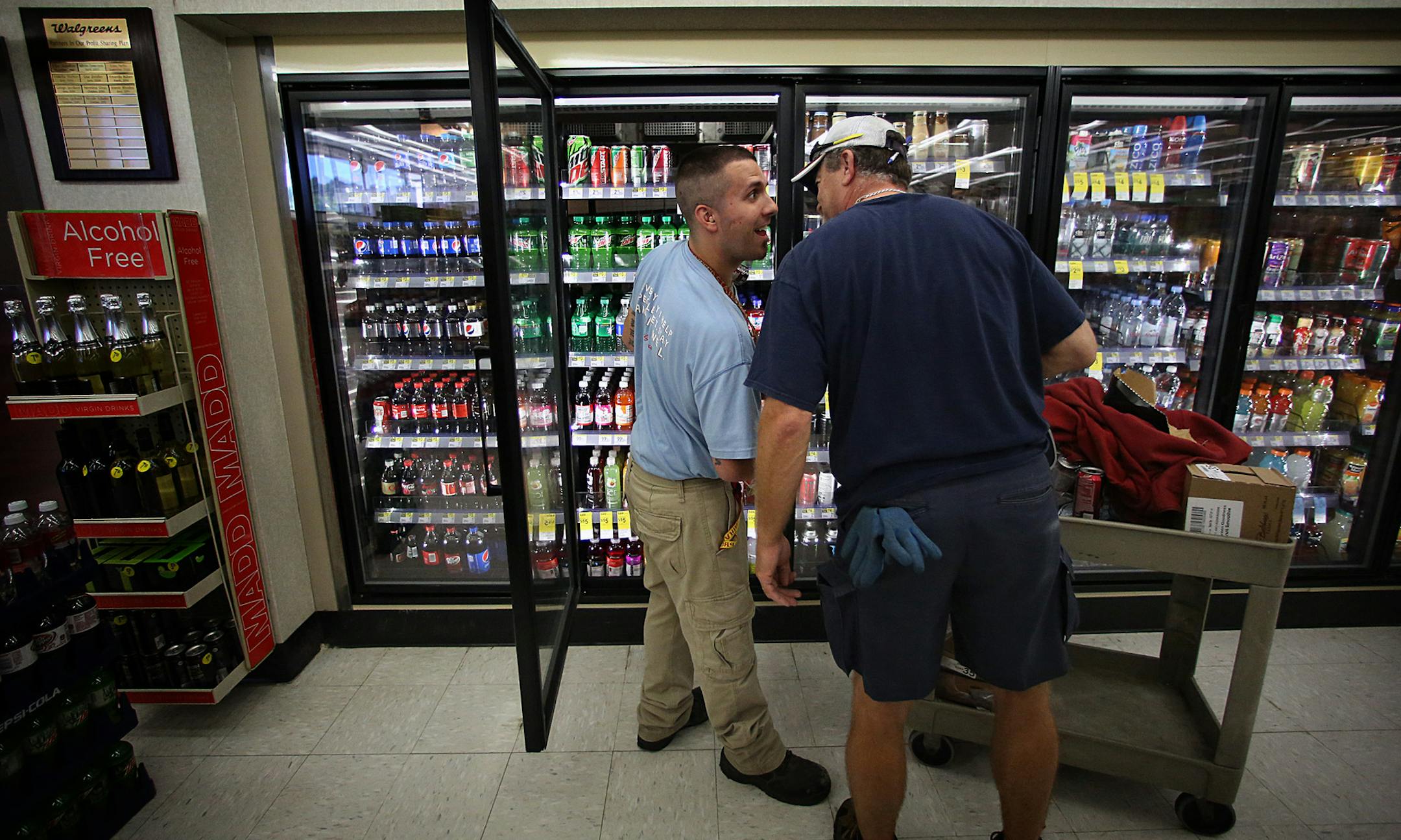
Nearly a decade ago, Marine Lance Cpl. Kyle Anderson, a can-do guy out of suburban St. Paul who was a state high school wrestling champion, was decorated for pulling a wounded buddy out of the line of fire in Iraq.
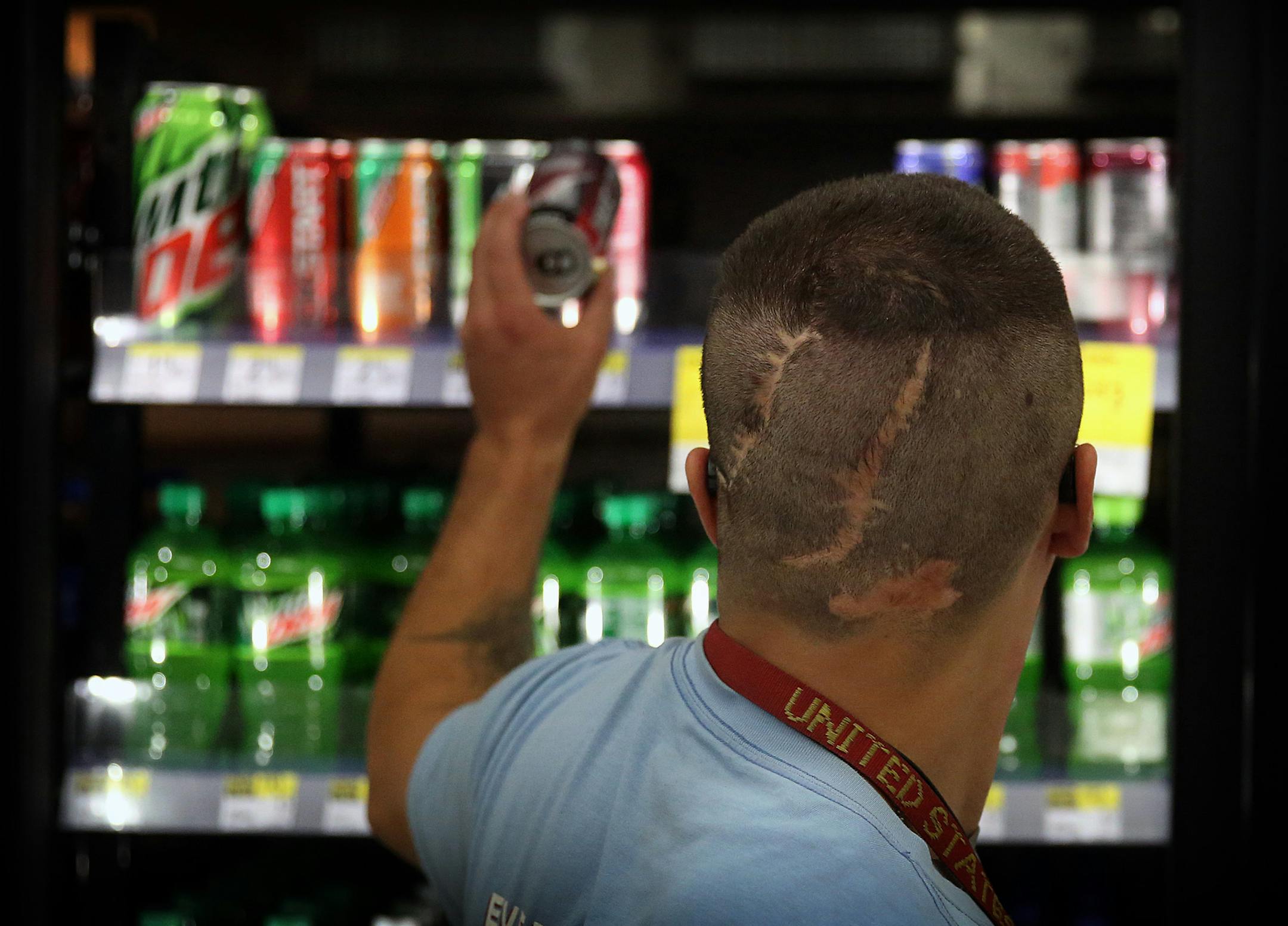
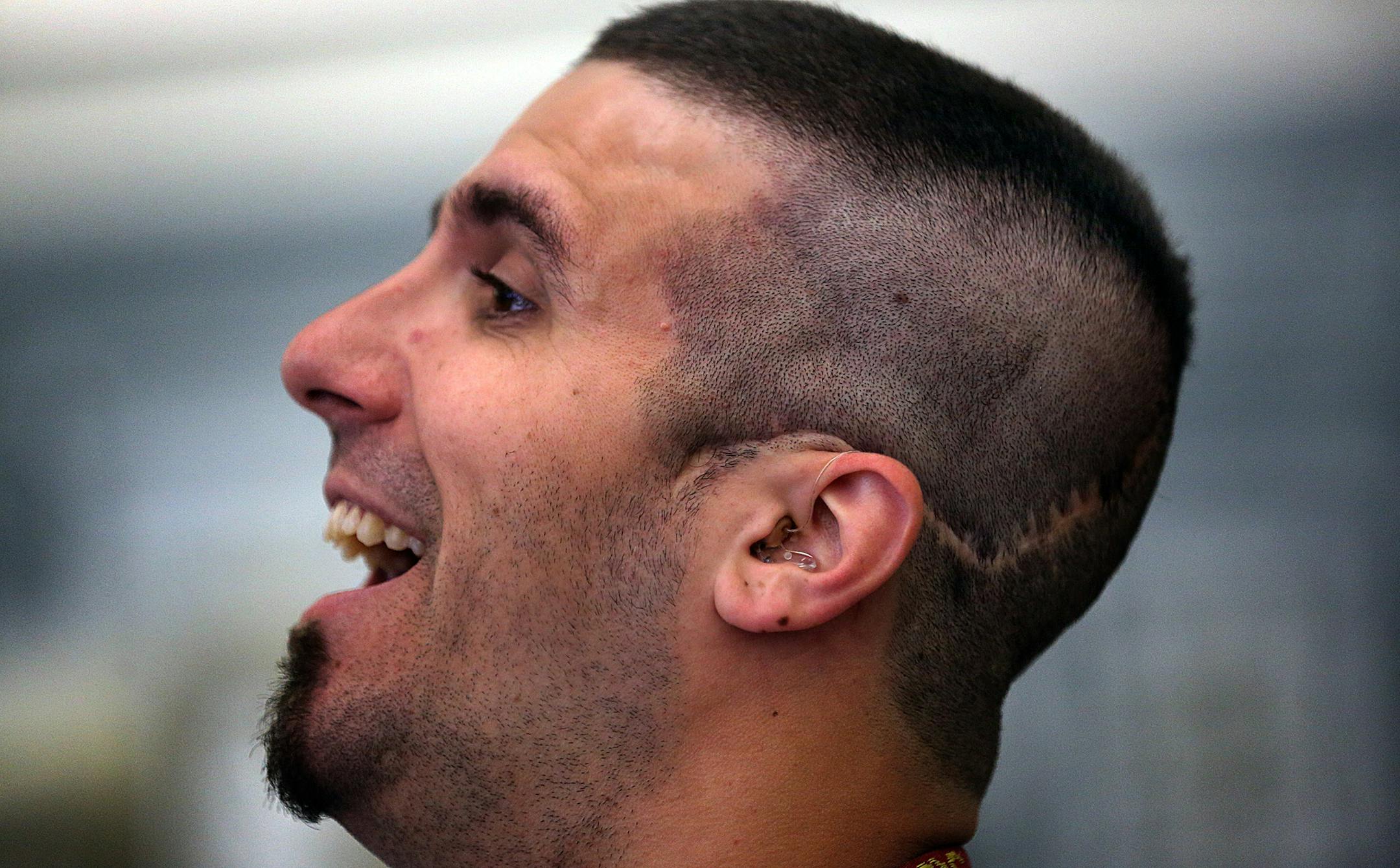
Days later, in October 2004, while on patrol, Anderson was cut down by a roadside bomb that sent pieces of shrapnel through his helmet and into his skull.
Anderson's life was saved by surgeons at Baghdad Hospital.
And that marked the beginning of years of medical work to repair his injured body and brain at the Minneapolis Veterans Affairs Medical Center.
And therapy — physical, occupational and emotional — that continues today to help him recover lost speech, coordination and strength.
This Miracle Marine, who lives independently with the help of family members, two years ago went back to work. Following a successful housekeeping internship at the VA that was part of his therapy, Anderson was hired part-time to stock shelves and manage refrigerated goods by Clay Schultze, store manager at a Walgreens in Inver Grove Heights.
"I'm always busy," Anderson said with a warm grin last week that transcended his speech impediment. "Tuesday is our busiest day. All our vendors show up. I like people. I go home then and rest."
This Labor Day marks five years since the Great Recession. Today, more Minnesotans than ever are working and the economic recovery has gained job-generating traction. Yet one group — people with disabilities, whether acquired through injury or congenital — who want to work have yet to recover from the economic downturn, according to government statistics and advocacy groups.
![Wells Fargo business systems consultant Jim Peet,who was injured in a trampoline accident in 1987, in his work space at Wells Fargo operations center Thursday Aug. 28, 2014, in Minneapolis MN.] (DAVID JOLES/STARTRIBUNE)djoles@startribune Minnesota employs more people than before the Great Recession, but the the unemployment rate of the able-to-work developmently disabled remmains 25 percent-plus. Here are the issues and f ew solutions embodied in several can-do workers who bring insight and spec](https://arc.stimg.co/startribunemedia/673TPGPCAEOS6J63EIAWJLMB5U.jpg?&w=1080)
![Wells Fargo business systems consultant consultant Jim Peet,who was injured in a trampoline accident in 1987, in his work space at Wells Fargo operations center Thursday Aug. 28, 2014, in Minneapolis MN.] (DAVID JOLES/STARTRIBUNE)djoles@startribune Minnesota employs more people than before the Great Recession, but the the unemployment rate of the able-to-work developmently disabled remmains 25 percent-plus. Here are the issues and f ew solutions embodied in several can-do workers who bring insig](https://arc.stimg.co/startribunemedia/MNNUXIQDWS6LOWTDWE6NYQMPVI.jpg?&w=1080)



