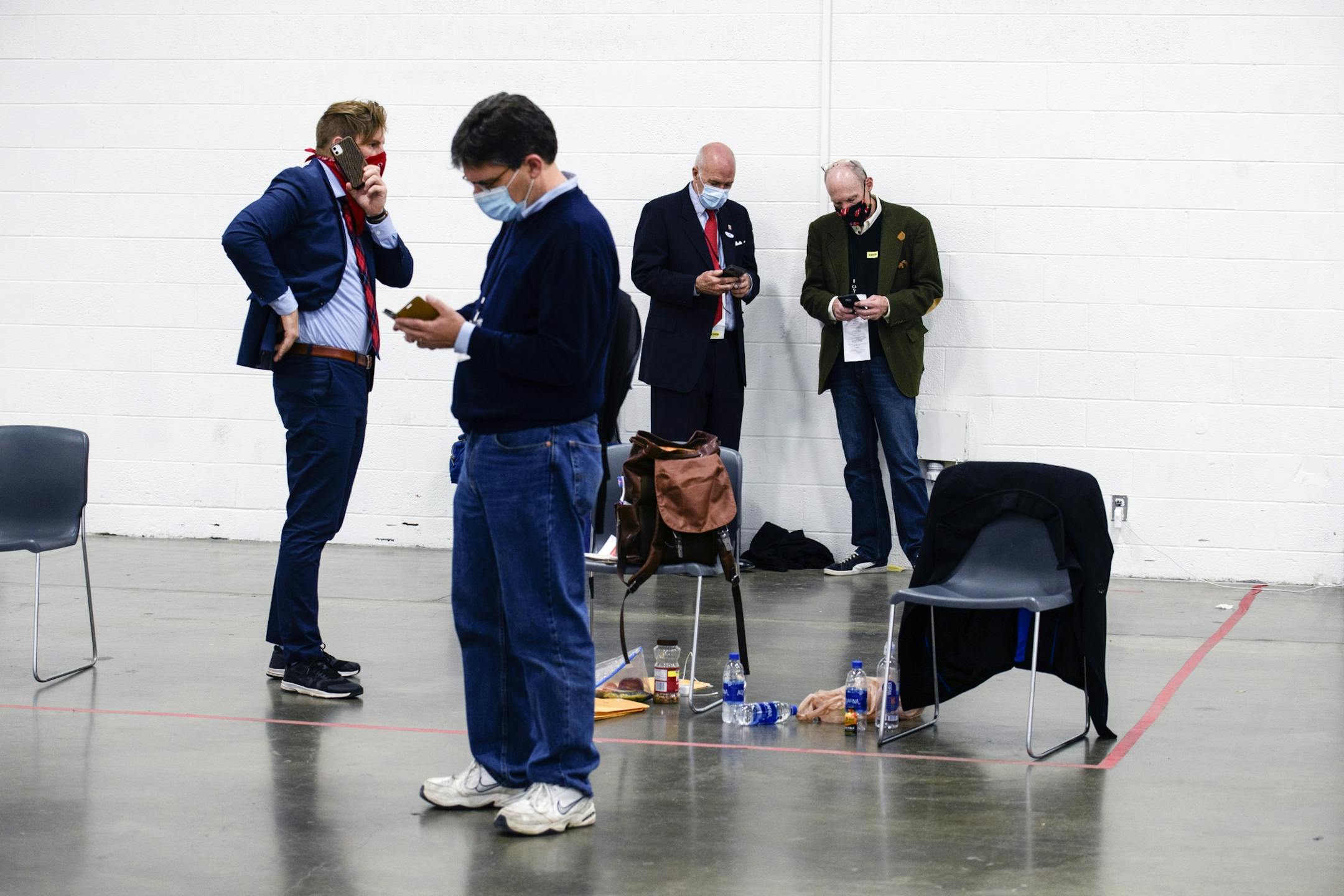
It should surprise no one that in a nation split by political differences, the 2020 election should turn out to be yet another cliffhanger.
As of early Wednesday, there is no clear winner in the contest between President Donald Trump and Democratic challenger Joe Biden. That will likely make the days ahead a high-stress period, as each side mounts challenges and pushes to move public opinion in its favor.
The watchwords now, above all others, should be patience and calm. Little is to be gained from demonizing the other side or prematurely declaring victory, as Trump did early Wednesday morning. Election results actually take time to count and to certify. In this election, electors won't meet until Dec. 14 to formally declare a winner.
At this writing, key states Wisconsin, Michigan, Pennsylvania, Nevada, Arizona, Georgia and North Carolina were still too close to call, but it's clear that the eventual winner of the presidency will lead a divided nation without a clear mandate.
In the meantime, there are likely to be legal challenges. Minnesota has been through that before, during the historic 2008 faceoff between then-Sen. Norm Coleman and his Democratic challenger, Al Franken. The court battles and recounts lasted eight grueling months before Franken was declared the winner by 312 votes. Despite assertions to the contrary, there never was evidence of widespread election fraud.
Lessons are learned in every such contest. Minnesota clarified election laws, instituted better training and created more voter protections in the wake of that election. Similarly, the wrenching presidential contest in 2000 between then-Vice President Al Gore and Republican nominee George W. Bush went to the U.S. Supreme Court after a month of recounts and legal battles over "hanging chads." That fracas spawned the Help America Vote Act, which instituted a number of reforms.
What's important now is that every legally cast vote be counted. Minnesota alone saw an unprecedented surge of 1.8 million absentee ballots in an overall record turnout. Biden won the state, and incumbent Democratic U.S. Sen. Tina Smith was re-elected.
Minnesota's urban-rural divide was clear in congressional results, with victories by incumbent Democratic U.S. Reps. Ilhan Omar, Betty McCollum and Dean Phillips and a lead for Angie Craig in the Twin Cities area, and wins in more-rural districts by Republican incumbents Tom Emmer and Pete Stauber and challenger Michelle Fischbach and a narrow advantage for Jim Hagedorn. Fischbach's decisive victory over 15-term Democratic Rep. Collin Peterson was especially noteworthy.