It's a stretch to place the names of Jared Kushner and Henry Cabot Lodge in the same sentence; it's difficult even to imagine that Lodge, the aristocratic Massachusetts senator who dominated the nation's immigration debate from the 1890s into the 1920s, would give Kushner the time of day. But Kushner's new immigration plan, aimed at reducing immigration from specific nations through the virtual elimination of what he and others have disparaged as "chain migration" and the simultaneous valorization of the highly educated, is simply a version of a blatantly discriminatory effort Lodge initiated more than a century ago.
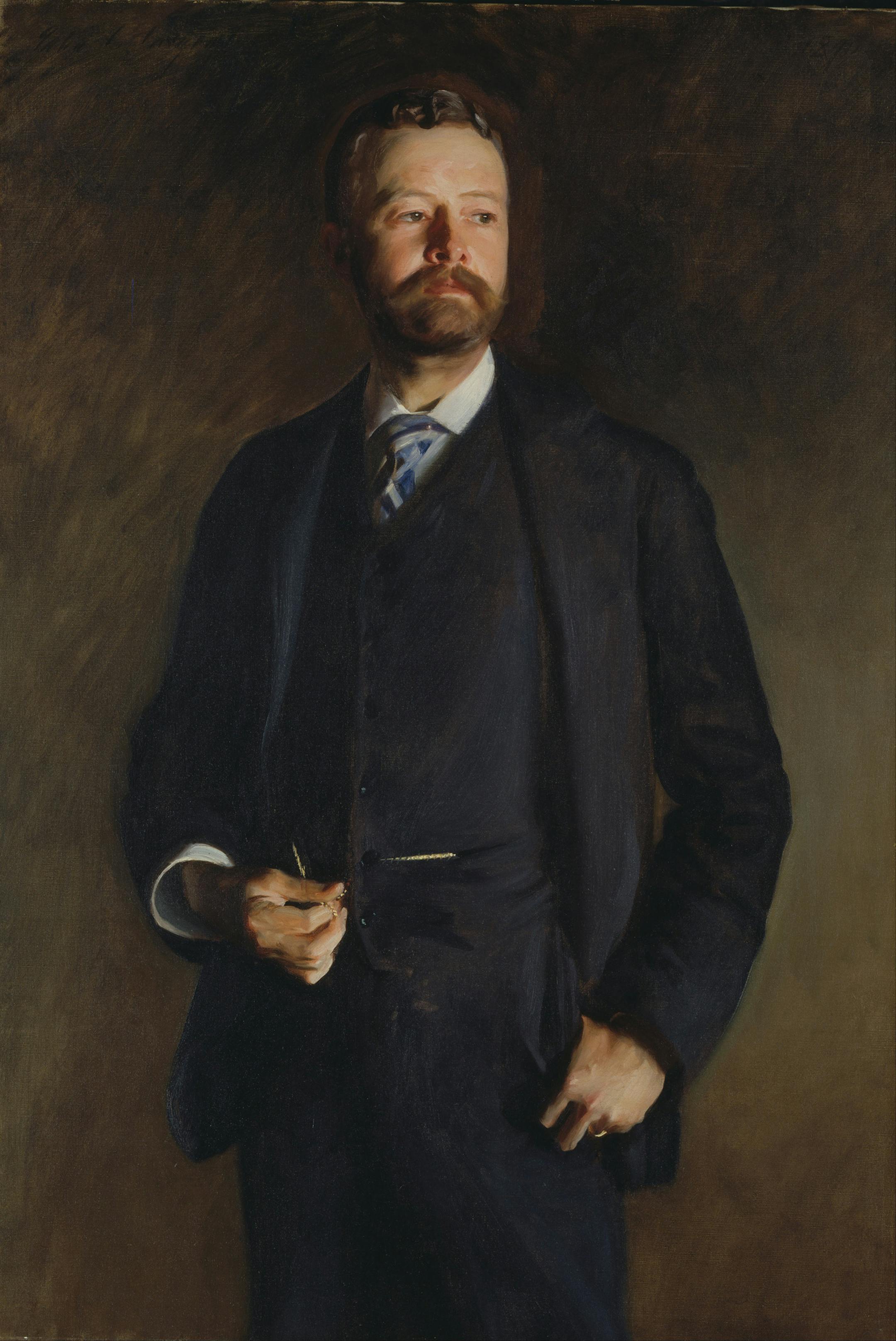
A man of uncommon refinement and even greater arrogance, Lodge was a Harvard PhD., the erudite author of more than a dozen books and, in many ways, the archetype of the Boston Brahmin of a century ago. His friend Thomas B. Reed, speaker of the House in the closing years of the 19th century, said Lodge arose from "thin soil, highly cultivated." Lodge himself celebrated his fellow Brahmins for "their intense belief in themselves, their race, and their traditions." His idea of the west, said another colleague, was Pittsfield, Mass. Look at John Singer Sargent's remarkable likeness of the young Lodge that hangs in the National Portrait Gallery. You almost feel you are despoiling him by your very presence.
As well you might have been, if you were Italian, or Greek, or a Russian Jew or from any of the other national groups he had in mind in 1895, when he rose on the Senate floor to introduce the first restrictive immigration bill aimed at Eastern and Southern Europeans. The widening streams of émigrés pouring out of the impoverished lands between the Baltic and the Mediterranean had broadened to flood stage, and Lodge determined that the best way to keep them out was to make them submit to a literacy test.
Aware of the scant educational opportunities in most of these countries, he told his fellow senators that his bill "will bear most heavily upon the Italians, Russians, Poles, Hungarians, and Asiatics, and very lightly, or not at all, upon English-speaking emigrants." And, he argued, why should it be otherwise? "The races most affected" by his test, he explained, were those "with which the English-speaking people have never hitherto assimilated, and are alien to the great body of the people of the United States."
Lodge's talk was a hit. His closest friend, Theodore Roosevelt — at the time the New York City police commissioner — called it "an A-1 speech," which pleased Lodge greatly. He was probably even more delighted with the reaction of the "Russian-Nihilistic Club" of Chicago, which burned him in effigy.
Eagerly endorsing the House version of the bill, Lodge's Massachusetts colleague Rep. Elijah Morse declared himself delighted to see that it would exclude "undesirable immigration" from "southern Europe, from Russia, from Italy, and from Greece" — people, he said, who brought to the United States little else than "an alimentary canal and an appetite."
Lodge's literacy test bill passed with ease. But on President Grover Cleveland's very last day in office, he struck it down with a veto, and there were not enough votes in the Senate to override.
Over the next 20 years, Lodge and his colleagues tried again and again, introducing a version of the literacy test into nearly every Congress. Three times it was approved by both chambers; three times it was struck down by veto. Only with anti-European fervor spiking on the brink of World War I, and new theories of "racial eugenics" shaping public debate, was it finally enacted over President Woodrow Wilson's second veto, in 1917.