

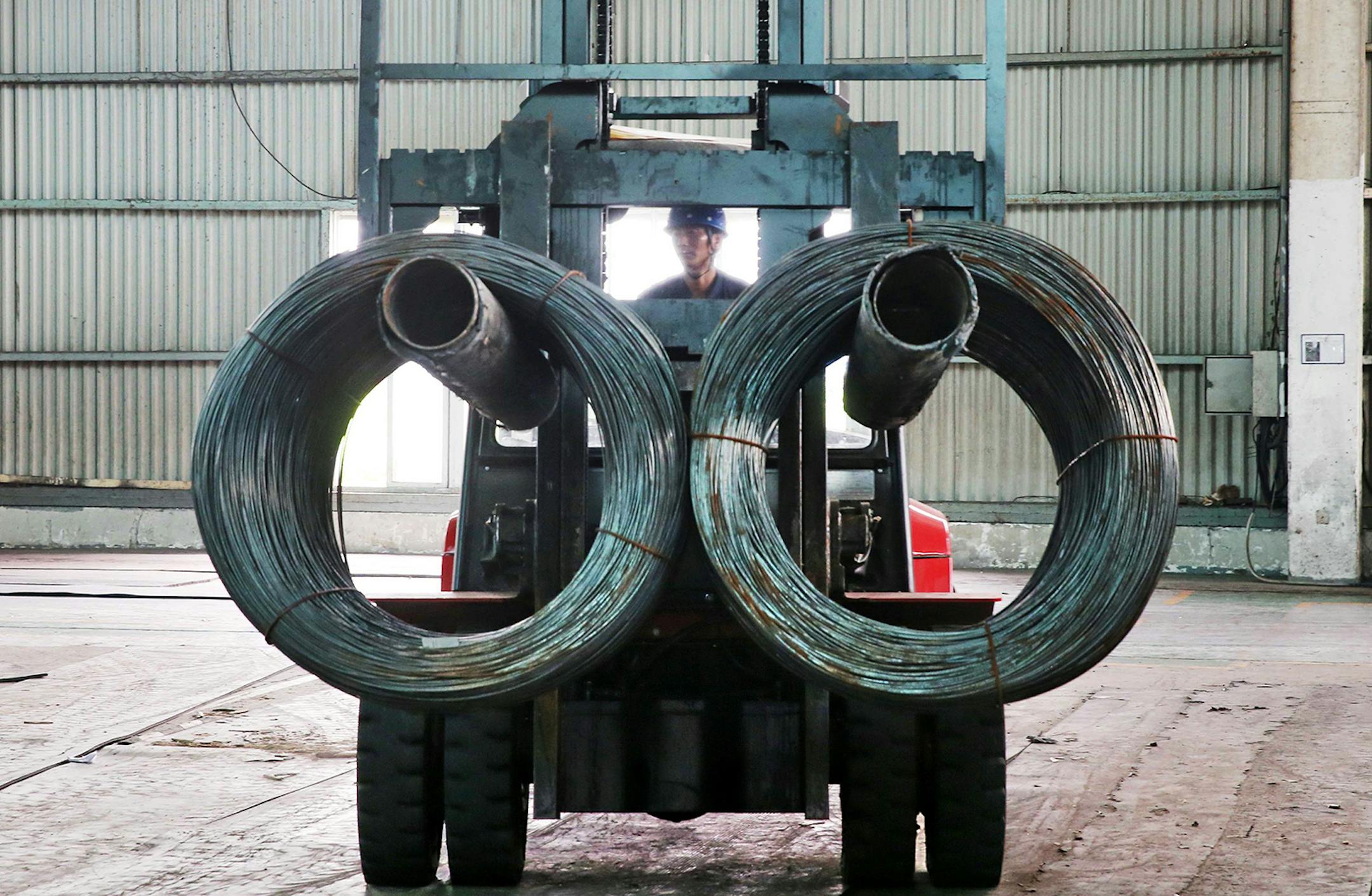
The recent Star Tribune editorial "What happened to Trump steel boom?" (Jan. 9) had the appearance of a political-leaning narrative at the outset of this election year. The editorial failed to acknowledge that trade enforcement is, and has historically been, bipartisan — and for good reason.
Let's be clear about the root cause of the so-called "protectionism." Unfair trade practices and illegal dumping have tilted the playing field in the favor of foreign steelmakers, especially China. Both Democratic and Republican White Houses over the last two decades have recognized that enabling cheap foreign steel — supported by massive pollution, shamefully cheap labor, subsidization and currency manipulation — is bad policy.
Those past leaders also took a strong stance to ensure the continued viability of critical industries that serve as the building blocks of our economy and the vanguard of our national security.
The Iron Range was devastated in 2015 by cheap, unfairly traded, dirty, subsidized foreign steel. Long before President Donald Trump came into office, the iron mining and steelmaking industries advocated for trade enforcement action by the federal government, allowing domestic steelmaking to level the playing field with imports that were dumped or illegally subsidized.
Congressman Rick Nolan (a Democrat), Sen. Amy Klobuchar (a Democrat) and organized labor and industry leaders made a bold, impassioned plea for trade enforcement. As a result, President Barack Obama's administration imposed tariffs as high as 500% on Chinese steel, providing a critical lifeline to the iron ore and steel industries.
Unfortunately, China circumvented those tariffs and continued to infect the world with its own low-quality, high-polluting, subsidized steel. Fortunately, the Trump administration recognized the threat to U.S. national security and took further action under Section 232.
A more balanced view of how the steel tariffs are working is to judge the three overarching objectives laid out by the administration with respect to the Section 232 tariffs. Here are those metrics and the results as of year-end 2019:
1. Enable steel producers to operate at about 80% or better of the industry's capacity utilization rate.


