

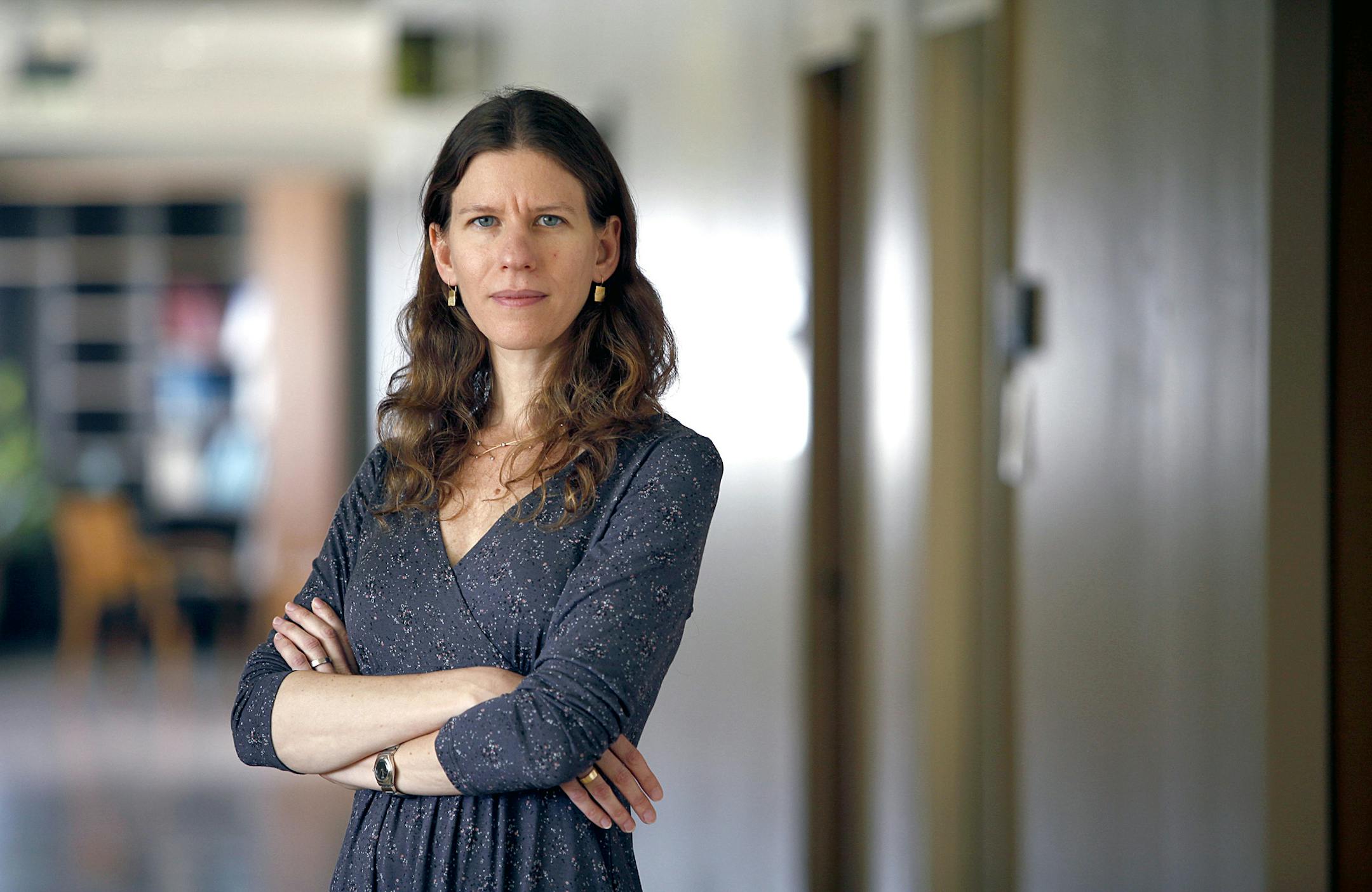
JERUSALEM – Cultural concerns don't necessarily stop Israel's Arab women from working. The lack of affordable day care does.
Longer maternity leave for Austrian women might keep them in the labor force longer. And girls in areas of India with more sex-selection abortions are less likely to be malnourished.
These are some of the discoveries by Argentina-born economist Analia Schlosser of Tel Aviv University, whose research has been cited by the Bank of Israel, the World Bank and the Organization for Economic Cooperation and Development.
Israel extended its free day-care program more widely after a policy debate that included Schlosser's work, and a group lobbying for mixed-gender classes used her studies to show their benefits. Schlosser, who often chooses topics related to women or gender, says she went into economics rather than mathematics because she wanted to be involved in practical policy questions.
"Women are more interested in things connected to this world, less theoretical things," said Schlosser, 38. "I try to find a causal effect. This is one of the things that links all my research."
Schlosser, who spent a year at the Massachusetts Institute of Technology and two years at Princeton University, is a rarity in Israel. Only two of the 19 faculty members in her economics department are women. At Hebrew University of Jerusalem, only one of 26 is female. The comparable rate in the U.S. is 20 percent.
Schlosser's work on gender separation in schools produced new information for public policy makers in Britain and the U.S. and led to other studies, said co-author Victor Lavy of Hebrew University, who hired Schlosser as a research assistant when she was an undergraduate.
"All of her work touches upon important questions of public policy," Lavy said. "I see her among the leading economists in Israel doing empirical work, very careful empirical work." Lavy helped arrange for Schlosser's year in Cambridge, Mass., at MIT as a doctoral student, and her two years at Princeton in New Jersey as a postdoc.


