

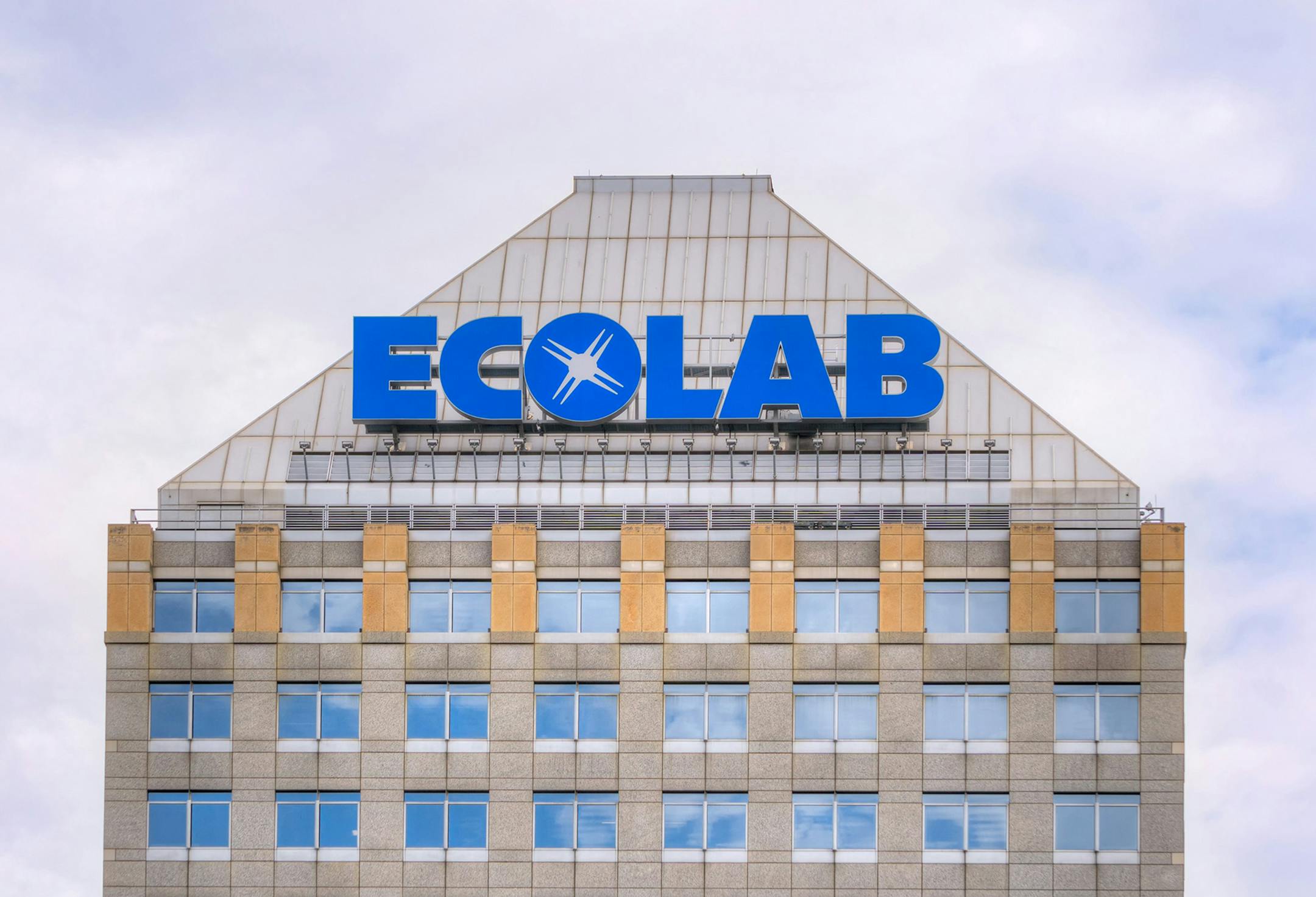
Ecolab Chief Executive Christophe Beck said Tuesday that inflationary costs will continue to drag the St. Paul company's profits into at least the second quarter.
As it warned last month, significant cost increases and the continuing impact of COVID-19 affected profits. While sales increased 10% to $3.36 billion in the fourth quarter, compared with the same period in 2020, net income was essentially flat.
"We are very pleased with the strong top-line growth we delivered in the fourth quarter," Beck said in the company's earnings release. "Strong volume and pricing momentum was largely offset by significant raw materials and freight cost increases."
Ecolab, a giant in the cleaning supplies market, saw a 20% increase in the cost of raw materials and freight costs during the quarter, resulting in net income of $301 million, or $1.04 a share, for the quarter ended Dec. 31.
Challenges came both from inflation and workarounds because of the pandemic. For example, the company said in January that one of its longtime delivery companies shut down without warning in December, and the surge in COVID-19 cases with the omicron variant caused constraints in the broader logistics space.
While Beck said he sees COVID-19 effects and supply-chain cost impacts to continue into spring, the situation will improve incrementally for the remainder of the year. He also is confident that sales recovery in the institutional and specialty segments as more people go back to school and work will help the company, as will the acquisition of Purolite.
"We now enter 2022 with confidence and well aware that the environment might change" Beck told analysts in the company's earnings call. "We expect the global economy to remain strong even if not as a straight line. The exact timing for the end of COVID's impact remains hard to predict, but we expect it to be mostly behind us by the middle of this year."
Adjusted earnings per share were $1.28, a 4% increase over the $1.23 earned in the same quarter last year, and they did not meet analysts' expectations. Adjustments included inventory writedowns caused by the pandemic, tax expenses and acquisition costs.


