Ecolab is fighting the bedbug's bite

St. Paul-based Ecolab has a new program to fight the resurgent critters, and it's not the only one gearing up.

August 21, 2010 at 2:59AM
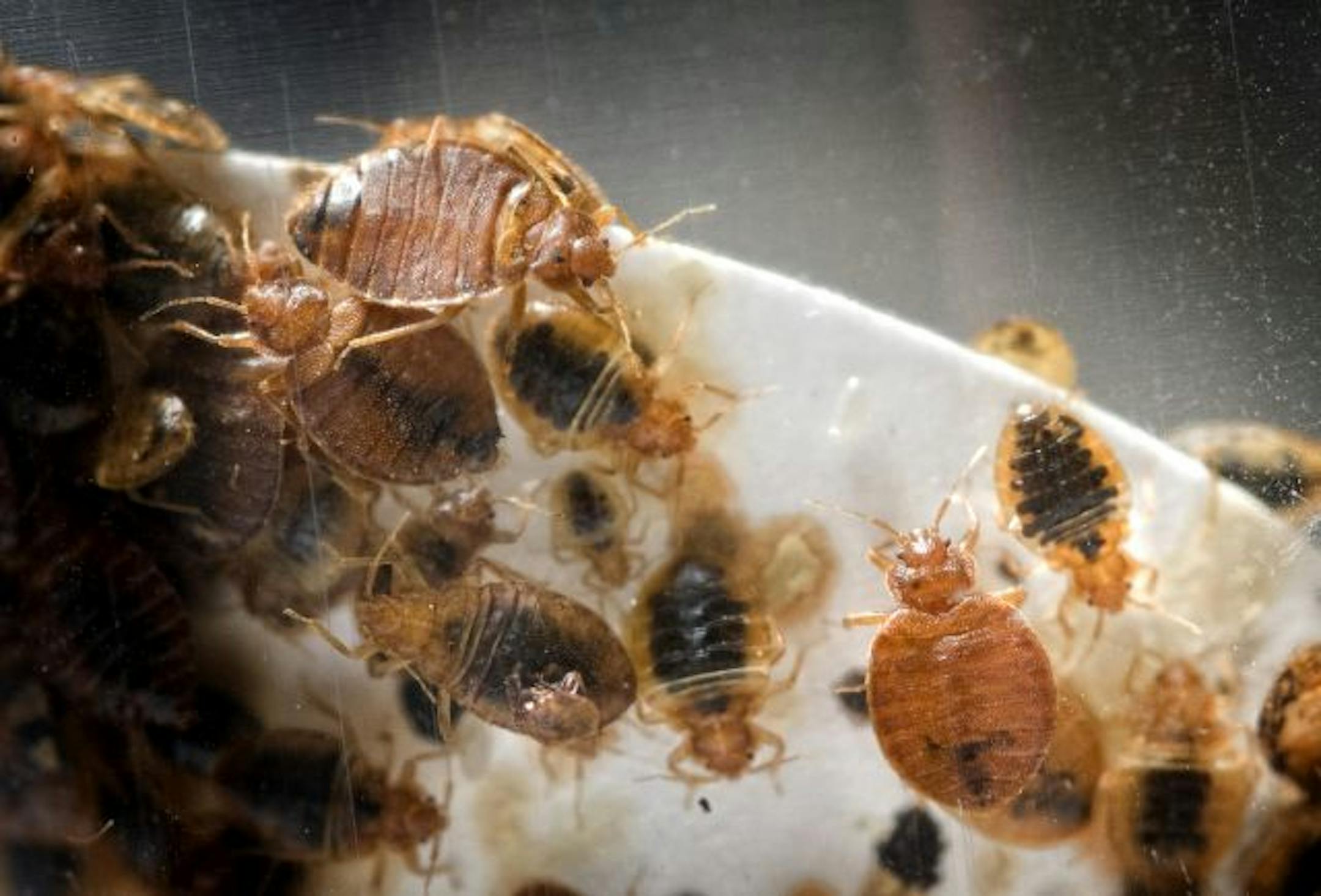
Live bedbugs at Ecolab. he dark substance inside some of their abdomens is evidence of a recent feeding.
Live bedbugs at Ecolab. The dark substance inside some of their abdomens is evidence of a recent feeding. (Star Tribune/The Minnesota Star Tribune)

Bedbugs are moving up on the hit list at Ecolab Inc.

The St. Paul company, whose sanitizing, cleaning and pest-elimination products generate about $6 billion in yearly global sales, recently introduced a new bedbug treatment program aimed primarily at the hotel market. Greg Thorsen, senior vice president for pest elimination in North America, won't disclose specific sales figures but said "it's been very well-received."

Small wonder. Bedbugs were all but wiped out decades ago by DDT, which was banned as an environmental hazard in 1972. After that they were kept in check by other pesticides and methods that including killing them with extreme heat or cold.

But lately they've been making a big-time comeback, and they're no longer just a problem for hotels. This week an AMC theater complex in New York's Times Square had to shut down to deal with a bedbug infestation. Earlier this year other outbreaks were reported in New York at an Abercrombie & Fitch store, a Victoria's Secret store, a hospital and some large office buildings.

A recent study by the National Pest Management Association and University of Kentucky raised the prospect of a "bedbug pandemic."

Bedbugs used to be found mostly in gateway cities like New York. But John Barcay, Ecolab's senior scientist for pest elimination, says that's no longer the case.

"Bedbugs are in every large city, and you're even finding them now in rural areas," he said.

That's because people travel more frequently and widely these days, and bedbugs are adept hitchhikers that can be transported by getting into a suitcase or onto clothing.
Ecolab's not alone in hopping on the bedbug bandwagon. Large companies like Orkin and Terminix are also in the market, as are smaller local pest control firms like Brothers Manufacturing Inc. in Grant, near Stillwater. Co-owner Clay Kendhammer said his company has supplied cleaning and maintenance services for area apartment complexes since 1995 but set up a pest control division about a year ago because it was getting so many requests to treat bedbugs.

"Our business is booming," he said. The company uses a 2-year-old terrier mix dog named Lil Bro that's been trained to sniff out infestations. "He can fly through a room very fast and when he finds something he stops, his tail goes straight up and he just starts pawing at it," Kendhammer said. The company uses liquid carbon dioxide to freeze the bugs and hot steam extraction, he said.

Bedbugs aren't necessarily a symptom of bad housekeeping and aren't known to spread disease. In a recent conference call with analysts, Ecolab CEO Douglas Baker Jr. referred to them as "mosquitoes without wings."

Even so, they're a huge headache for property owners, who dread the bad publicity and lost business if an outbreak makes news. Thorsen won't disclose names of Ecolab customers.

There's also the cost of replacing bedding, draperies and other fabric furnishings that have to be discarded in infected rooms. In addition, there's lost revenue because a hotel has to shut down rooms -- the one that's infested, plus the ones on either side and immediately above and below -- while they're being treated. Ecolab's new treatment program reduces the time rooms are out of commission from five days to three.

400,000 hotel rooms

Ecolab has years of experience in eliminating pests, including bedbugs. Thorsen estimates the company has treated about 400,000 hotel rooms in North America for bedbugs in the last 10 years and says the new program took about two years to develop. Pesticides that kill young and adult bedbugs and their eggs are applied by Ecolab's personnel as wet sprays, aerosols or dry powders depending on the surface. Bedbugs can show up in such places as draperies, behind pictures and in light sockets.

Barcay says they're one of the most difficult bugs to eradicate because they can creep into tiny spaces and live for several months without having to bite a person and suck their blood.

Ecolab's bedbug treatment program costs about $2,000 for the infected and adjacent rooms. As part of its normal core pest elimination service, Ecolab also offers training for the property's housekeeping staff to teach them how to inspect for bedbugs to nip outbreaks in the bud.

Thorsen said the new program has generated some interest from nonhotel customers, such as college dormitories. He and Barcay say the program might have to be modified if it were used in places like office buildings, where it's more difficult to shut down rooms.

Ecolab's pest elimination division generates about $500 million in yearly revenue and has recently seen a slight downturn in sales tied to the recession. Some customers like restaurants have gone out of business, while others have cut back on maintenance services to trim costs.

Healthy growth foreseen

But Edward Yang, an analyst at Oppenheimer & Co. in New York, said that over the long term the division should generate double-digit yearly sales growth. Ecolab has a 14,000-plus sales force and significant brand equity from customers in the food service, hospitality and health care markets that already buy the company's cleaning and sanitizing products. "It fits in well with Ecolab's Circle-the-Customer model," Yang said.

"Living in New York, where there's been several high-profile bedbug infestations, I do believe that it is a real problem and can drive some incremental volumes for Ecolab," Yang said.

Susan Feyder • 612-673-1723

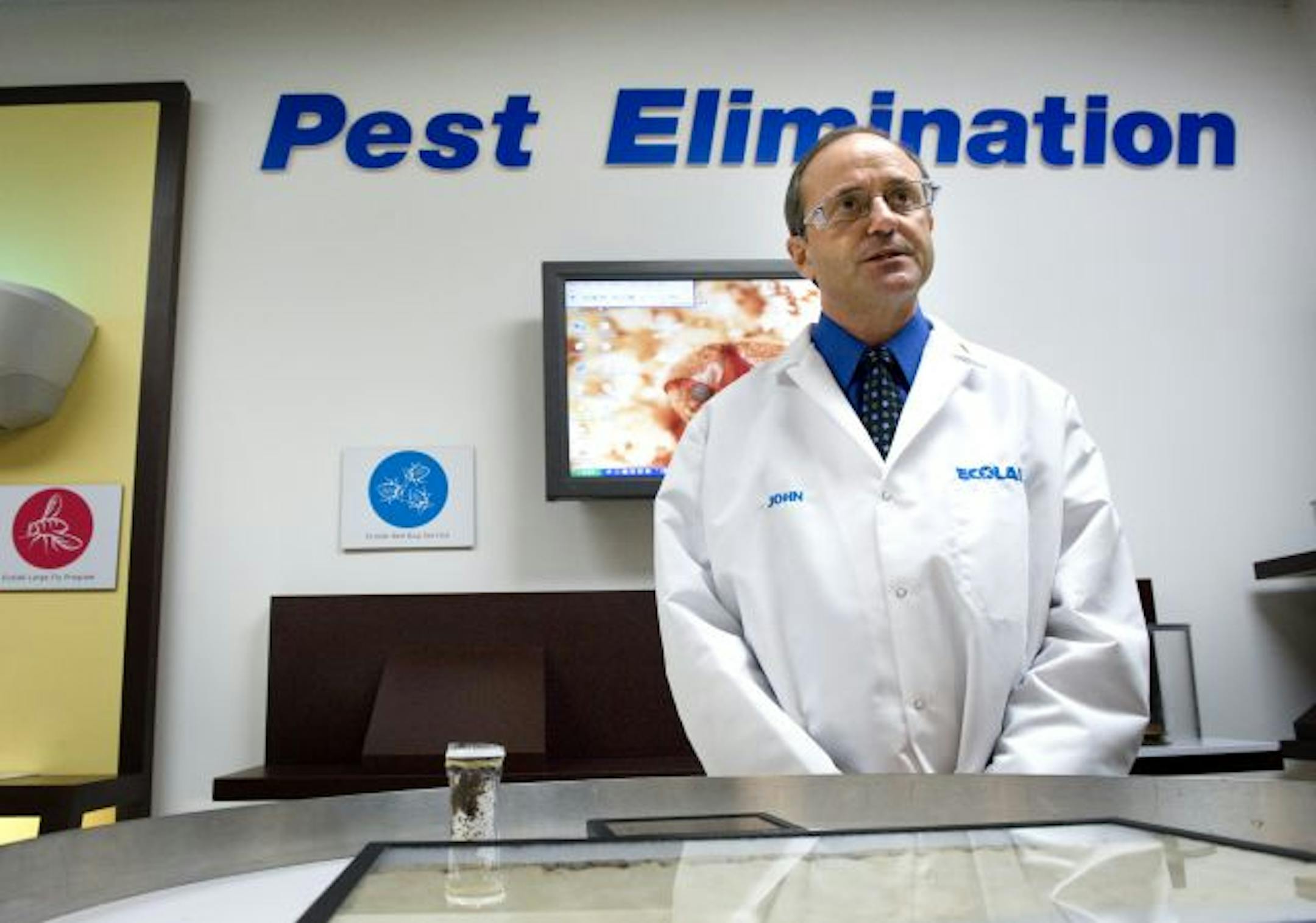
Dr. John Barcay, an Ecolab senior scientist.
Ecolab senior scientist John Barcay says that bedbugs are a formidable foe because they can live so long between feedings. (Star Tribune/The Minnesota Star Tribune)
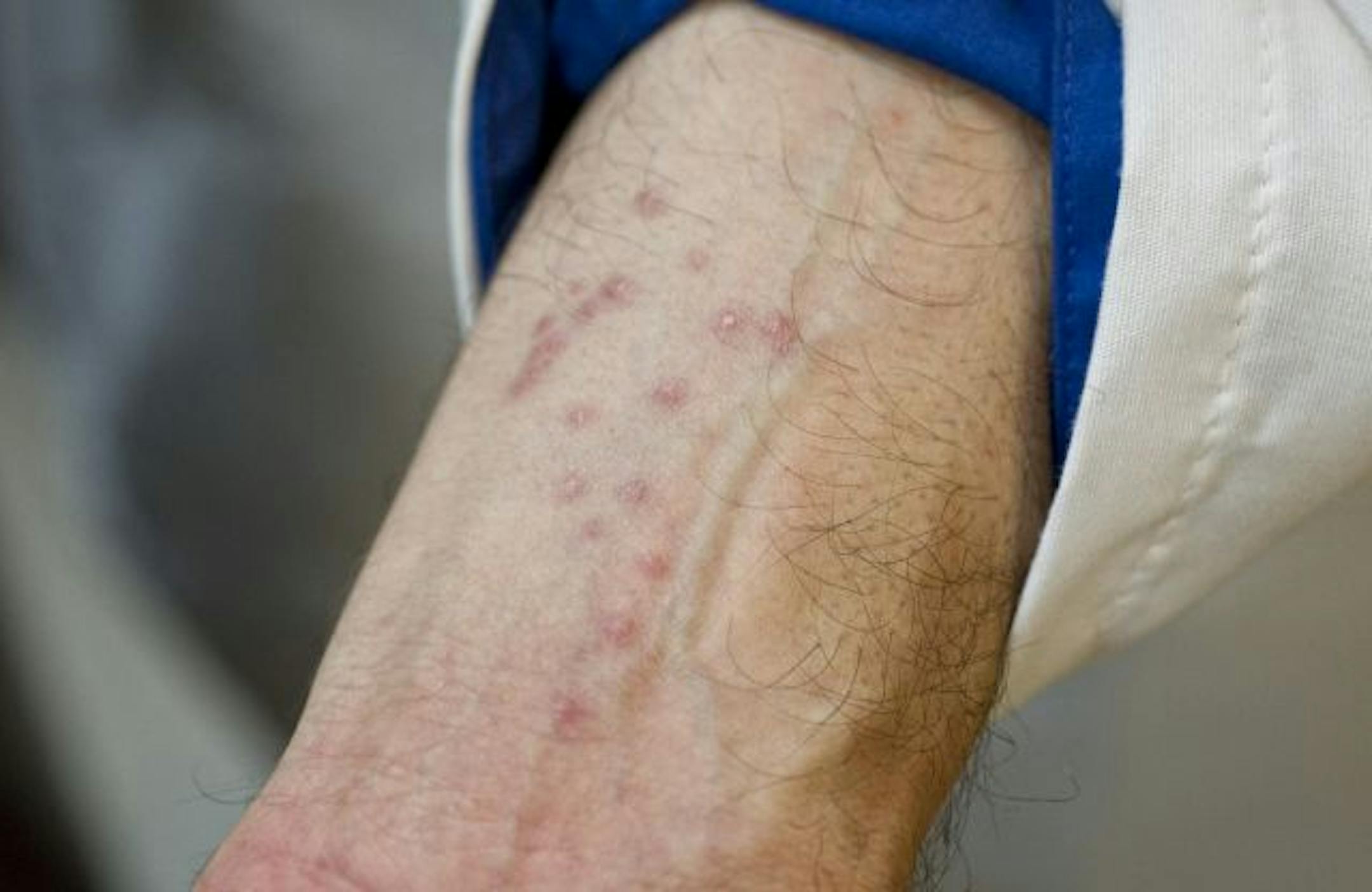
Dr. John Barcay, an Ecolab senior scientist showed the effects of bedbug bites. He said he is part of the 40 percent of the human population affected this way since most show no reaction to the bites.
John Barcay showed the effects of bedbug bites. He said he’s among the 40 percent of humans so affected; most show no reaction to the bites. (Star Tribune/The Minnesota Star Tribune)
Lil Bro, the bed bug-detection dog used by Brothers Manufacturing of Grant, Minn.
Lil Bro, the bedbug-detection dog used by Brothers Manufacturing of Grant, Minn. (Star Tribune/The Minnesota Star Tribune)
about the writer

about the writer

SUSAN FEYDER, Star Tribune

More from Business

See More
card image
Jeff Wheeler/The Minnesota Star Tribune

The sale of part of the team will allow the Pohlad family to pay off “a significant amount” of the organization’s $500 million debt.

card image