

An anxious world watches as Russia amasses more than 100,000 troops on its border with Ukraine. But Kremlin aggression isn't just amplifying abroad. It's intensifying internally, too.
The latest example is the court-ordered closing of Memorial International, the country's most significant civic institution working to preserve the memory of victims of Stalin-era crimes as well as protecting human rights in today's Russia.
Founded during the glasnost and perestroika (openness and reconstruction) era under former General Secretary Mikhail Gorbachev, Memorial, as it's known, was shuttered by a court ruling on Dec. 28, 2021. The end thus came in the centenary year of one of the institution's founders, Nobel Peace Prize winner Andrei Sakharov, and just days after the 30th anniversary of the dissolution of the Soviet Union.
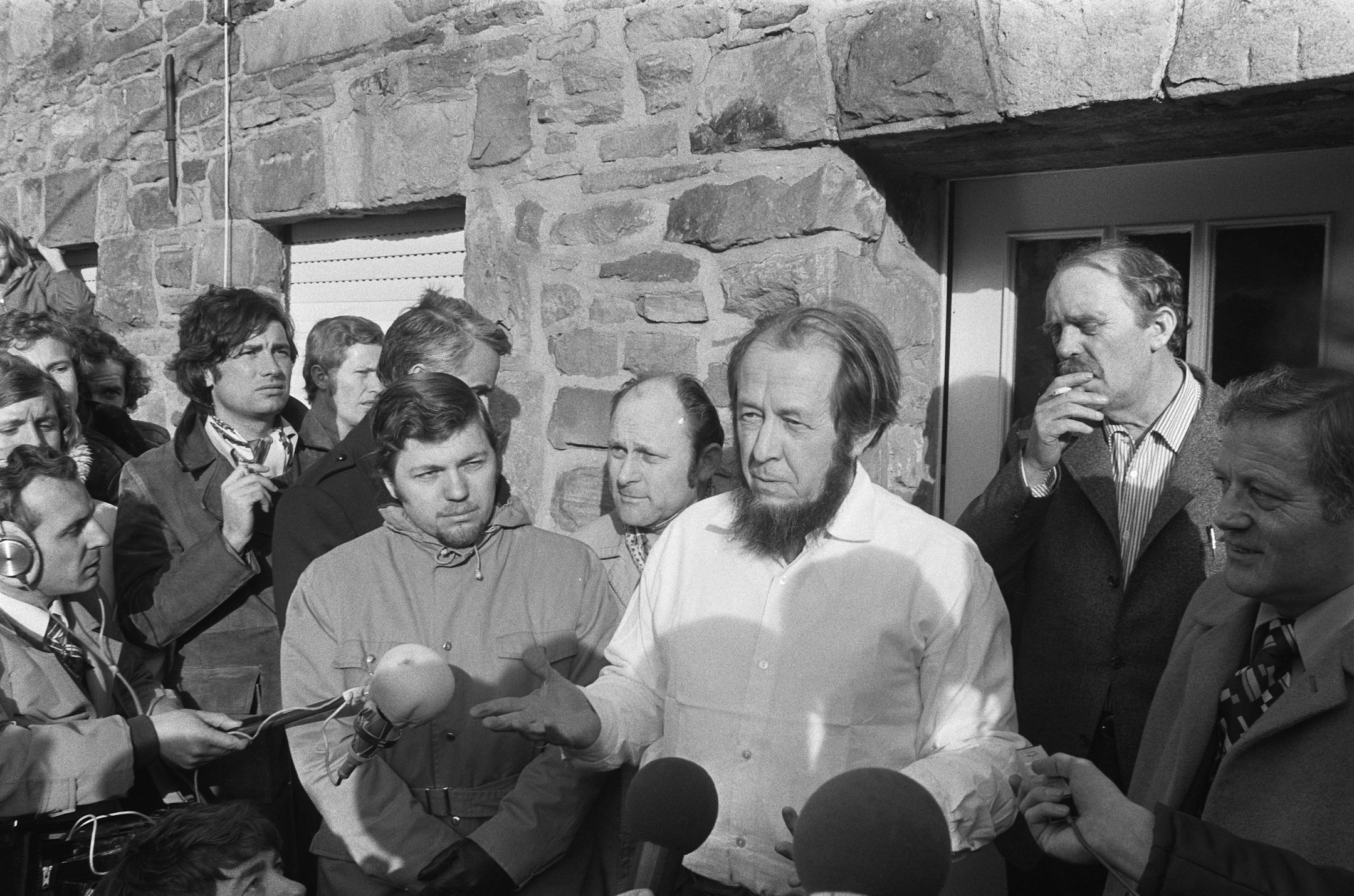
Memorial was accused of being a "foreign agent" — a Soviet-era euphemism for traitor. It's the kind of charge that sent an estimated 17 million Russians to Soviet prison camps — or gulags. They included a former World War II Army captain, Alexander Solzhenitsyn, who would himself later win a Nobel Prize in literature, most notably for "The Gulag Archipelago," an account of the Kafkaesque camps in Siberia that scarred, or ended, the lives of millions.
Most of them, Solzhenitsyn wrote, had an identical reaction to their arrest: "Me? What for?"
Memorial, a well-established, well-respected institution, may have asked the same incredulous question. And received the same ridiculous answer, echoed in verbiage that would have been familiar to Solzhenitsyn's ear, and era: Memorial, State Prosecutor Aleksei Zhafyarov said at the trial, "creates the false image of the Soviet Union as a terrorist state." It "makes us repent for the Soviet past, instead of remembering its glorious history."
That history is more sordid than glorious. But Russians "are being told that Stalin, for all his faults, was a great national leader who brought the country successfully through World War II," said Tom Hanson, diplomat-in-residence at the University of Minnesota Duluth. A former Foreign Service officer who was stationed in the Soviet Union in the mid '80s, Hanson added that "the interpretation is tipping toward the positive view of the past as opposed to a balanced view of the past."
Security services are "increasingly influential in Russia and have been particularly so about Memorial's efforts to shine a light on the crimes of the Stalin era," said Timothy M. Frye, professor of post-Soviet foreign policy at Columbia University. Frye, author of "Weak Strongman: The Limits of Power in Putin's Russia," added that "in the Soviet period, the Soviets tried to erase the memory of Stalin's crimes, and were only partially successful, and it will be even harder to do so in the modern world."


