

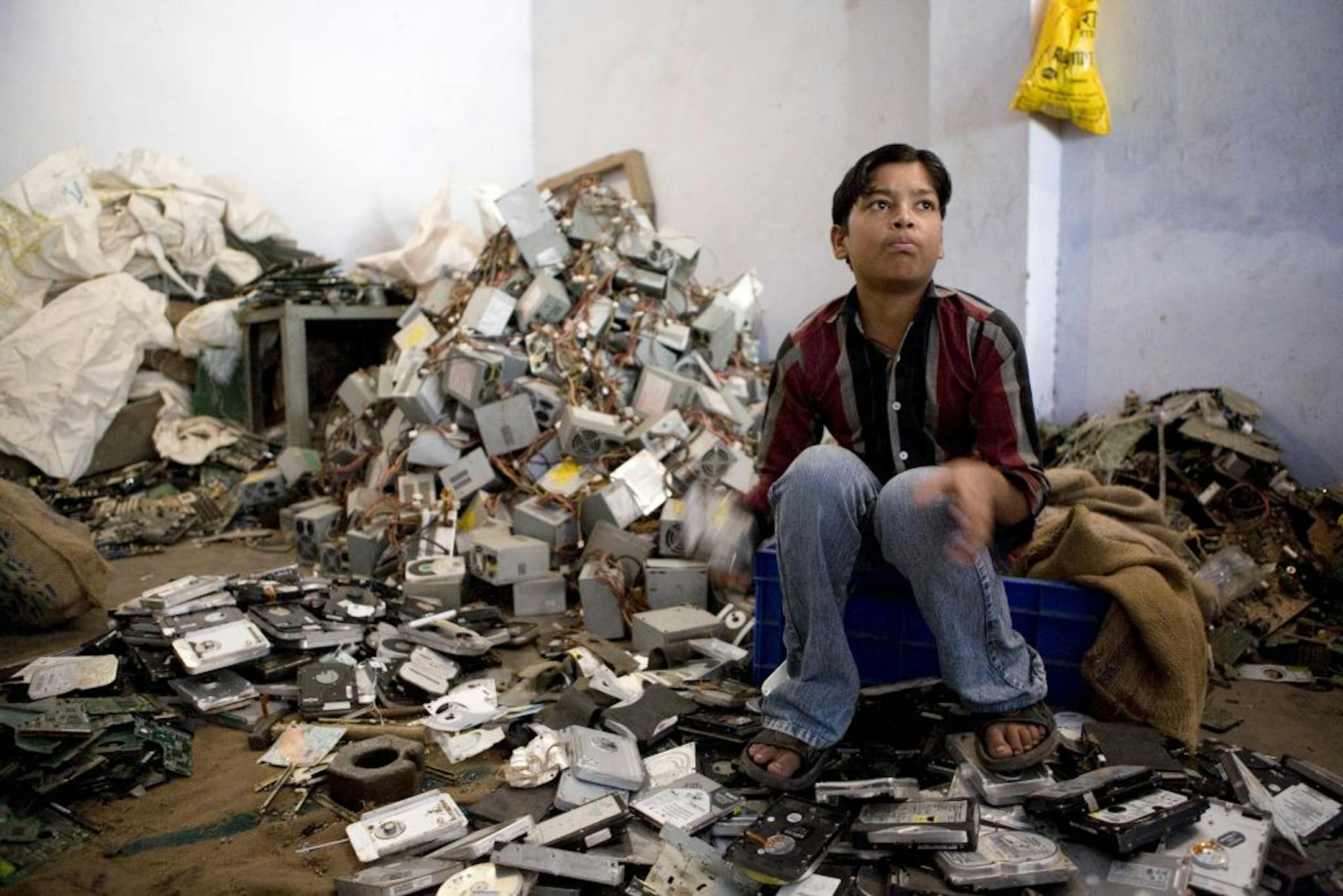
Poor countries have long been a popular destination for the rich world's toxic trash.
In 1987 an Italian importer sparked international outrage by dumping 8,000 leaky barrels in the Nigerian village of Koko. This month, Nigeria fined importers $1 million for trying to bring in two containers full of defunct televisions, computers, microwaves and stereos, aboard a ship from Tilbury in Britain -- the fifth such incident in three years.
Waste consisting of dead electronic goods, or e-waste, is growing at three times the rate of other kinds of rubbish, fueled by gadgets' diminishing lifespan and the appetite for consumer electronics among the developing world's burgeoning middle classes.
In 1998 America discarded 20 million computers; by 2009 that number was 47.4 million. China alone retired 160 million appliances in 2011, 40 percent of America's haul. A 2011 report by Pike Research, a consultancy, estimates the volume and weight of global e-scrap will more than double in the next 15 years.
International efforts to regulate the trade in waste revolve around the Basel Convention, passed in 1989 after the Koko row. It aims to stop the rich world dumping its harmful detritus in poor countries.
But e-waste is not just poisonous: it contains precious metals, too. Processors, chips and connecting pins contain seams of silver, gold and palladium; these "deposits" are 40 to 50 times richer than dug-up ores, according to a study by the United Nations University. Other less valuable and more troubling lodes for "urban miners" include cadmium, lead and mercury.
High-tech recyclers can recover up to 95 percent of the metal using furnaces and solvents. But dirtier methods are cheaper. In China's Guiyu area, 100,000 people work in e-waste recycling. It is "ground zero for the e-waste trade," said Jim Puckett of the Basel Action Network, a green group.
Standard practice is to separate the plastic by boiling circuit boards on stoves, and then leach the metals with acid. Workers risk burns, inhaling fumes and poisoning from lead and other carcinogens. A study by the nearby Shantou University found high miscarriage rates in local women.



