

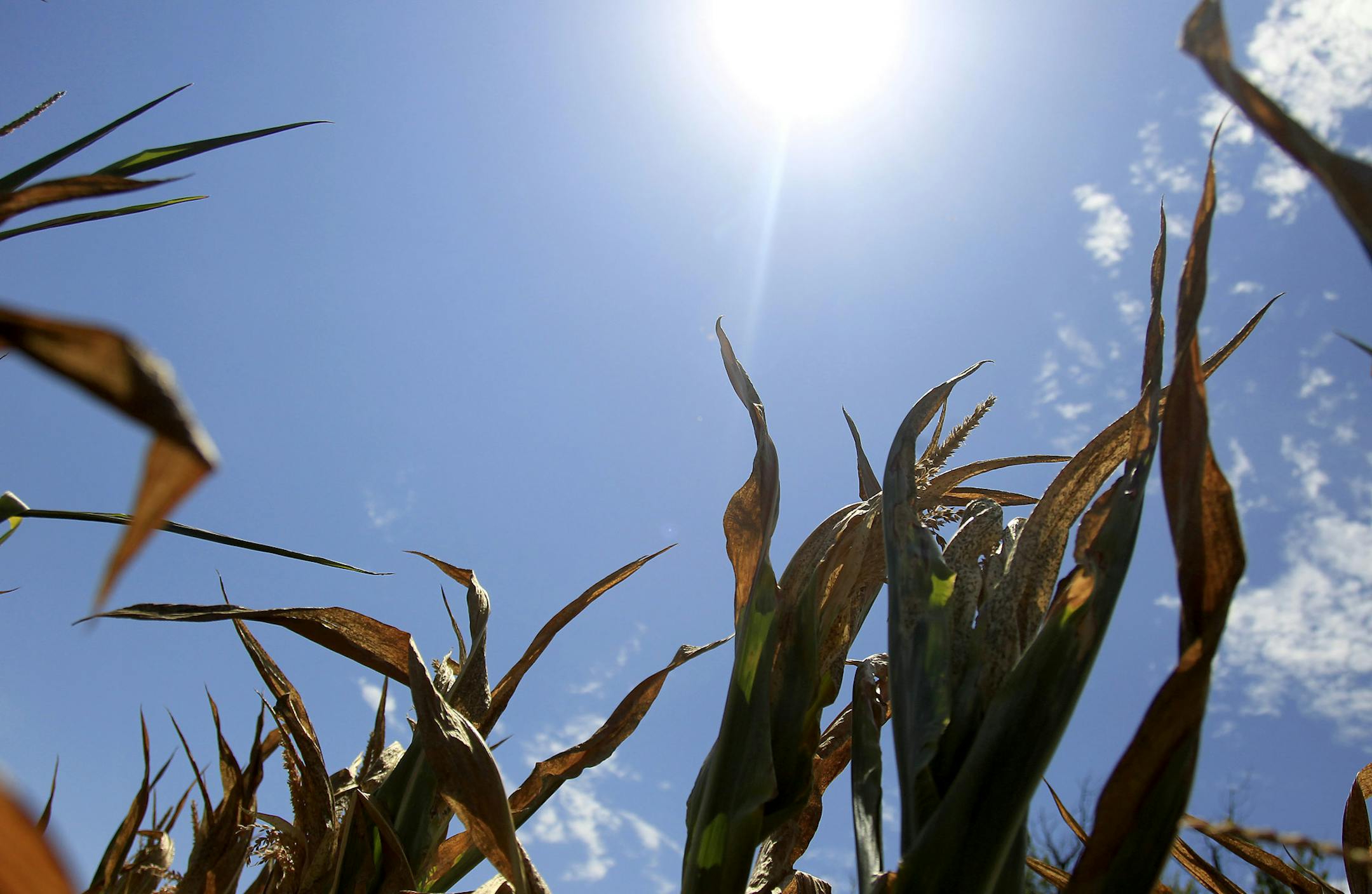
Dry weather that has persisted in Minnesota through the fall and winter is raising concerns among farmers about this year's growing season.
Most of the state didn't get significant precipitation before the soil froze, meaning dirt that was already moisture-depleted didn't get the recharge it desperately needs. Drought Monitor, a drought-tracking website, shows that since last fall's harvest, a big chunk of Minnesota has moved from "moderate" drought to "severe."
"It's unusually dry in our area," said Kensington, Minn., farmer Curt Stark, whose land has moved into the "severe" classification. "It's something everybody is kind of nervous about."
Last year, Minnesota corn farmers grew their largest crop ever while a drought in other key corn states shriveled crops and pushed prices above $7 per bushel for the last half of the year.
Currently, all of Minnesota is in at least a moderate drought, according to Drought Monitor, a service of the University of Nebraska, the U.S. Department of Agriculture and the National Oceanic and Atmospheric Administration. The percentage of Minnesota in "extreme" drought — most notably the southwest — has stayed near 25 percent since November, according to Drought Monitor.
Many counties have dried up considerably since then. Earlier this month, 84 percent of Minnesota was classified as in "severe" drought — the ground between "moderate" and "extreme" — compared with around 45 percent in late October.
Spring is key time
"Fall and spring are the important recharge periods," said Greg Spoden, the state's climatologist. "So we will be very dependent on abundant spring rains."
There is also the possibility that better weather across the country could boost output and drive prices down. The USDA's current forecast assumes that yields — which were bashed by last year's drought — return to their long-term trends and lead to record crop production in 2013.


