

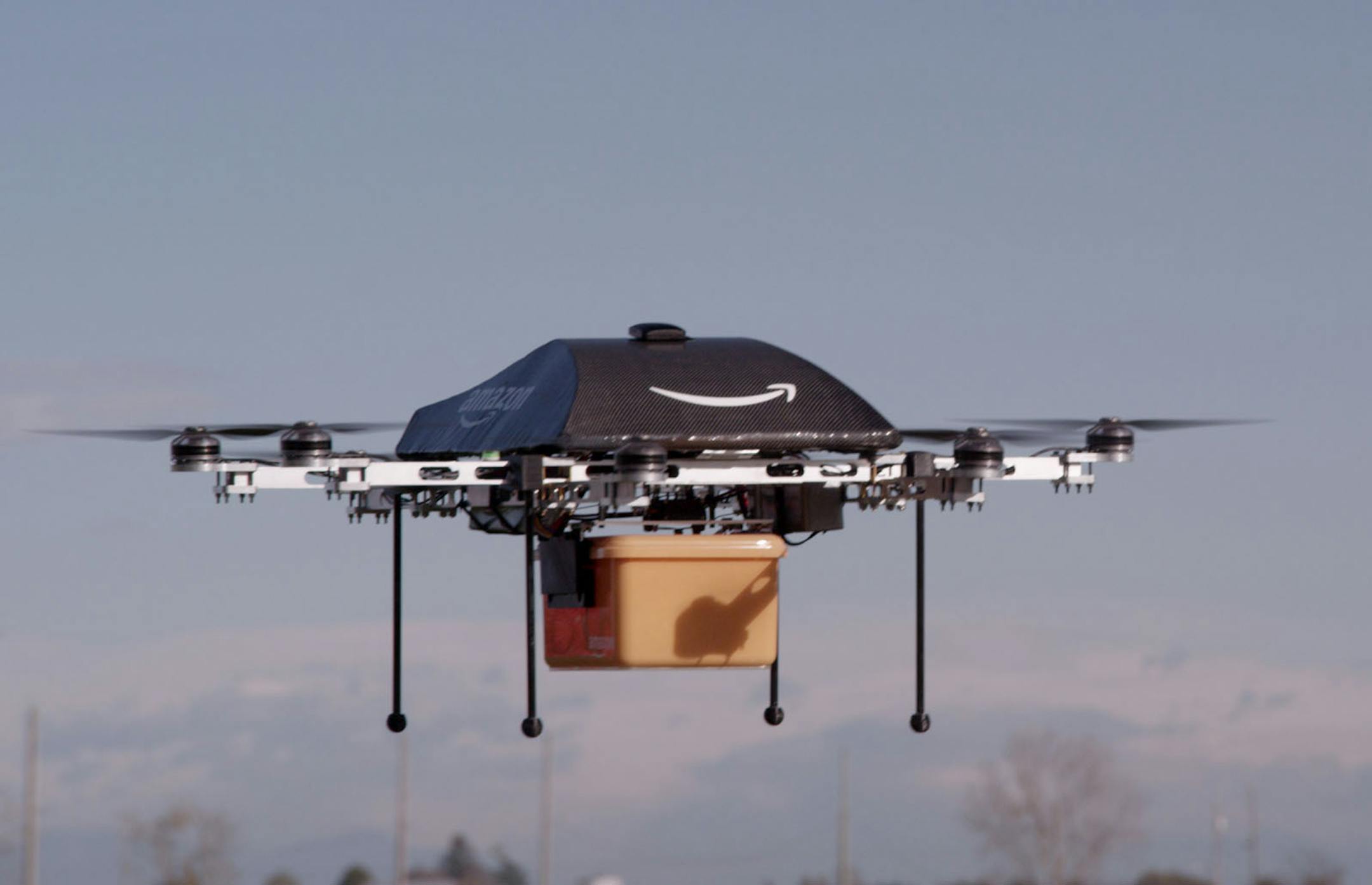
SARITA, Texas – If someday soon it's possible to have a hot pizza delivered to your door by a drone, it may be because of work now underway on the remote and sandy shores of the Texas Gulf Coast.
There, a team of scientists and engineers is researching how to fly airplanes without pilots. They're conducting their research on behalf of the Federal Aviation Administration in this unpopulated area, mainly so no one gets hurt.
To be clear, they're not there to expedite a food order to your house. In fact, many bristle at the suggestion that in just a few years the work they're doing could lead to drones buzzing among birds, treetops and tall buildings, making restaurant and retail deliveries in major metro areas.
Instead, they say, the real benefit of unmanned aircraft will be in police work, firefighting and other public services — in which remote-control machines can gather intelligence without putting humans at risk.
"There's so many needs for these things today — the forest fires, hurricanes," said John Hugeley, mission commander for a series of unmanned test flights conducted last week by Texas A&M University-Corpus Christi. "But I'd rather see us crawl, then walk, then run."
But the urgency behind their work is clear. Federal regulations or not, drones are exploding in popularity.
Many people with an entrepreneurial spirit — and often a background in remote-control hobbies — are already buying drones for commercial uses. They are opening businesses that specialize in aerial photography, surveillance and thermal imaging — even though they don't yet have FAA certificates to operate their machines for profit.
Meanwhile, the FAA, urged on by Congress, is scrambling to set up guidelines for unmanned aircraft by 2015, before the situation gets worse.



